Ohio history

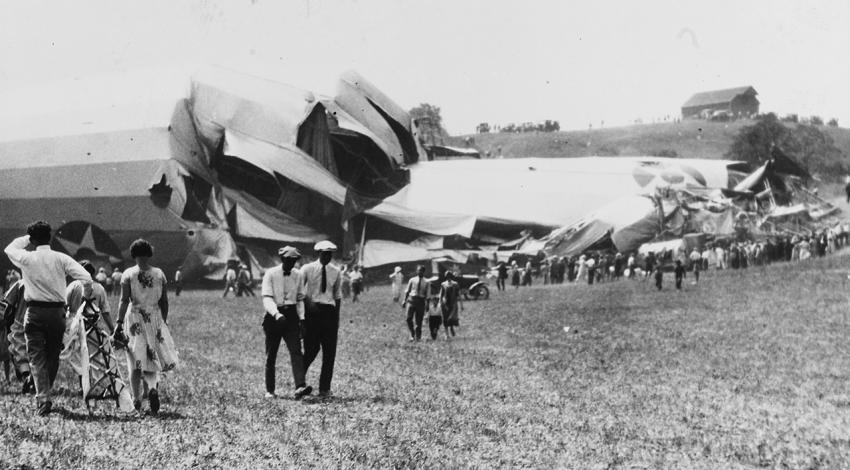
A crowd stands around the crashed ship staring at the wreckage.

The notion seems so fanciful: A U.S. Navy ship sinks in Ohio, not in Lake Erie or the Ohio River, but over the Appalachian piedmont of Noble County. It was a rural, bucolic setting — a patchwork of woodlots and farm fields split by fence lines and hedgerows and narrow roads with curves that followed the contours of the hillsides.

And the sky! An ocean blue that seemed meant for sailing — this, after all, is not a maritime tale, but rather, an aviation story.

The inside of Bishop's Bicycles, containing multiple bikes, bags, and shirts.

Location: Historic downtown Milford near the Little Miami Scenic biking trail.

Provenance: After customers kept asking him to make bicycle parts and repairs, blacksmith John Bishop founded Bishop’s Bicycles in Winchester, Kentucky, in 1890. The shop moved to Cincinnati in 1910, subsequently relocated to Norwood and Silverton, then finally planted on Milford’s Main Street in 1971. Bruce Bishop sold the business in 2006, and now it’s owned by Greg and Lisa Linfert.

A picture of the outside of the Old Johnston Farm, a large red building.

During the early 1800s, Ohio was the western edge of America’s frontier. A few Native American tribes still remained in the state, but the Indian Removal Act numbered their days. Passed by the U.S. Congress in 1830, the Act required all Indians living on reservations to move west of the Mississippi. The last to leave the Buckeye State were the Wyandot, and the man tasked with making that happen was John Johnston (1774–1861).