Caryn Golden Whitney

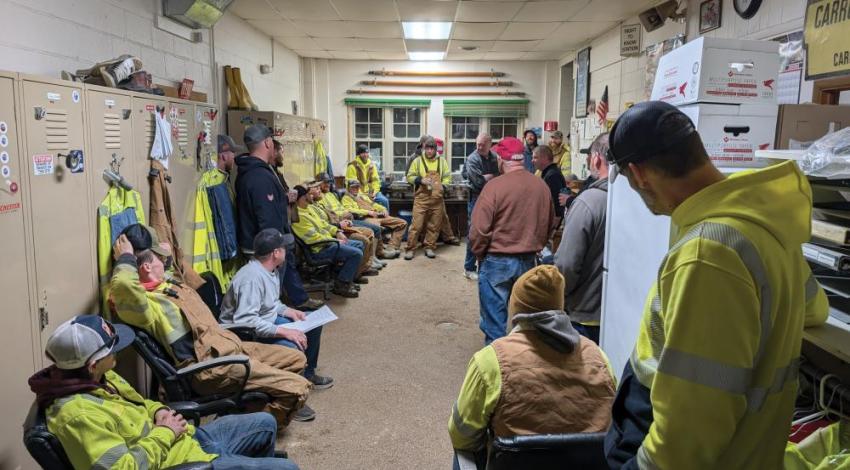
A group of lineworkers having a team meeting

Appropriately, spring’s swift, early arrival in Ohio this year came on a Friday the 13th. A fast‑moving low‑pressure system tore across the state this past March, unleashing widespread damaging winds.

11:52 a.m., March 13: Trouble begins

In Millersburg, in eastern Ohio, reports of outages started coming in to Holmes‑Wayne Electric Cooperative around noon. “The numbers escalated quickly through the afternoon,” says Robyn Tate, the co-op’s vice president and chief administrative officer, noting that the hardest-hit areas were also the most rural. Large trees came down and numerous poles snapped under their weight. 

A thermometer stuck in a snowy field

At about 4:30 a.m. one frigid Monday this past December, a signal went out from Columbus that temporarily switched off electric water heaters, furnaces, heat pumps, and geothermal systems in tens of thousands of electric cooperative members’ homes around the state.

Buckeye Power, the generation and transmission cooperative that provides the electricity Ohio’s co-ops distribute to their members, can reduce costs and ease strain on the grid by cycling those appliances off and on for short periods of time when the demand for power is at its highest. More than 100,000 co-op members in Ohio volunteer to participate in the program.

The renewable, green energy source, generated and transmitted by Buckeye Power for OEC members, has been available since 2017 when the OurSolar program was launched.

The hours of bright sunshine that come with scorching Ohio summers often spur people to consider harnessing energy from the sky’s brightest star with rooftop solar panels.

Bright side

Demarco Deshaies of Rockridge in Hocking County decided to investigate solar as a backup after losing electric service for several days following a devastating February 2022 winter storm.