Understanding the how, why, and who of your monthly bill
As a cooperative member, you get a bill from [selected_context:field_cooperative:entity:short_name] every month because we act as your electric distribution provider. But you may not realize that the co-op directly controls only a small portion of the cost of your power. Outside factors, like wholesale suppliers, investor-owned utilities that provide power transmission, and even you have a say in what your total cost for electricity looks like.
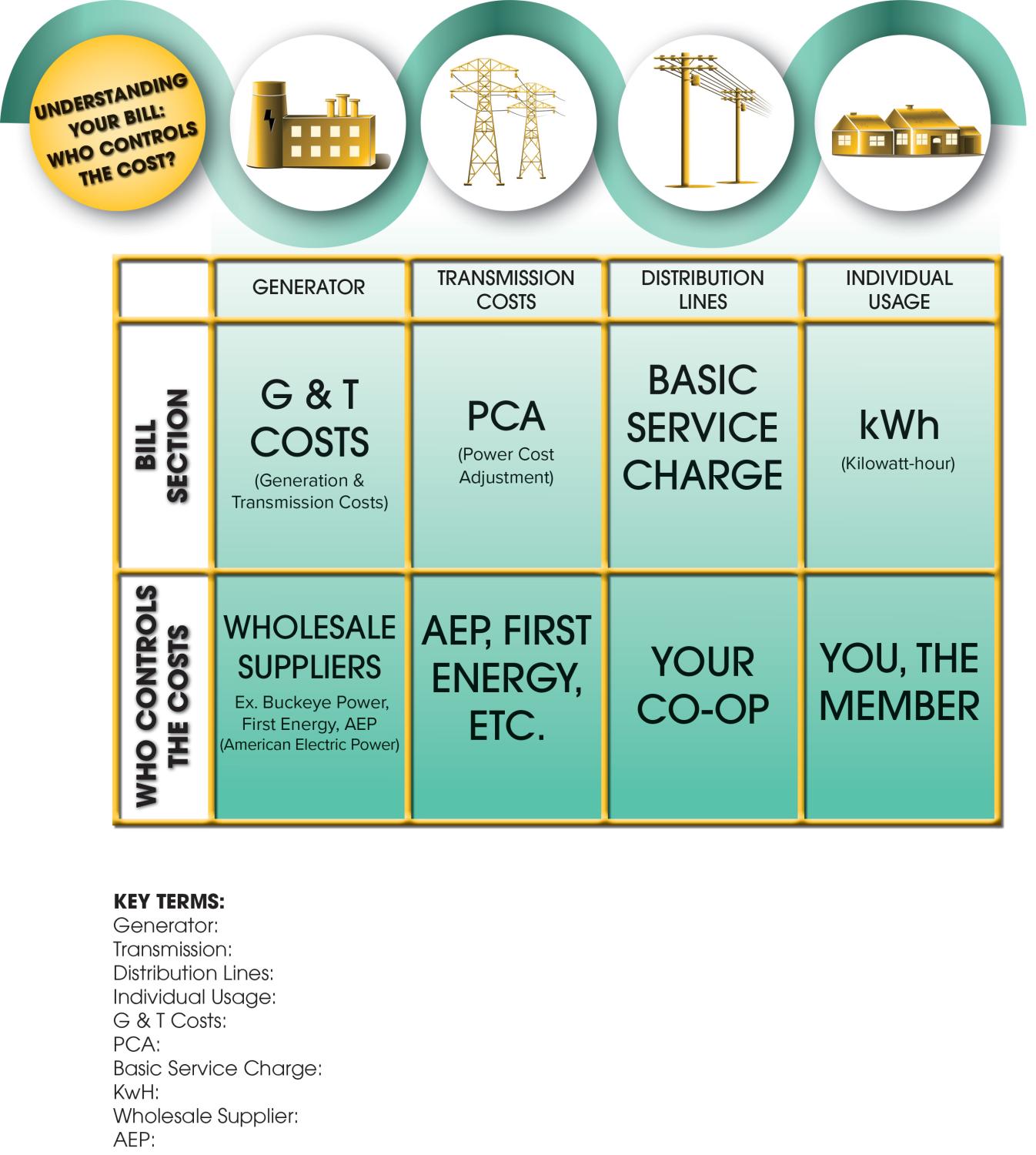
[selected_context:field_cooperative:entity:short_name] is responsible for setting the basic service charge, which covers the cost of equipment, system maintenance, and other necessary expenditures to keep the distribution system operating reliably and efficiently. This charge is set by the board of directors each year.
The co-op rate schedules are determined by factors outside of [selected_context:field_cooperative:entity:short_name]’s control, including generation and transmission costs set by wholesale suppliers like Buckeye Power and additional transmission costs set by investor-owned utilities like FirstEnergy and AEP, which help move power from generation sources to [selected_context:field_cooperative:entity:short_name]’s substations for distribution. These costs are affected by factors such as the price of fuel, environmental controls, and demand on the electric system as a whole.
And lastly, your individual kilowatt-hour use is calculated based on how much power you as a consumer pull into your home each month. This is where you have all the control!
Members can easily monitor how much power they’re using and when by utilizing SmartHub on their computer or phone. Following the time-of-day schedule to avoid large power use during periods when electricity costs more, investing in energy-efficient upgrades to your home, and turning off unnecessary electronics and lights when not in use can all have a big impact on how much power you consume each month.