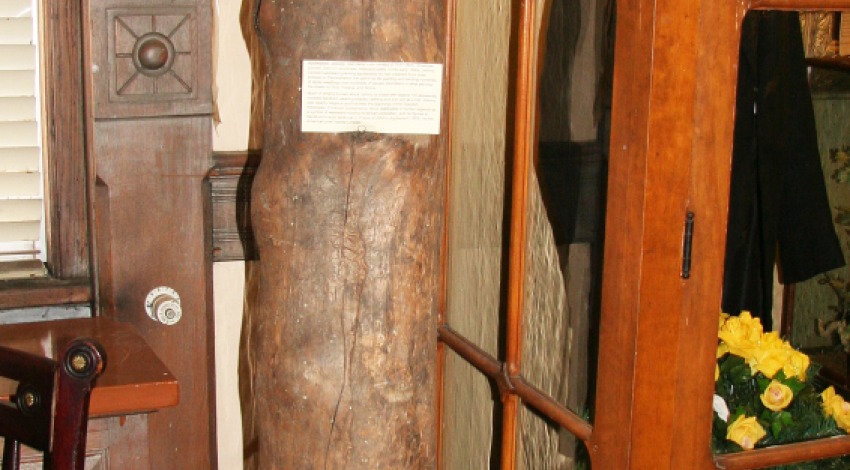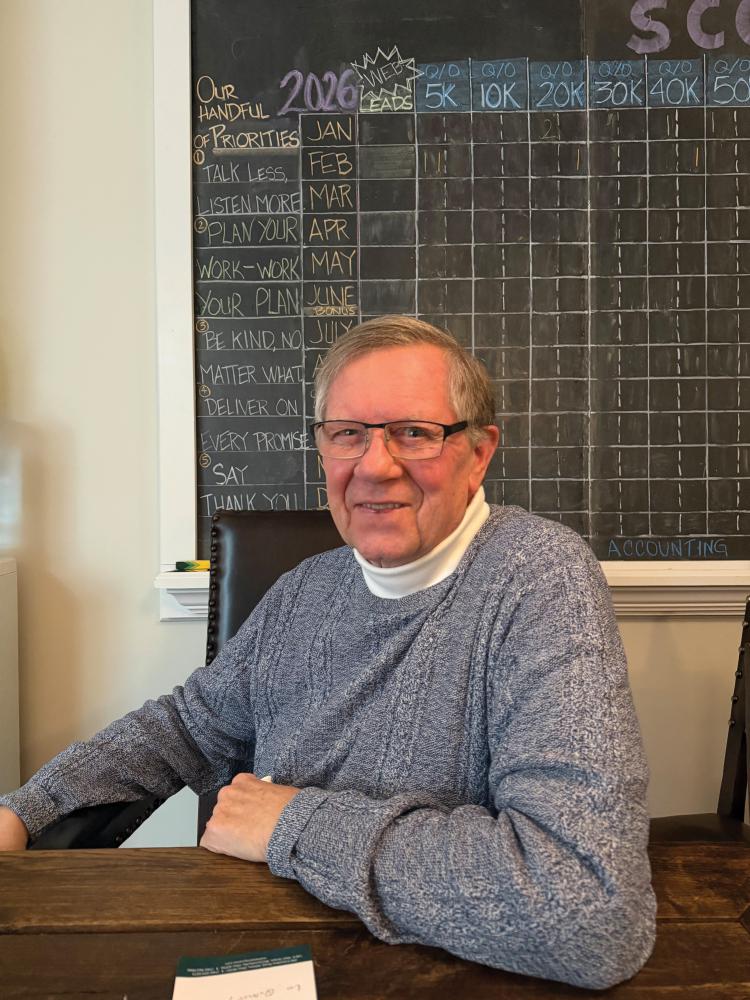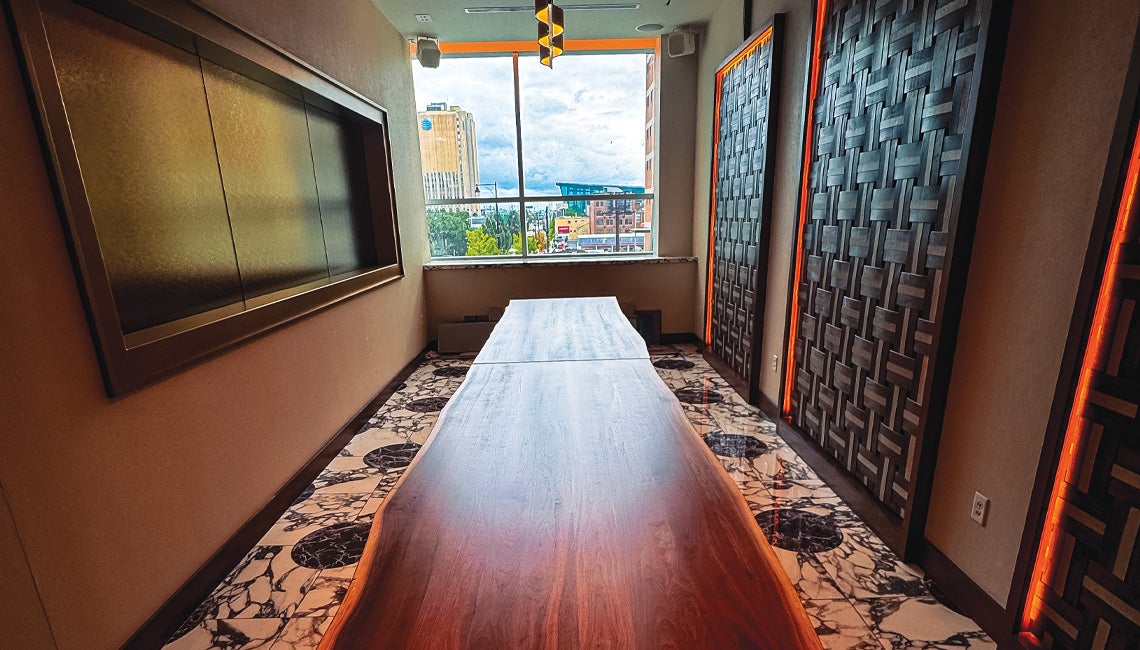
A deeply worn long wooden table, believed to date back more than 400 years, is the centerpiece of the Contraxx Furniture offices in McConnelsville. It has moved through farmhouses and bank offices, absorbing generations of conversations about livelihoods and futures long before the company itself came into being. The table was a gift from a mentor of owner Mike Workman, a self-described “hillbilly at heart.”
When Workman created Contraxx Furniture, he set out to prove that Appalachian Ohio could build a future without leaving itself behind.
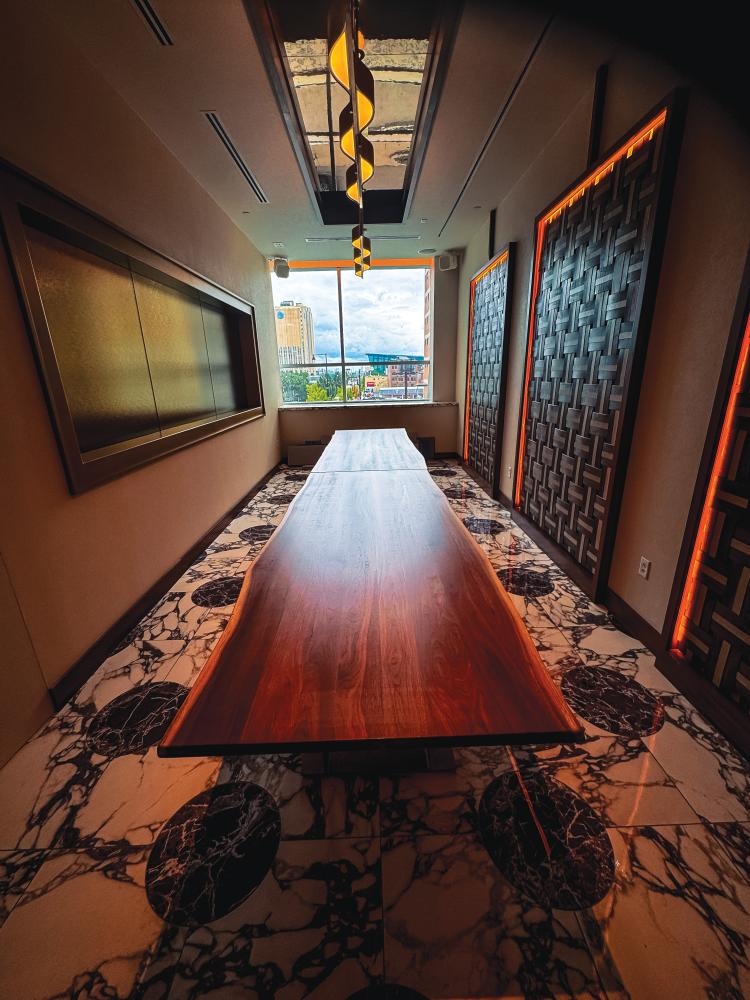
The craftsmen who build furniture for Contraxx Furniture have created stunning pieces that are featured in the hospitality industry, including 1857 Prime, the Kansas City restaurant owned by NFL superstars Travis Kelce and Patrick Mahomes.
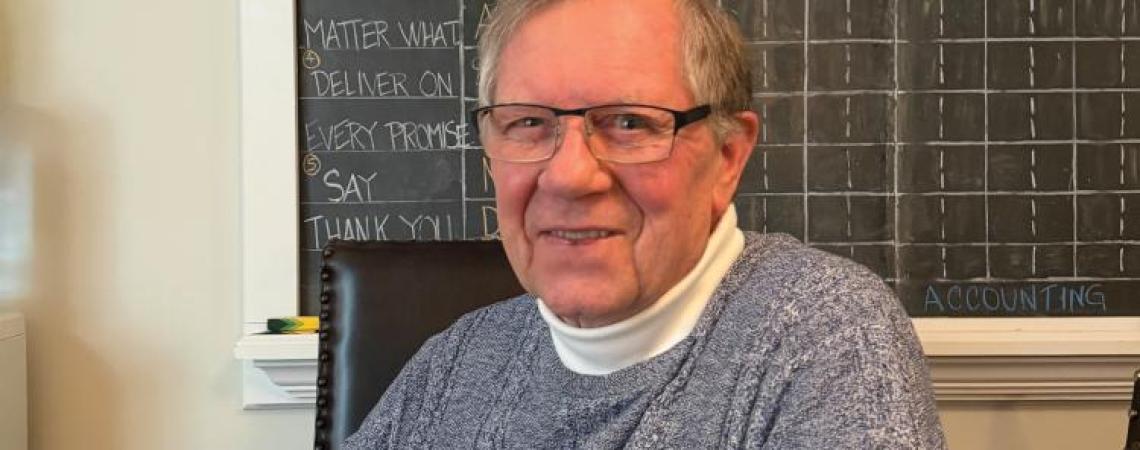
Early in his career, Workman learned how the national furniture world works — through trade shows, corporate showrooms, and long days selling into a system built for scale. During his years at Taylor Woodcraft, a McConnelsville-based school furniture manufacturer, he built relationships with major retailers, including Williams-Sonoma. He began supplying consumer pieces — starting with stools — and saw how demand could push standardized production toward customization.
When Taylor shut down after a corporate acquisition, those relationships became a bridge. What began with stools expanded to tables, then cabinets, and eventually led to an unexpected call from a designer asking whether Workman could build furniture for a hotel.
Loss and redirection were familiar territory. As a first-year student at Ohio University, Workman posted a 1.6 GPA and was called into the provost’s office. “I don’t think you’re cut out for this,” she told him. Given one condition to stay — raise his GPA to a 2.2 — he quit two jobs, focused, and finished the semester at 2.20. Years later, after spending two decades helping build Taylor Woodcraft into a nationally recognized manufacturer, he watched it close anyway, undone by corporate decisions made far from the community it supported.
He stayed on for a year to help wind the company down. The experience forced a reckoning with how and where furniture could be made.
“I knew I couldn’t do this again,” he says. The logic of high-volume manufacturing — chasing scale, lowering costs, moving production overseas — came at too high a cost. He had seen what it did to towns in North Carolina. He had watched it hollow out places that depended on steady, skilled work. And he was seeing it happen at home.
In Morgan County alone, the decline of the coal industry cost the community roughly 2,000 jobs. What remained was a workforce with deep practical knowledge but few stable options. Workman realized that instead of producing thousands of identical pieces at a time, he could reverse the model and bring manufacturing back to his region by focusing on custom work — made one piece at a time.
That idea became Contraxx Furniture.
Rather than operating as a single factory, Contraxx functions as a distributed manufacturing network, coordinating more than 250 family-owned wood, metal, and stone shops across Ohio, Appalachia, and western Michigan. About 45 of those shops form the company’s core production partners. Each specializes in a particular skill (think: legs, tops, case goods, finishing), allowing work to be shared and flexible and reliable. Because production isn’t dependent on constant high volume, shops can weather fluctuations without collapsing. Jobs could be steady and the skills of the people around him could be used.
For Workman, this model aligns naturally with the region itself. Farming, he notes, is no longer the reliable cash crop it once was for many Appalachian families. But barns with silos tell another story: Those are people who already know how to make, fix, and adapt. “When you grow up rural,” he says, “you learn how to survive. You rebuild engines. You fix what breaks. That ethic is embedded.” Contraxx offers a way to turn that knowledge into a living, one that keeps families on their land and children in local schools.
Workman is careful to deflect attention from himself. “I don’t want to be a hero,” he says. Contraxx doesn’t exhibit at trade shows or chase growth for its own sake. The company is selective about its clients, focused largely on hospitality projects where trust and follow-through matter. Internally, it operates horizontally, with shared responsibility and shared reward. “We don’t want to be the biggest,” Workman says. “We want to be the best.”
His vision extends beyond the business. He imagines McConnelsville on the front page of Time magazine as a challenge to the one-dimensional portrayals that have come to stand for Appalachian life. He’s seen firsthand how his Appalachian community adapts to a changing world while retaining its values. “This is America,” he says. “It’s been flown over and driven through, but people don’t always stop to see what it offers.”
Back at the long wooden table, community meetings still happen — about schools, businesses, and what comes next. It’s used not just by Workman, but by neighbors and local leaders who gather there to make decisions together. “It’s heard a lot of stories,” Workman says. “I’ve never been at a meeting at this table where something negative didn’t turn into something positive.” For him, the work continues not in distant boardrooms, but in Morgan County, where decisions are made close to home by the people they affect.