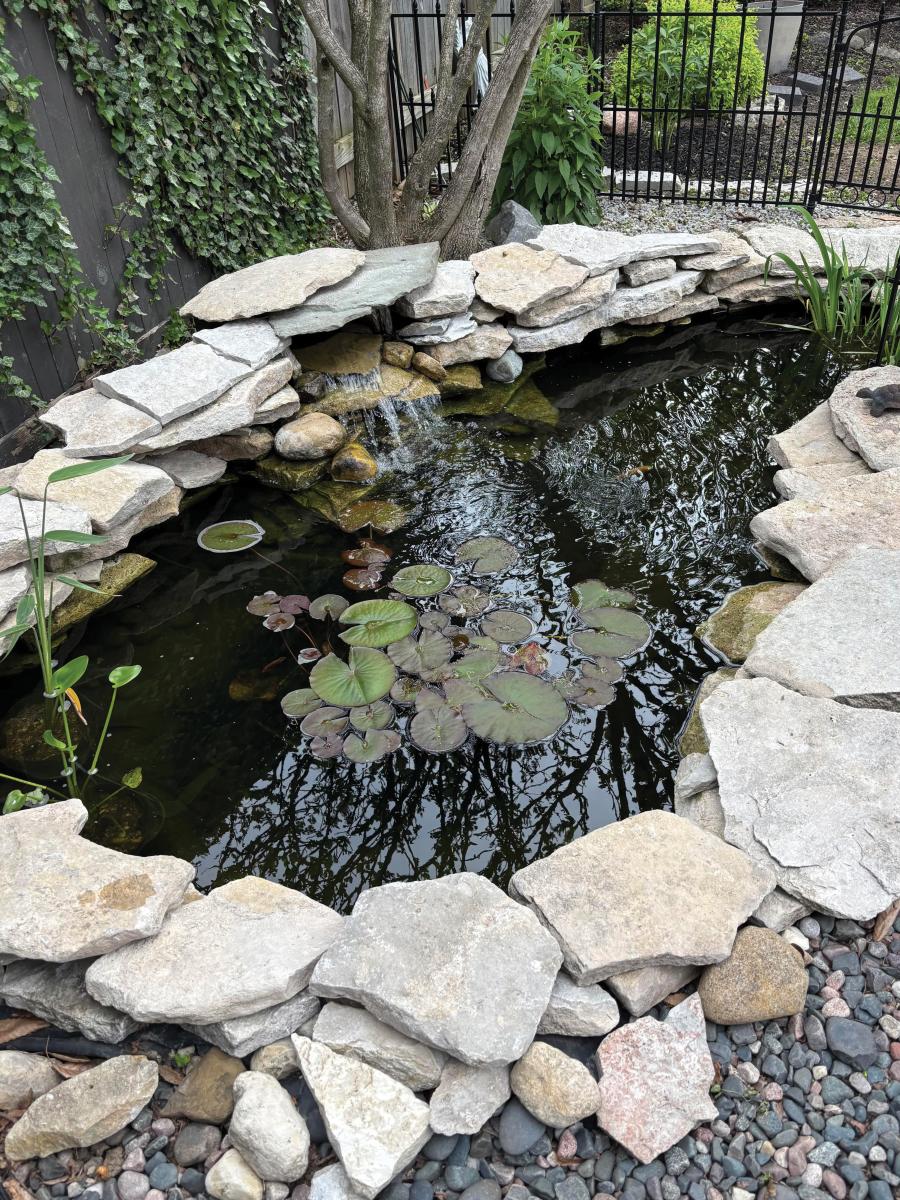
When we moved into our house nearly three decades ago, there was a small pond in the backyard garden, its shape fixed by a hard plastic liner. The pond was choked with excess vegetation that hid, somewhere in the depths, a small pump that did not pump.
Yearning for the sound of running water and croaking frogs in our suburban backyard, we put rebuilding that pond at the top of our to-do list. Since money was tight and we were up for a challenge, we did it ourselves — removing the old, cracked pond liner and starting from scratch.
It was physically demanding work, and it took some trial and error to balance our water chemistry, but for more than two decades now, the pond has provided a visual and audible centerpiece to our landscape.
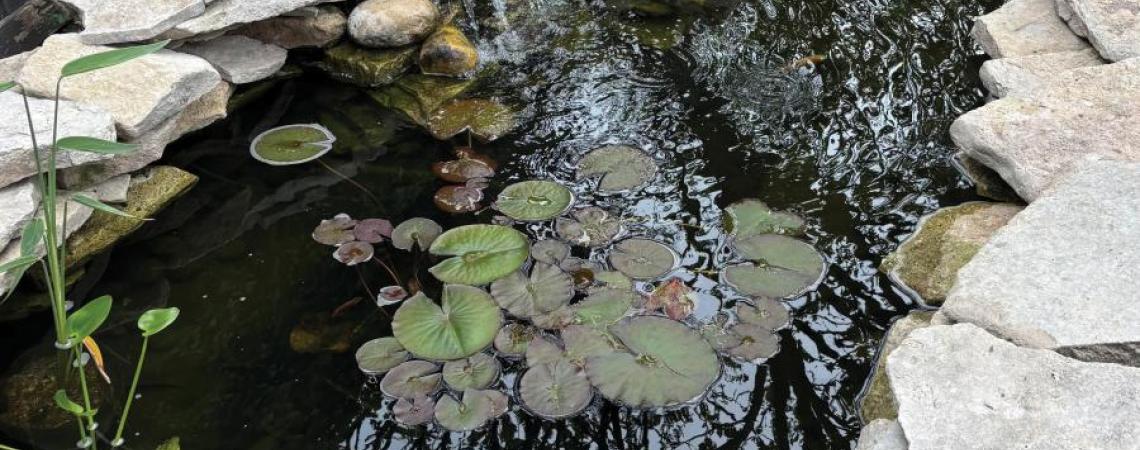
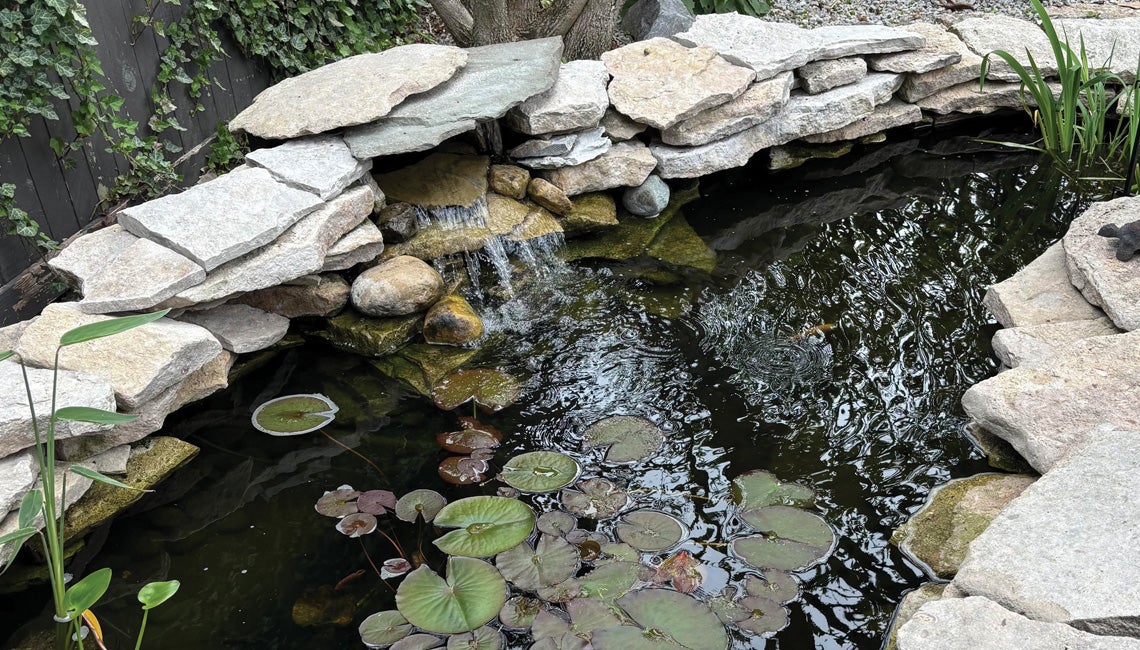
Even a small pond adds beauty and interest to a backyard.
Even a small pond adds beauty and interest to a backyard, says Justin Miller, general manager of Aquarium Adventure in Columbus, and for the homeowner, an added value is “stress relief.”
“You sit out there with the sound and the movement of the water and it just relaxes you,” he says.
You can hire a landscaper or a company like Aquarium Adventure to install a backyard pond, but if DIY projects spark joy for you, a small backyard pond is a doable project — as long as you have a strong back (or some friends who do). Digging the basin is the hardest part of the project, Miller says, so many times, homeowners will hire an excavator to do that heavy lifting even if the rest of it is DIY.
Miller strongly recommends a full pond clean-out each spring. Empty the water, remove accumulated debris, and clean and inspect the liner. When you refill the pond, be sure to remove the chlorine that occurs in tap water, using a chemical detoxifier or simply by letting the water sit for several days before adding back plants or fish.
Planning a DIY pond?
Here are a few things to consider if you’re thinking about wading into a pond project of your own:
Check local regulations: A permit may be required, especially if your pond will be more than 1,000 square feet at the surface. Community rules differ everywhere, though, so call before you dig. That goes for the utilities, too — dial 811 and have your utilities marked so you can avoid buried water, gas, and electric lines.
Choose a spot: Do you want to gaze out on your pond from your patio? Or practice the Japanese garden principle of miegakure (hide and reveal) and tuck the water feature behind some shrubbery, so that visitors will discover it as they walk through your yard? Either way, you’ll need an electricity source nearby, for aeration.
Aeration: Fountains or waterfalls will keep water moving, prevent mosquitoes, add oxygen to the water, and provide a pleasing murmur and splash to your pond. Some pumps are submerged in the deepest part of the pond, while others hang at the pond’s edge, doing double duty by skimming out debris. Do some research and pick the best setup for your needs.
Decide your depth and shape: If you want fish, you’ll want the water at least 2 feet deep — 3 feet for larger species like koi. Gently sloping edges will encourage frogs to visit, but fish love tadpoles, so many people choose either fish or frogs, not both.
Choose a liner: Soft-sided liners will conform to the basin you dig, they’re easy to install, and Miller says 45-mil liners like those sold in his store will last decades. Preformed shell liners offer ease of installation, a clean look, and resistance to puncturing by rocks, roots, or animal burrowing.
Pond chemistry is key: Proper pH levels are key for fish and plant health. Excess nutrients will cause excess algae to grow, turning the water an unsightly green. Test your water regularly and use barley bales, chemical algicides, or UV sterilizers to keep your water clear.
Add some plants: Pond plants add beauty, provide shelter for fish, and can help balance water chemistry. Options include submerged plants, floaters, and marginals. Many are perennial and can be sunk to the bottom of the pond to weather the winter.
Mosquito-proof your pond: Proper aeration helps. Fish will eat mosquito larvae. Consider biological additives to the pond that will kill larvae but not harm fish or frogs.