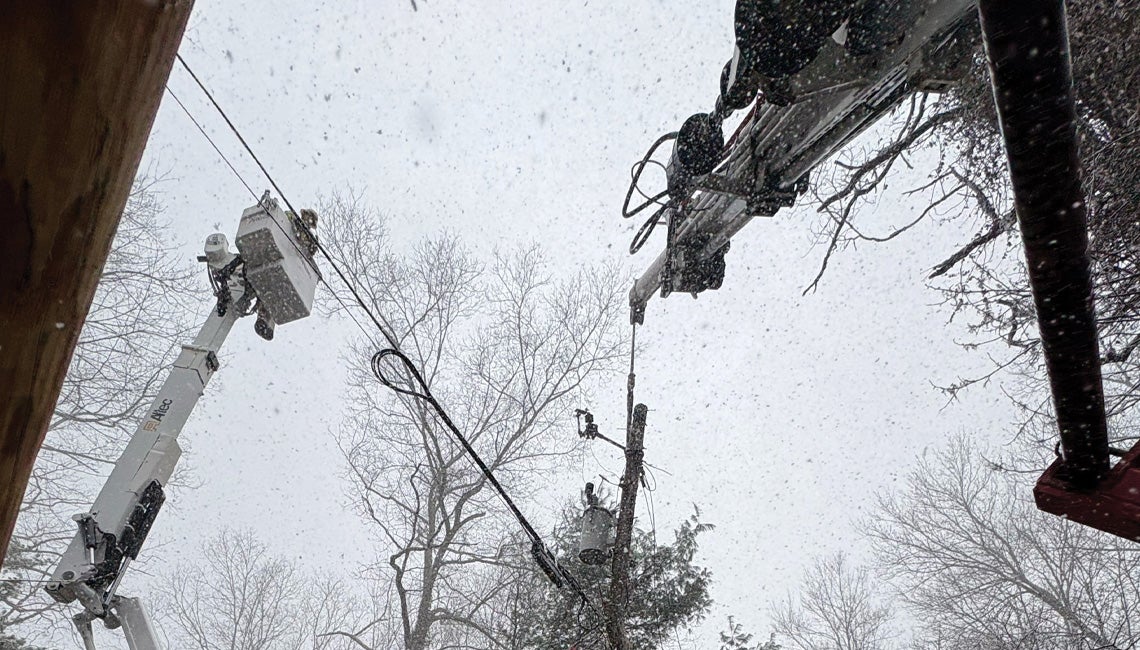
Appropriately, spring’s swift, early arrival in Ohio this year came on a Friday the 13th. A fast‑moving low‑pressure system tore across the state this past March, unleashing widespread damaging winds. The National Weather Service measured sustained winds up to 40 mph, with gusts as high as 85 mph.
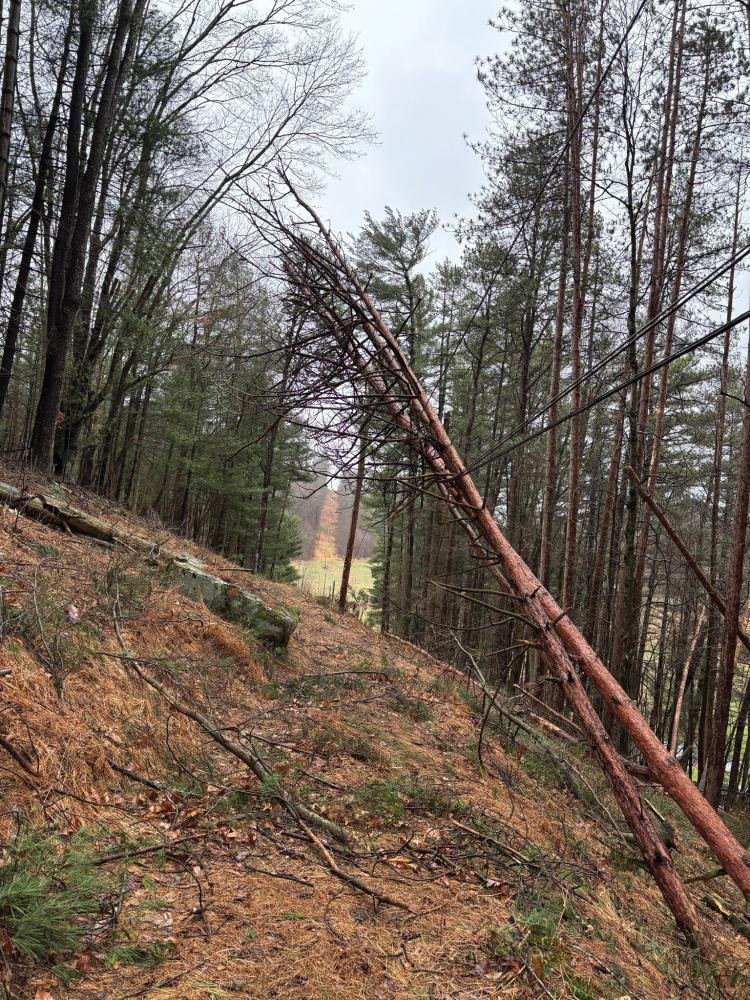
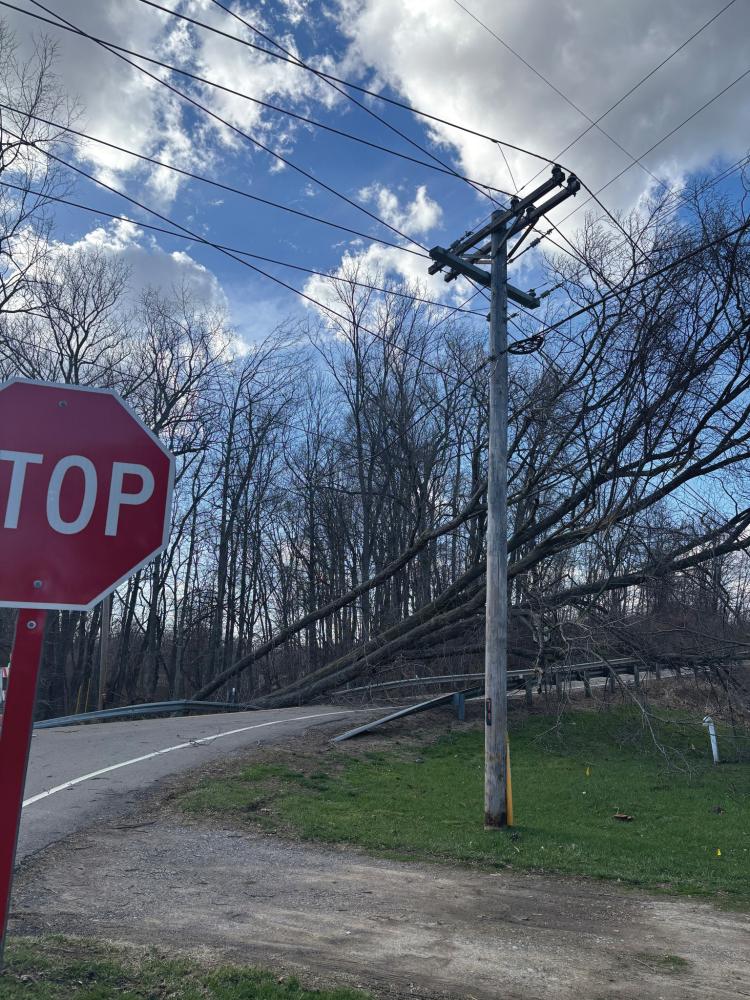
Trees, with root systems anchored in ground already waterlogged from previous rain, could not stand up to the sudden blast, and very quickly, power outages began to mount. At the peak of the storm, more than 600,000 homes and businesses were without power in Ohio; 88,000 of those were in areas served by electric cooperatives.
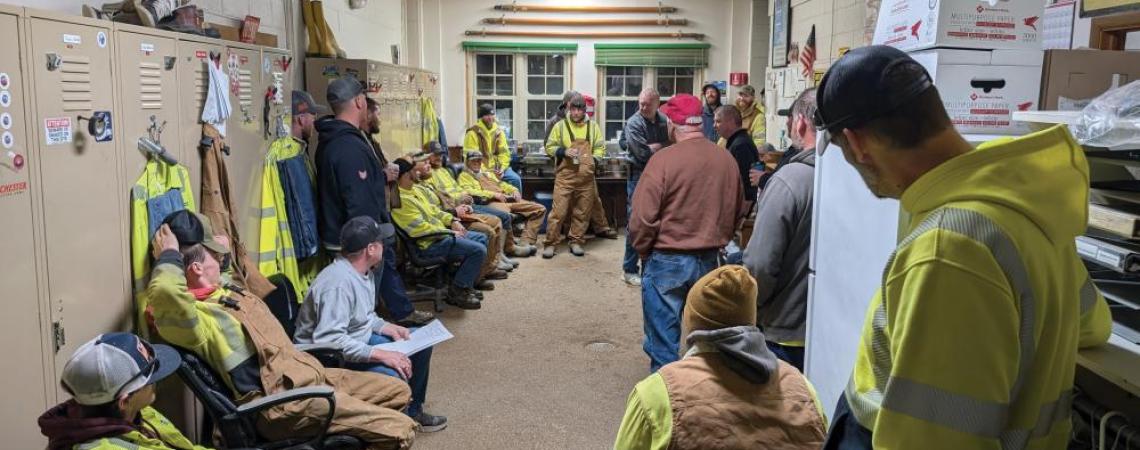
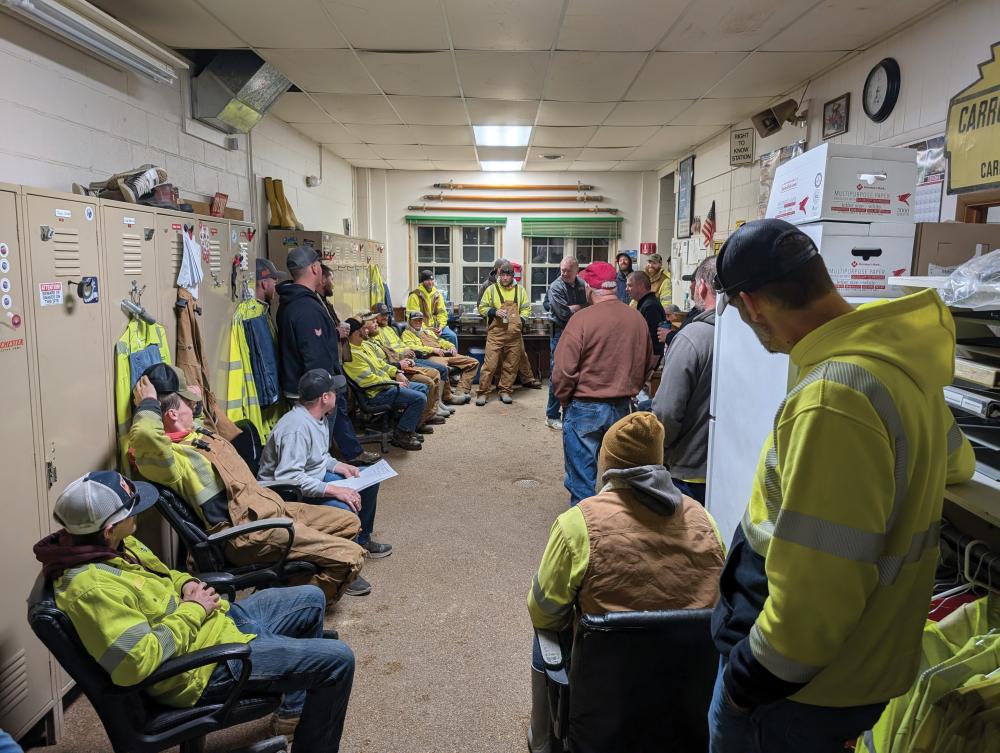
Carroll Electric Cooperative line crews pay close attention at the morning safety briefing before heading out for a long day on Saturday.
11:52 a.m., March 13: Trouble begins
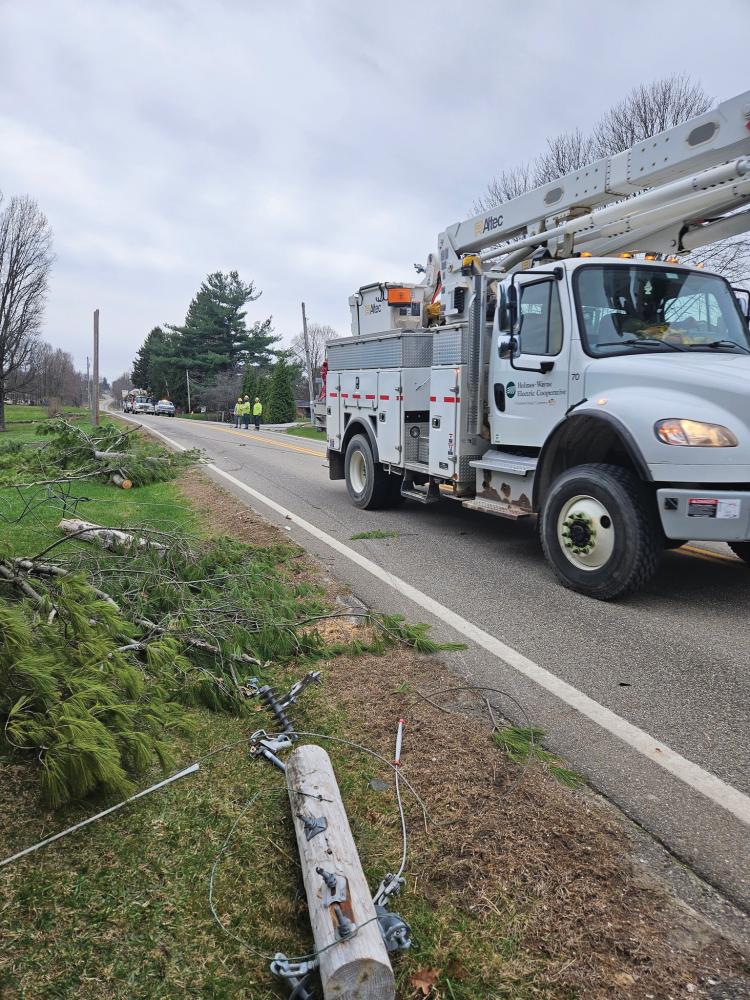
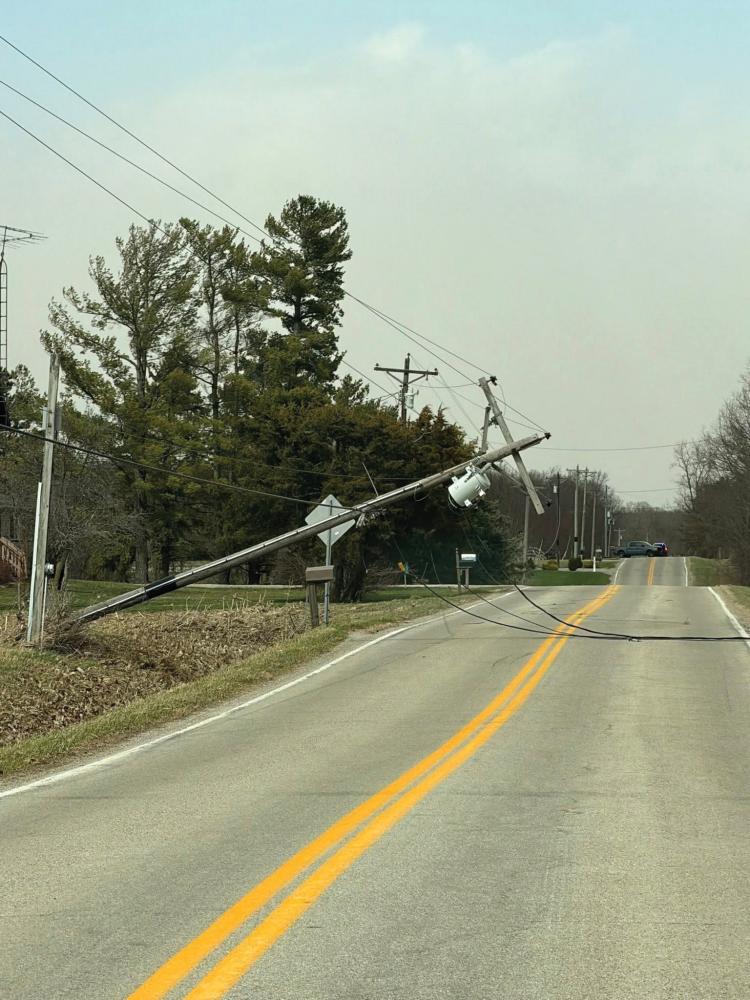
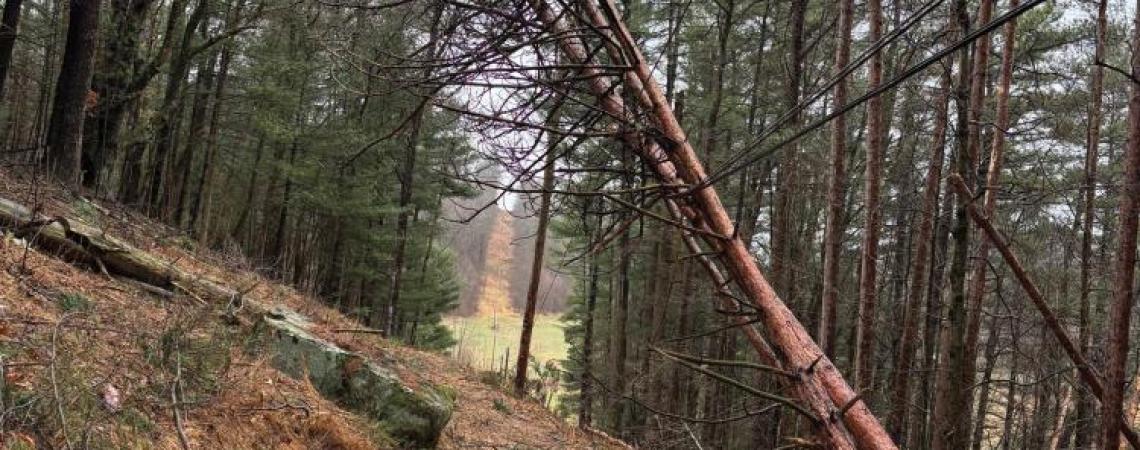
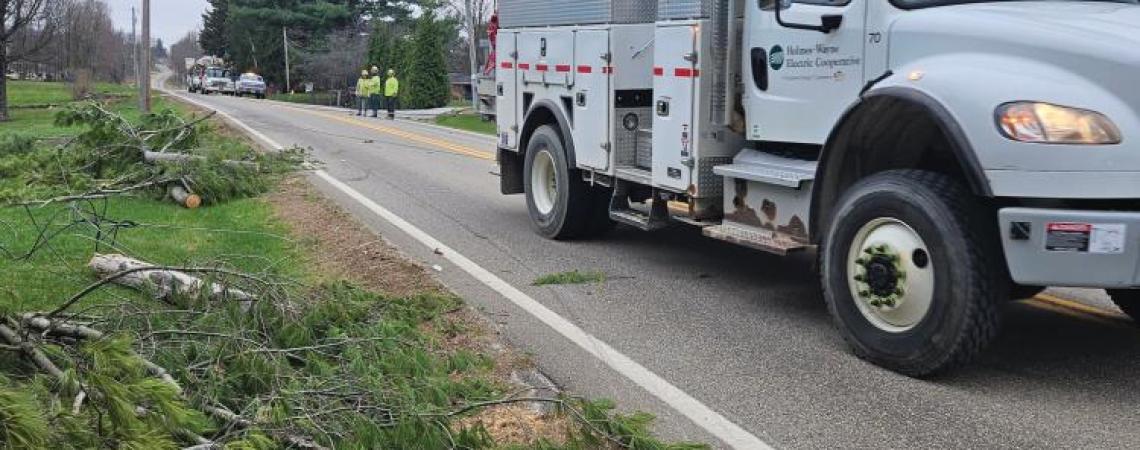
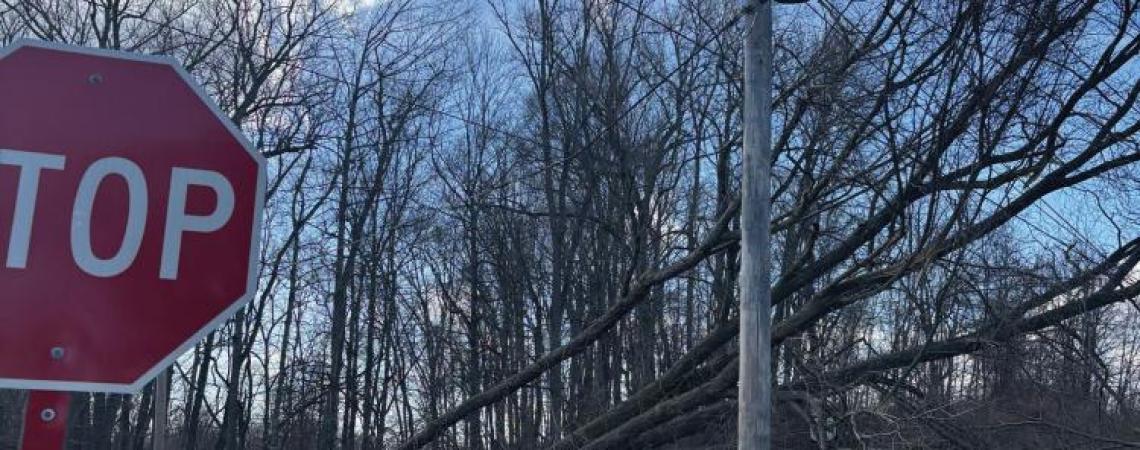
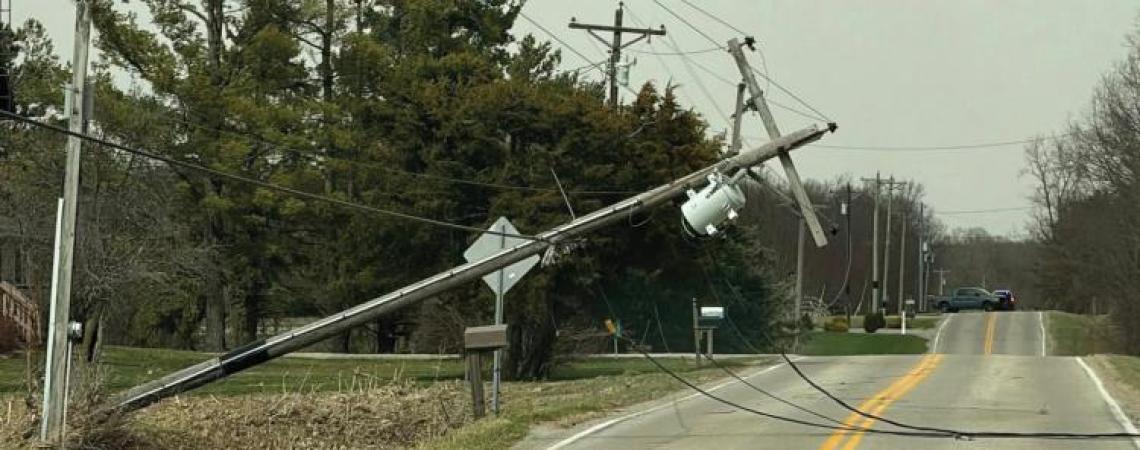
In Millersburg, in eastern Ohio, reports of outages started coming in to Holmes‑Wayne Electric Cooperative around noon. “The numbers escalated quickly through the afternoon,” says Robyn Tate, the co-op’s vice president and chief administrative officer, noting that the hardest-hit areas were also the most rural. Large trees came down and numerous poles snapped under their weight.

By midnight, 10 of the co-op’s 19 substations were without power from the transmission provider, and 11,000 of the co-op’s 18,000 members were in the dark.
Holmes-Wayne was not alone. Nearly all of the 24 co-ops in Ohio experienced outages from these high winds; seven were hit hard enough that they sent out a call for help. Ohio’s Electric Cooperatives’ statewide office had already jump-started the process of accessing the damage and coordinating mutual aid.
6:37 p.m., March 13: Peak of the storm
By the time the statewide co-op outage number peaked just after 6:30 that evening, it was clear that co-ops were looking at a multi-day restoration effort. More than 11,000 of the 28,000 members of The Energy Cooperative in Newark lost power. Paulding Putnam, the Paulding-based co-op, reported some 50 poles down across its service territory.
Because so many Ohio co-ops were occupied with their own systems, line crews had to be called in from out of state to help, as well. “It’s a process that’s been in place a long time,” says Chris Napier, director of safety training and loss prevention at the Ohio statewide office, who coordinated the mutual aid effort. “Co-ops are always prepared to assist.”
The scale of the mutual aid was immense
- Ohio: 37 lineworkers from 11 cooperatives
- Indiana: 34 lineworkers from 14 co-ops
- Kentucky: 9 lineworkers from 2 co-ops
- Virginia/Delaware/Maryland: 8 lineworkers from 2 co-ops
- 36 bucket trucks
- 9 digger derricks
March 14–18: Dangerous, demanding work
“Restoration after a windstorm of this magnitude is rarely straightforward,” Napier says. “Downed trees and remote locations make it tough for crews to get where they need to go, and they’re never really sure what they’ll find when they do get in there.”
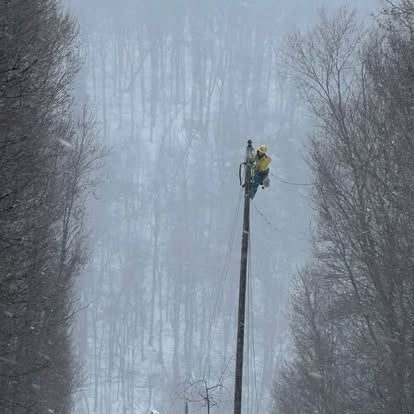
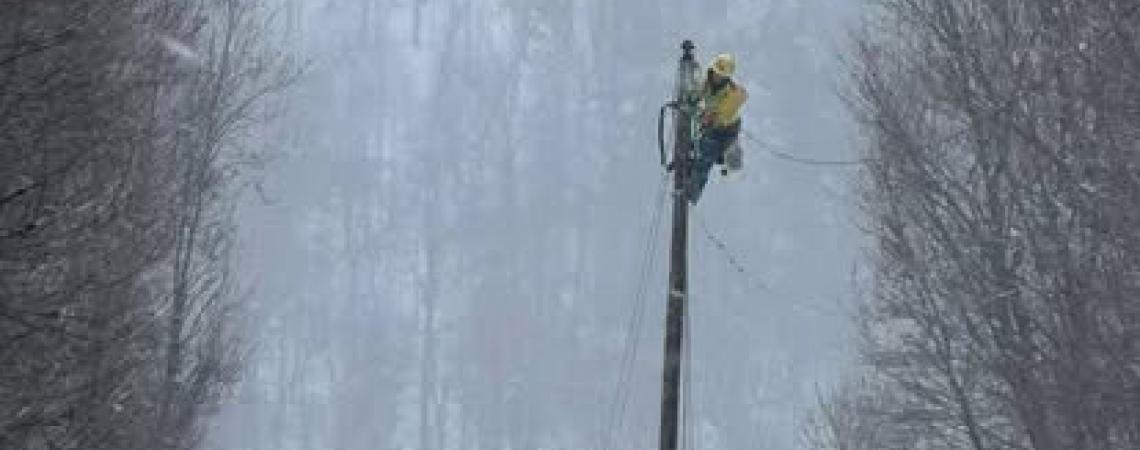
Rugged terrain can compound that challenge. At Holmes-Wayne, for example, crews often had to haul equipment by foot into areas unreachable by trucks. “The work was extremely labor‑intensive just to get to some of those remote locations,” Tate says. “Then when they got there, since they couldn’t get a truck into the work zone, that meant they were climbing poles — and even though they make it look easy, if you’ve ever tried that, you know it isn’t easy.”
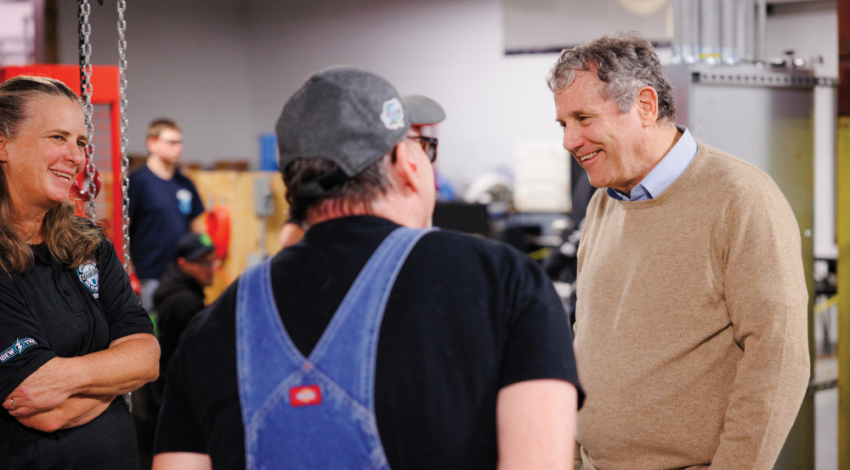
Casey McVicker, member services manager at Guernsey-Muskingum Electric Cooperative, says more than 30 poles had been broken and over a third of the co-ops’s nearly 18,000 members lost power. Mutual aid crews started at the New Concord office for a safety briefing and onboarding, then were partnered with GMEC employees —”birddogs” — to help them navigate the unfamiliar terrain and maximize safety. “It would have taken probably twice as long to restore power if not for the help of our sister cooperatives,” McVicker says.
Small moments, lasting impact
Amid the heavy damage, difficult conditions, and long hours, there were lighter moments — scenes that captured the cooperative difference.
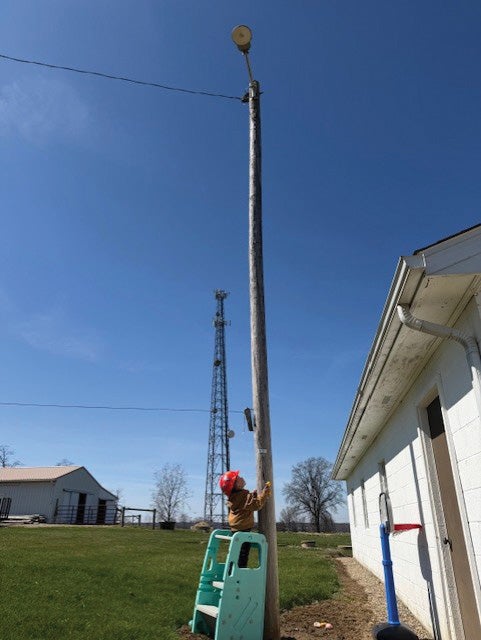
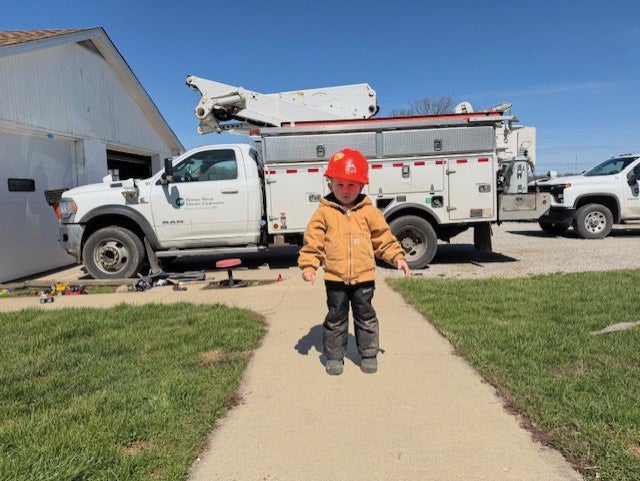
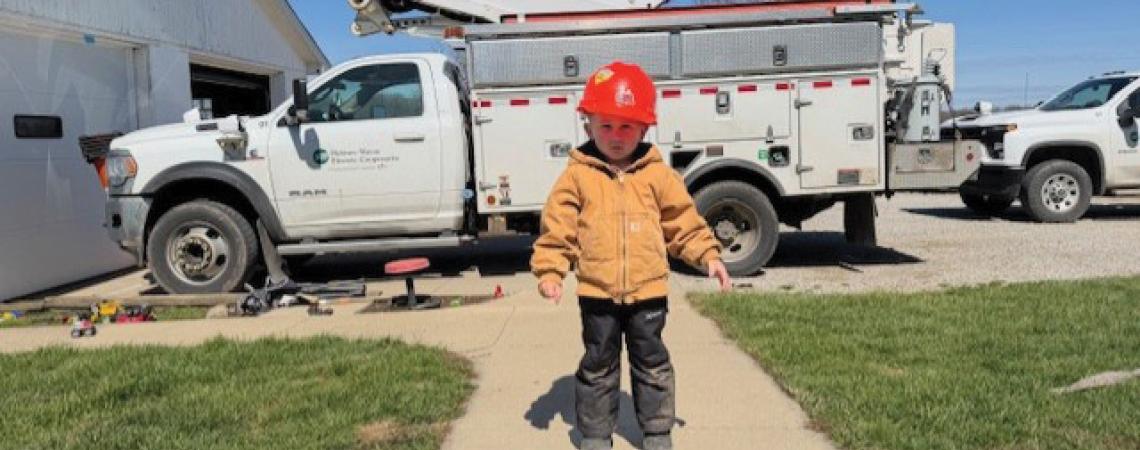
When Holmes-Wayne crews stopped to repair an outdoor light at a member’s home, for example, the Bryant family’s curious 3‑year‑old, Frank, watched linemen Cody Spreng and Josh Johnson do their work. They took a few minutes to talk with him, show him what they were doing, and answer everything they could, and the interaction sparked something bigger. “Frank walked away inspired,” his mom shared on social media, touched by the patience and kindness. She said the moment ignited his imagination in a way she couldn’t have on her own.
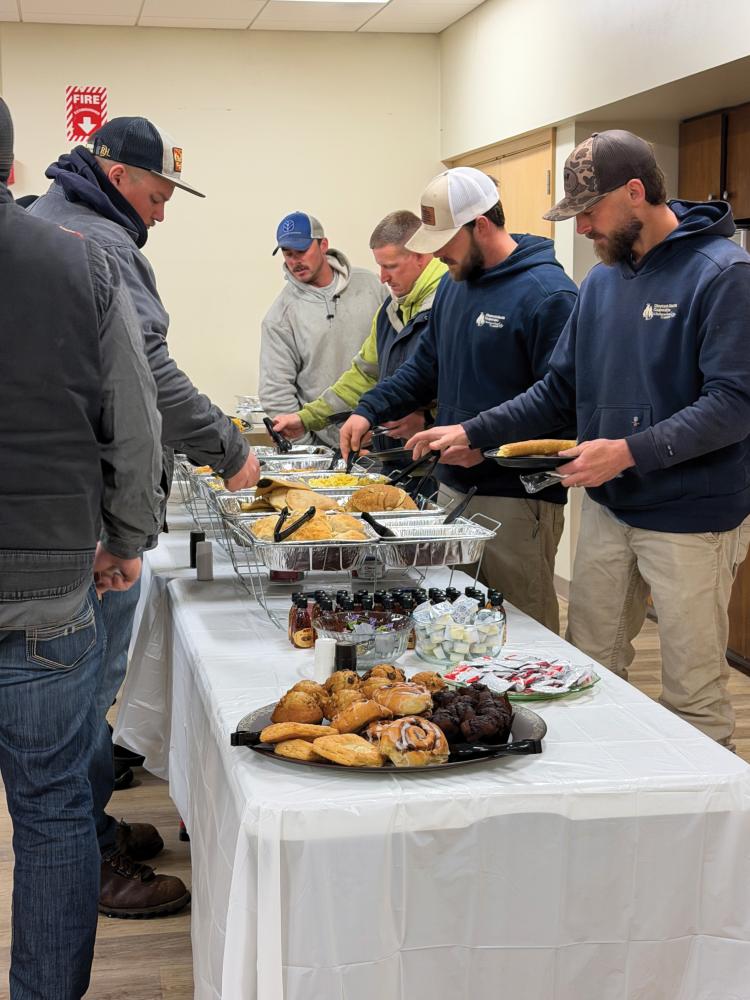
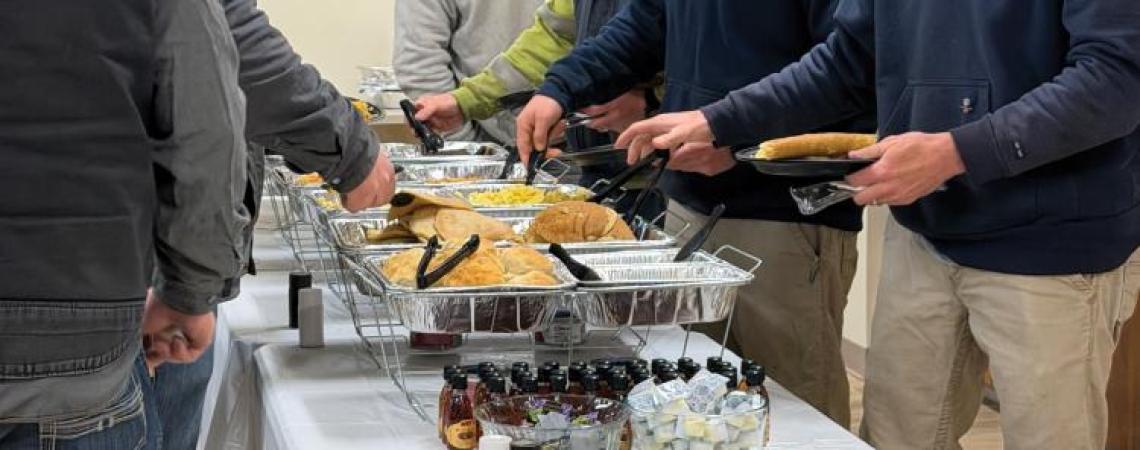
As the crews battled exhaustion and difficult conditions, cooperative communities responded with overwhelming support. Co-op staff and even some members volunteered time and donated food to keep the crews fed. Lunches were delivered to job sites.
“We always get snacks and drinks dropped off for our linemen, and a full meal is provided every morning and evening for everyone working to get the lights back on,” Tate says.
Safety is non-negotiable
But it’s more than food. The pressure to get power back on for members is real, and crews worked 16-hour days, racing daylight and even more wind and weather in the days following the storm.
So those little moments serve to remind line crews just why they do what they do. And all the words of encouragement from members — in person and online — mean just as much. Nearly all the cooperatives impacted received dozens of “thank you” posts on their Facebook pages from their members, even those still patiently waiting for power to come back on.
In all of that, Napier says line crews’ commitment to safety never wavered. “Safety is non‑negotiable, period,” he says. “The goal at the end of every day is to get everyone back home safely.”
March 18: Restoration complete
Five days after the storm, power was restored to the last members who had still been in the dark because of the storm. Napier marked the occasion with a congratulatory message to those from across the state and beyond who had taken part in the effort. You could sense the pride in the work and gratitude for the safety of all those involved.
“Poles have been planted in the ground, wire pulled in the air, and time sacrificed away from family and friends to bring us to this point,” Napier wrote. “WELL DONE!!”