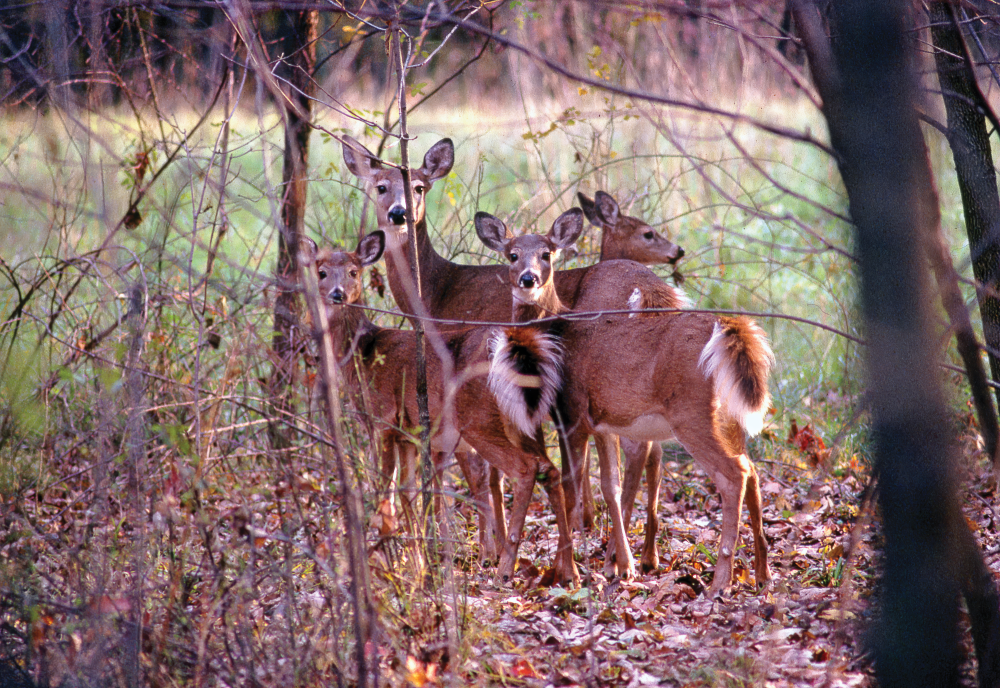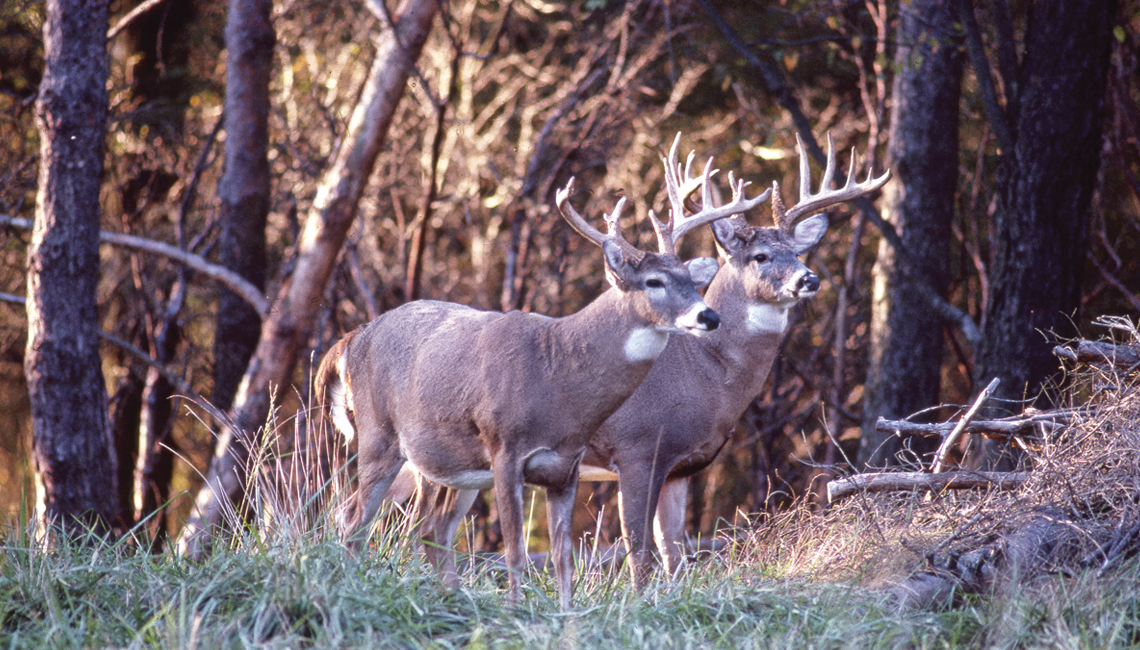
White-tailed deer add an intrinsic value to the landscape — almost everybody likes to watch them. They’re also good for business; hundreds of thousands of Ohioans (plus many thousands of nonresidents) enjoy hunting, and deer are the largest contributor, as recreational hunting adds roughly $2 billion annually to the state’s economy.
In fact, according to Clint McCoy, deer biologist with the Ohio Department of Natural Resources, Division of Wildlife, it’s likely that we have more deer on the landscape now than ever before.
As unbelievable as it may seem today, however, there was a time in relatively recent Ohio history when there were no wild white-tailed deer living within the state. The entire original deer herd was extirpated in 1904 as the result of habitat loss (mainly from deforestation) and unregulated hunting.
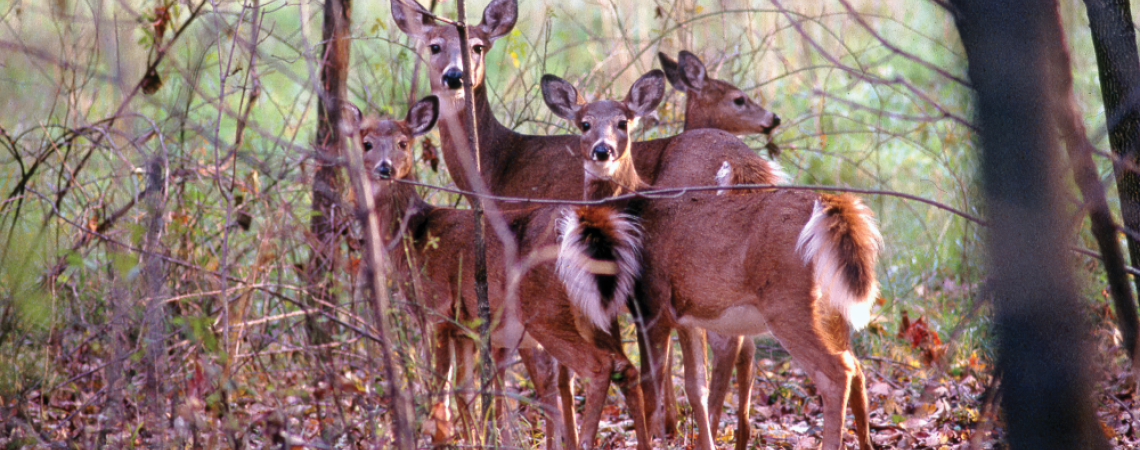
There are two diseases affecting the herd simultaneously: chronic wasting disease and epizootic hemorrhagic disease. Each affects the deer population in different ways — they each have different causes, cause different symptoms, and incubate over different time periods. Both are deadly.
But as forests once again began growing in Ohio during the early part of the 20th century, deer gradually returned along with them, only this time with strict hunting regulations in place to protect the herd. Fast forward to today, and whitetails are so numerous that they are common not only in rural areas but also in suburbs and even large cities.
Now, change is again on the horizon. How extensive it becomes is yet to be seen, but as the various annual Ohio deer hunting seasons begin opening this month, hunters should check the regulations for any changes from last year before heading out.
The herd’s wildly successful comeback story is, in fact, part of a growing problem. Anytime a wildlife population becomes unusually high, diseases often step in to cull its numbers, and Ohio whitetails have been in the midst of a growing epizootic (the animal world’s version of an epidemic) for the past several years.
In fact, there are two diseases affecting the herd simultaneously: chronic wasting disease and epizootic hemorrhagic disease. Each affects the deer population in different ways — they each have different causes, cause different symptoms, and incubate over different time periods. Both are deadly.
To get the latest information on the situation, I contacted ODNR’s McCloy, whose full-time job is studying and monitoring Ohio whitetails. Turn the page for the revealing results of our question-and-answer interview.
What are the symptoms of a deer that has contracted one of these diseases?
Chronic wasting disease
“Visible symptoms are absent for much of the time a deer is infected. The incubation period — the time from infection until deer show symptoms — is notoriously long, typically 16 to 24 months. That means infected deer live pretty normal lives for quite a while, which is not a good thing for containing disease. During a majority of the incubation period, infected deer shed the infective agent (a rogue protein called a prion) into the environment through various fluids and excrement. The prions can remain infectious in the environment for years. Once a deer becomes symptomatic, it is typically a quick downhill slide to death. If a deer is observed during this short time window, it will likely show signs of neurologic impairment, emaciation, drooling, etc.”
Epizootic hemorrhagic disease
“Deer infected with EHD typically begin showing symptoms within five to 10 days. For deer that have little resistance to the virus (presumably most deer in Ohio), they will usually be dead within two days of the onset of symptoms. Symptoms of EHD include respiratory distress; swollen head, neck, tongue, eyelids; extremely high fever causing behavioral changes such as disorientation and lack of fear of humans; and bloody discharge from nose/mouth. Extremely high fever often causes deer to seek water sources to try and regulate their body temperature. Also, extreme dehydration due to internal hemorrhaging could be a reason deer seek water when infected.”
What regions of Ohio have been affected by these two diseases?
Chronic wasting disease
“Despite statewide surveillance since the early 2000s, we have only detected CWD in a handful of counties, north of Columbus. The first CWD-positive deer was detected in 2020. Forty white-tailed deer taken during the 2025–26 Ohio hunting season tested positive for CWD. A total of 6,617 deer were tested, with positive CWD samples detected in Allen, Crawford, Hancock, Hardin, Marion, and Wyandot counties. We maintain a publicly available CWD dashboard that includes this information.”
Epizootic hemorrhagic disease
“This seasonal disease can show up really anywhere in the state in any given year. The virus is transmitted by an insect vector, so presence/abundance of the insect has a primary role in determining the location and severity of disease outbreaks. In 2024, EHD was most impactful in northwest Ohio (Defiance and Paulding counties). This past year saw the most significant outbreak we’ve ever recorded, centered on a four-county area in southeast Ohio.”
How did these two diseases spread to Ohio?
Chronic wasting disease
“We don’t know how CWD first entered Ohio or where it did. However, given that the disease agent is a non-living protein and can remain infectious in the environment, there are a number of ways these prions can be moved across the landscape. For instance, an infected carcass brought in by a hunter from another CWD area and discarded on the landscape; hay or other material contaminated with CWD prions that was shipped to Ohio; an unusually long excursion by a live deer from an existing CWD-positive area (the closest would be southern Michigan). We can speculate on the probabilities of each of these or other scenarios, but we will never know for certain.”
Epizootic hemorrhagic disease
“The primary mode of spread of this disease is changes in the environment. The virus has been present in the southern U.S. for likely hundreds, if not thousands, of years. Since the 1980s, researchers have noted that the virus has slowly moved northward as conditions became more favorable for the insect vector (warming temperatures). Since the virus can infect cattle (though rarely cause any symptoms), shipping cattle from EHD-endemic areas can be a mode of introduction in some years. The cattle arrive healthy but carry the virus, so that when an insect midge bites the cattle, the cows obtain the virus and can then transfer it to deer. Researchers believe that biting midges can pass the virus to their offspring and the larvae can overwinter in Ohio, then emerge the following summer and infect deer with the virus. A long cold stretch of weather, like we had this past winter, may prevent this mode of transfer from happening this year.”
How will these two diseases affect the Ohio deer herd in the long term?
Chronic wasting disease
“In areas where CWD has been found, it increases in prevalence (the percentage of deer that are infected goes up) and spreads geographically. Recent research suggests that population declines are likely to occur when prevalence increases beyond a certain threshold. In Wisconsin, research suggests this threshold is about 28 to 30 percent prevalence among adult females. Ohio is quite a long way, a decade or more, from reaching those levels, but there is nothing to suggest Ohio won’t get there eventually. Research from northwest Arkansas is showing a population decline of about 17 percent per year in an area with high CWD prevalence.”
Epizootic hemorrhagic disease
“Long-term impacts to deer populations are unlikely due to EHD. It can cause sudden and dramatic decreases in local deer populations, but because the disease is temporary and transmission ceases with the onset of cold weather, deer populations get a reprieve and bounce back from these outbreaks rather quickly. In most cases, populations return to pre-outbreak levels within three to five years.”
Is it safe for humans to eat venison from an infected deer?
Chronic wasting disease
“It is never recommended to eat a deer that appears sick or unhealthy. That said, in the case of CWD, the national Centers for Disease Control recommends that if hunters are hunting in an area of known CWD occurrence, they test any deer they harvest; and if that deer tests positive, not to consume it. This guidance is out of an abundance of caution, since CWD is of the same family of diseases that caused mad cow disease. However, there has been no link between CWD and human disease to date.”
Epizootic hemorrhagic disease
“EHD is a virus that affects ruminants (deer, cows, sheep, etc.); humans are not susceptible. Additionally, given the timing of EHD outbreaks (mostly prior to Ohio deer-hunting seasons) and the likelihood of an Ohio deer surviving infection, it is not likely that a hunter would have an opportunity to harvest a deer with an active EHD infection.”
To see ODNR’s CWD dashboard and a map of Ohio’s Disease Surveillance Area and its regulations, or to have a deer tested for chronic wasting disease, visit www.ohiodnr.gov/cwd. For information on EHD and an interactive map showing locations of the EHD outbreak or to report a dead or sick deer, click here. If you have further questions, call 1-800-WILDLIFE or email wildinfo@dnr.ohio.gov.