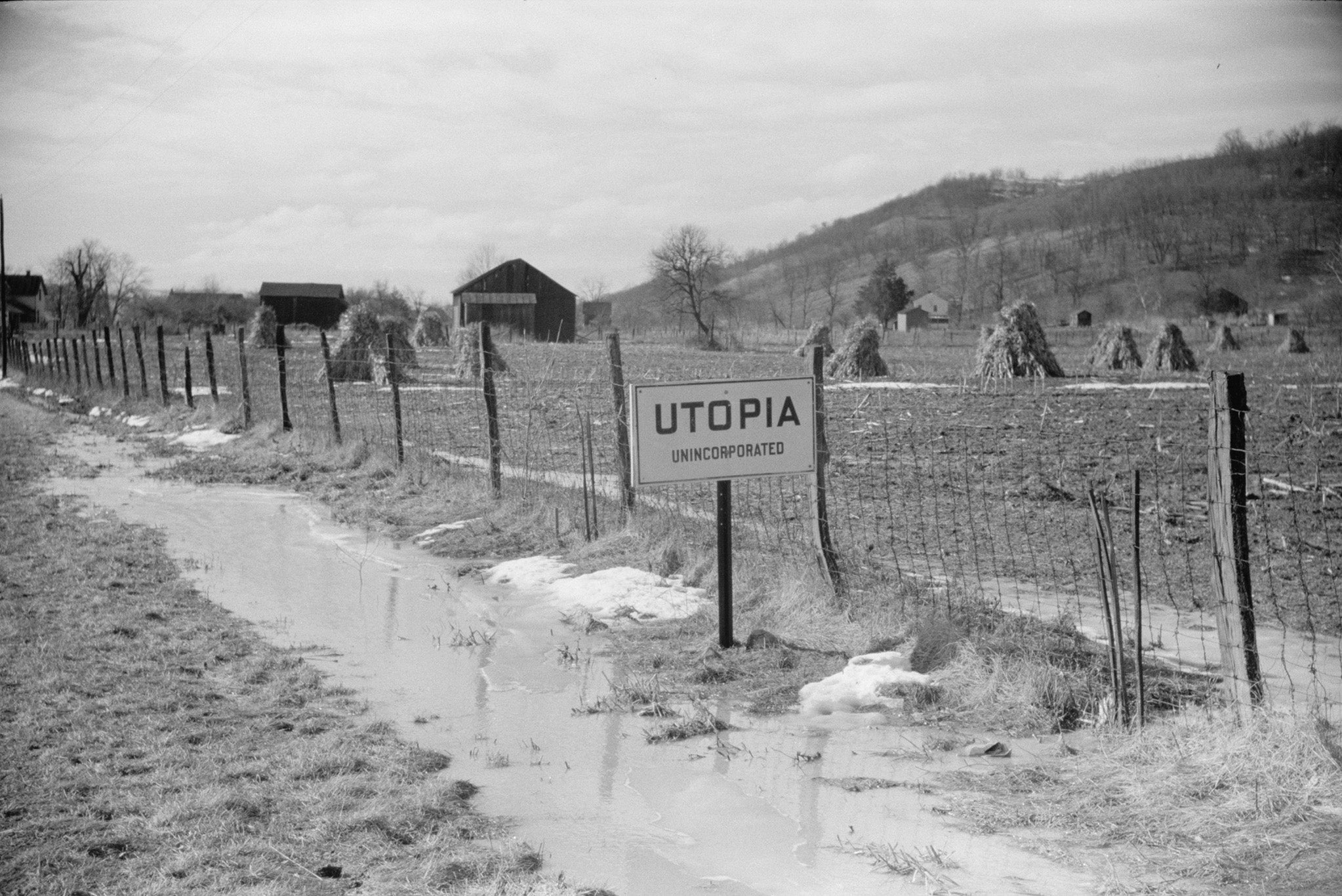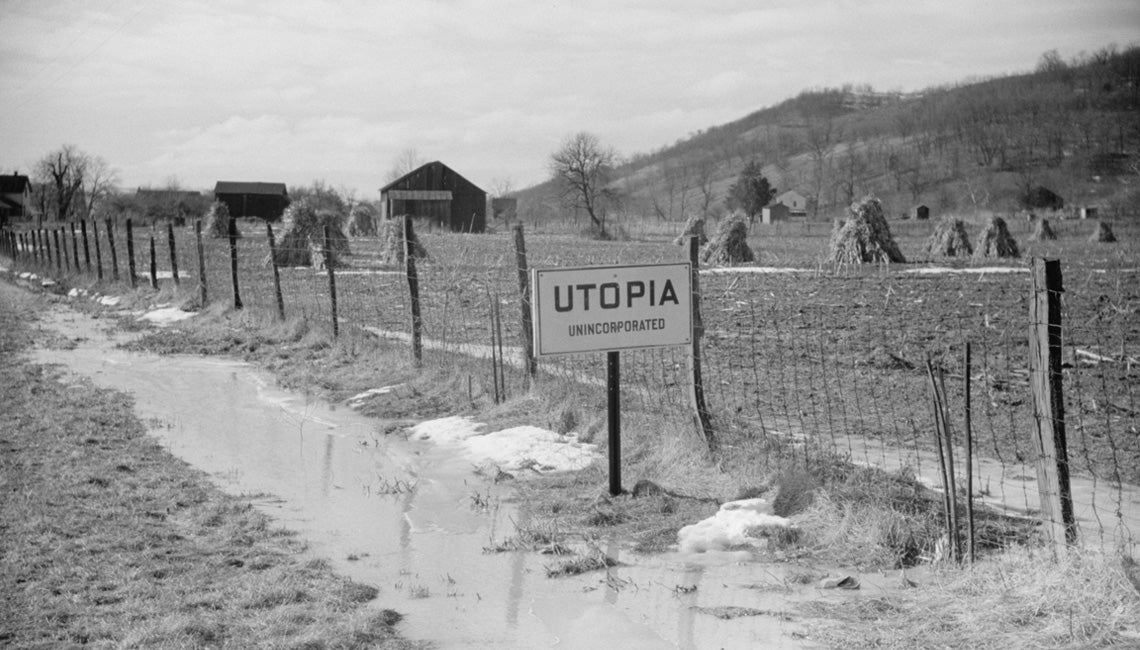
Communes, seeing how they are often made up of individuals who possess a similar innate trait (generously called “self-interest”), always fail. Maybe one of the most convincing bits of evidence for that is Utopia, an unincorporated dot on the Ohio map about 35 miles southeast of Cincinnati.
Belying its lofty name, Utopia has been home to not one but three failed tries at communal living — one of them with a deadly outcome.

Utopia is an unincorporated dot on the Ohio map about 35 miles southeast of Cincinnati.
The first Utopia
In the 1830s, our still-new republic was a land of religious chaos. New denominations arose and populist movements formed as some folks grew disillusioned with the status quo or frustrated by economic woes.
It was with that as the setting that French philosopher Charles Fourier’s views on communal living began to gain popularity: that everyone should share equally in both the work and the wealth of a community. Fourier-inspired communes called phalanxes began to spring up from New York to Texas.
At about the same time, Ohio was leaving the frontier behind. Having gained statehood in 1803, Ohio was evolving into a land of industry and agriculture — an ideal setting for a phalanx, and six of them formed within its borders. Most notable of those was the Clermont Phalanx, created in 1844 in Clermont County, nestled along a sweeping bend of the Ohio River in the midst of its deliberate northward jaunt toward the Queen City.
Phalanx living was supposed to mean laboring in common and sharing equally in the bounty. In reality, some tended to be “more equal” than others, and residents grew disillusioned in short order. The members of Clermont Phalanx abandoned their vision of social living — and their property — by 1846.
The second Utopia
As the property was being sold, in came John Otis Wattles to scoop it up. These days, when a person is widely identified with a middle name, it often means a crime has been committed. While Wattles wasn’t necessarily a criminal, he certainly exercised poor judgment.
Wattles was an ardent Quaker abolitionist and spiritualist — another fashionable movement in the mid-19th century as folks abandoned traditional religion and sought to commune with spirits of the dead.
He and his 100 or so followers bought out the phalanx commune and renamed it Excelsior. But they made a fatal mistake. They took down the community’s two-story main building, a 30-room town hall with residences and a large communal kitchen and dining room, and rebuilt it downslope, nearer to the river’s edge.
Just as they were finishing that work in December 1847, a flash flood destroyed it, carrying away the souls of at least 17 Spiritualists in the icy river (some estimates of the day put the toll at more than 100). Excelsior was abandoned.
The third Utopia
Soon after the fatal flood, Cincinnati businessman (and noted anarchist) Josiah Warren and a few of his friends bought the property. An inventor, musician, and social reformer, Warren had been a member of the noted socialist commune of New Harmony, Indiana, in the 1830s.
Warren developed what remained of the two previous incarnations of the commune, and it was he who gave the place its permanent name: Utopia.
Though his community took in a number of original phalanx members, Warren took a different tack than the Fourierists and Spiritualists who had made their runs at independent living on the site. Warren held the individual to be the supreme sovereign; basically, all individuals had the right to do exactly as they pleased as long as they were willing to take on the associated costs, be they economic, emotional, or in personal standing.
He also brought with him his experience from his mercantile, the Cincinnati Time Store. “Time” in this case did not imply one could buy products on installments, but rather with the promise to pay with time or expertise, from carpentry to milling to sewing. “Labor notes” — the promise to exchange labor for labor — were the legal tender in Utopia.
The community grew and even thrived for a decade or so, but time proved the experiment, like its predecessors, could not last. Market pressure outside Utopia eventually exerted an economic price that could not be paid in labor notes. Unable or unwilling to maintain the cost system, most of the Utopians sought greener pastures by the 1860s.
Remembering Utopia
Today, Utopia is an unincorporated community with a few dozen residences, a few businesses, and a relatively nice but sparsely used boat landing.
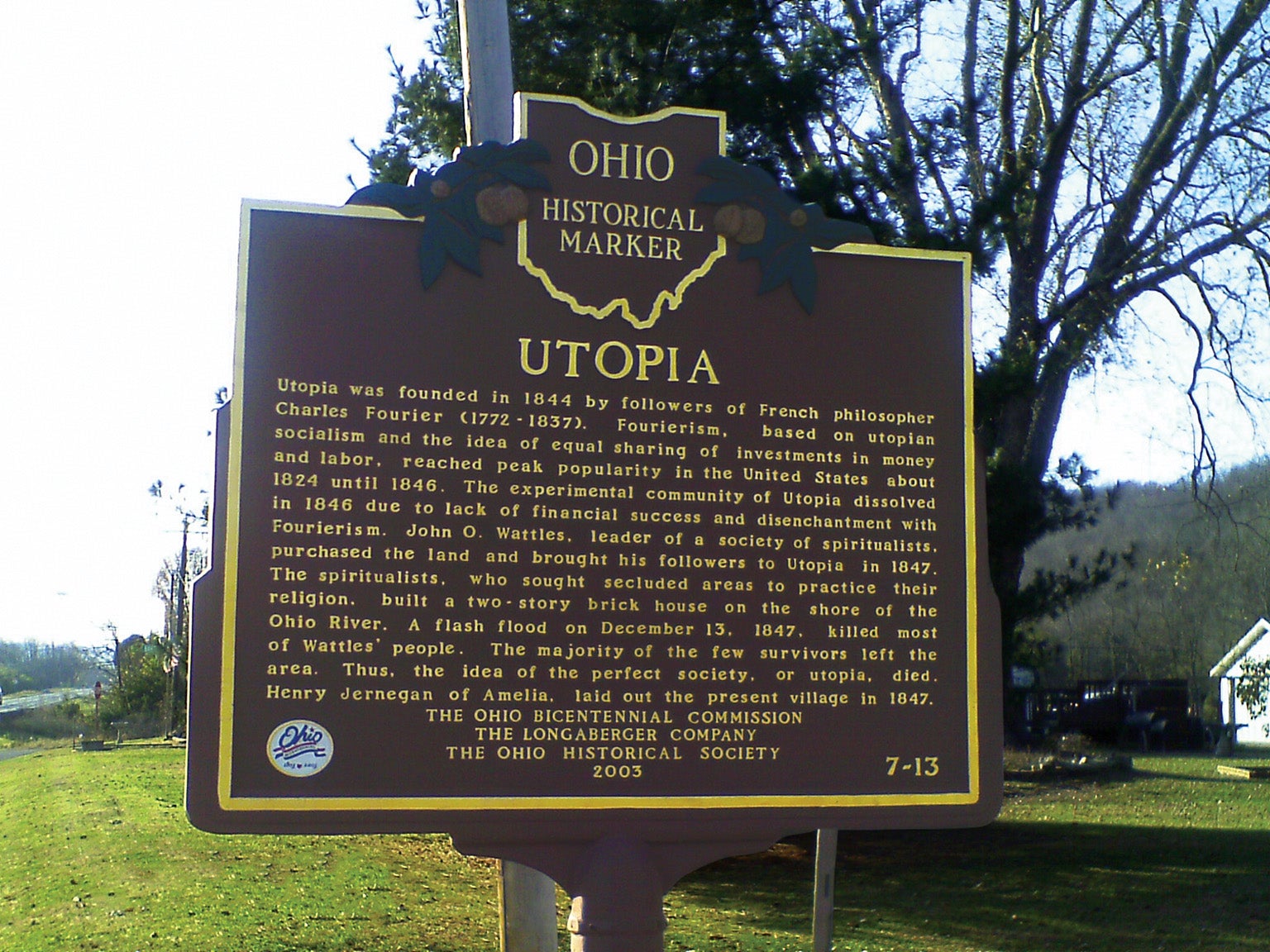
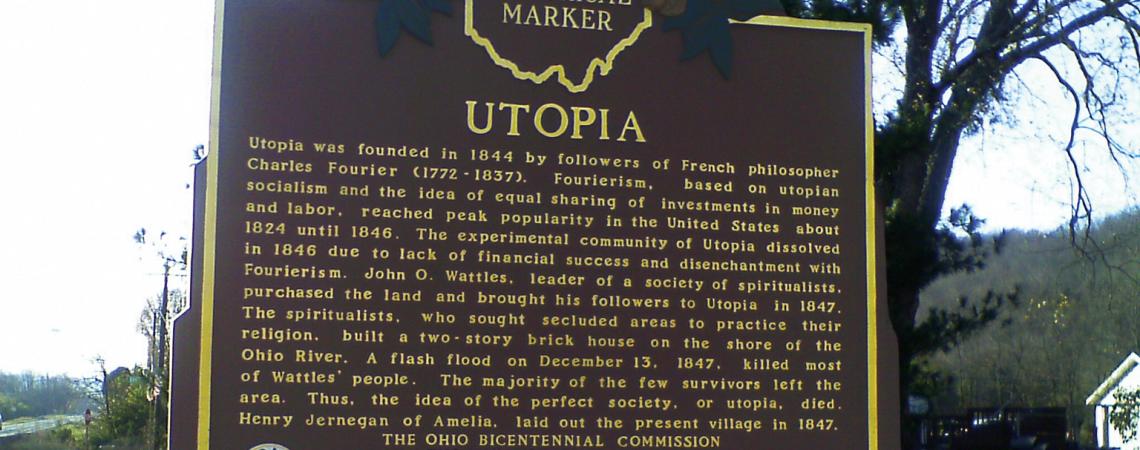
In 2003, the Ohio Bicentennial Commission erected a handsome roadside plaque commemorating Utopia’s unique history.
The incongruity, however, is rich. The sign makes no mention of Warren and his band of utopians, who not only had the most success of any of the communes in attempting to make a more perfect union on the site, but whose endeavors in this chapter of American experience gave the town its memorable name.