The story is well known to anyone familiar with electric cooperatives: People living in rural areas in the 1930s and ’40s couldn’t enjoy the benefits of electricity in their homes and on their farms because bringing power out into the countryside was a complicated and expensive task that for-profit electric companies wanted no part of.
So the people in small communities across the country formed cooperative associations and did it themselves. Electrifying those rural areas wasn’t easy and it certainly wasn’t cheap. To accomplish the task at all, let alone do it both affordably and reliably, required developing, adopting, and using innovative technology.
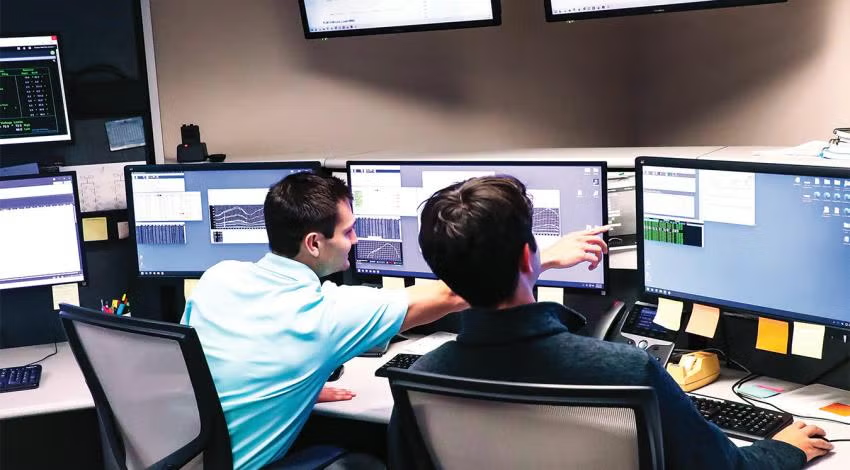
Early on, for example, co-ops developed lighter, less expensive power lines that were able to carry electricity efficiently over longer distances to reach those rural homes. Later, Ohio co-ops were among the first electric utilities in the nation to implement SCADA (supervisory control and data acquisition) systems, which can detect even tiny changes in the flow of electricity through power lines, transformers, switches, and substations so a co-op can head off many potential outages before they happen (or identify and fix them more quickly when they do).

Artificial intelligence can be of use to co-ops because it can scan vast amounts of data faster than any human ever could, then recognize patterns and even suggest solutions.
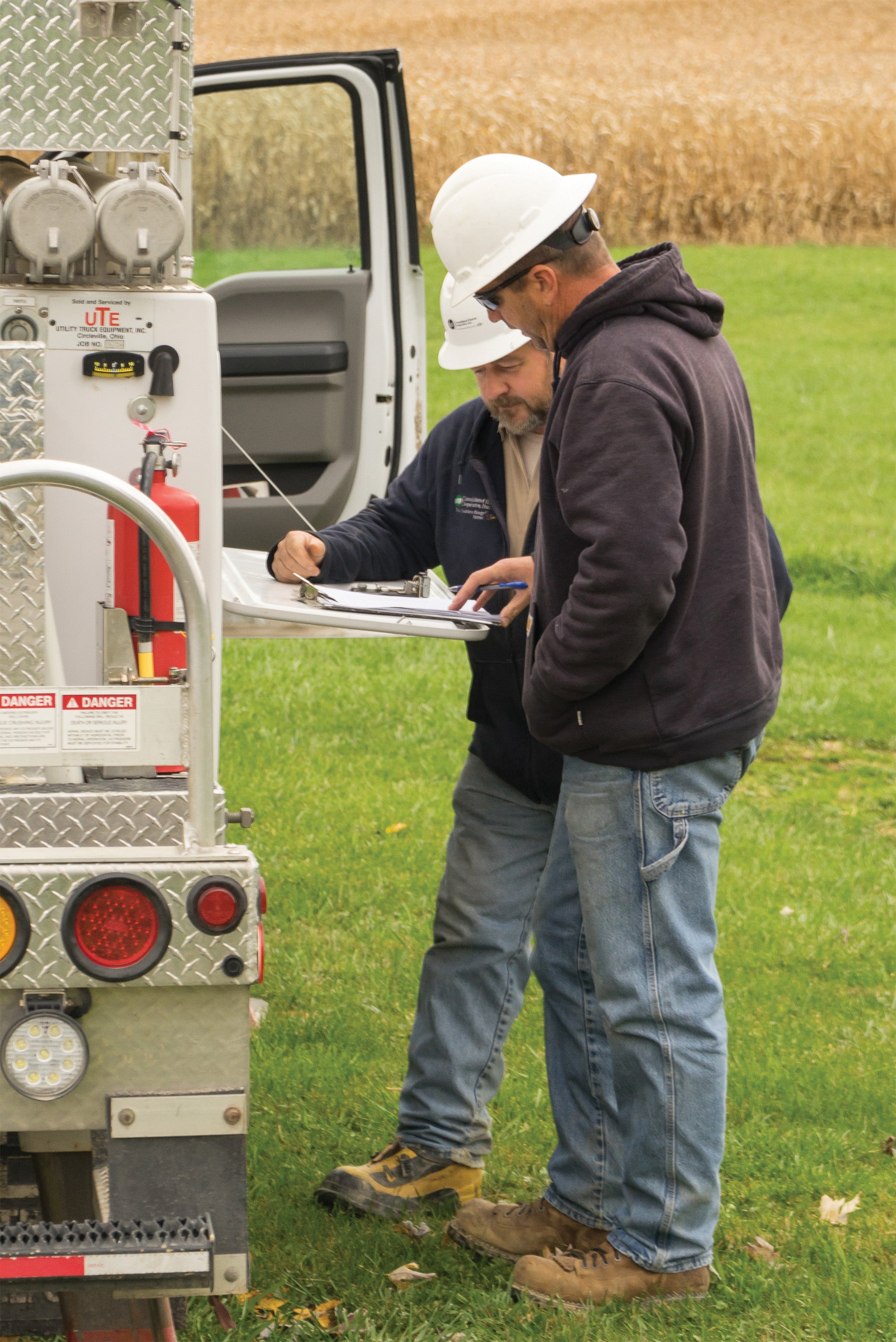
Co-ops were early adopters of AMR (automated meter reading) and AMI (advanced metering infrastructure), which automate tasks as mundane as reading a meter or finding the location of an outage. In a big city, that might take a few minutes for a utility crew, but co-op crews might have to drive for a couple of hours to do the same thing. If technology can eliminate that two-hour trip, it’s safer for employees, minimizes outage times, and saves members money.
Co-ops also pioneered the use of electronic mapping for planning purposes, camera-equipped drones to inspect remote power lines, and plenty more. They adopt new technology not to be fancy or showy, but out of necessity.
Kenton-based Mid-Ohio Energy Cooperative, which serves a little more than 8,000 meters across 10 counties, was one those early adopters of SCADA, AMI, and other member-facing technologies. “Electric cooperatives are member-owned and not-for-profit, so they’re motivated to find ways to be more efficient,” says John Metcalf, Mid-Ohio’s president and CEO. “We have always been thoughtful and deliberate when determining what new technology is available and whether it makes sense for our members.”
Along comes AI
So, as artificial intelligence develops into one of the most significant advances in history, co-ops are focusing attention on how to make the best use of it.
Generally speaking, AI is technology that lets computers mimic human thinking, learning, and problem-solving to accomplish tasks rather than following a set of instructions from a programmer that defines every step. It’s what allows AI agents such as Microsoft Copilot, ChatGPT, or Claude to generate text, images, or other content — summarizing long documents, for example, or drafting reports and other communications. Its potential seems nearly limitless.
“The question for us should not be whether we can use AI,” says Ed VanHoose, president and CEO of both Lorain-Medina Rural Electric Cooperative in Spencer and North Central Electric Cooperative in Attica. “The question should always be, ‘How does this help us better serve our members?’ If it can help us operate more safely, improve reliability, or make better use of our members’ money, then it is something we should be exploring.”
The two things that make AI possible are vast amounts of data and the computing power to sort it all out. In the early days of cooperatives, neither of those existed.
Before about 50 years ago, there was very little data being collected in a way that could be useful, but as more co-ops adopted those new technologies, that changed. The same new automated systems that help co-ops provide better service to their members also compile mountains of data.
Meanwhile, the computing capacity available to analyze that information has increased on a scale that’s nearly unimaginable just over the last couple of decades. Calculations and programs that used to take a computer the size of a building can now be done in the palm of your hand — and an average building-sized computer (the data centers popping up all over) today has roughly the computing power of between 10 million and 100 million iPhones.
What’s AI good for?
Beyond a chatbot on a computer screen, some of the most important applications of AI involve its ability to quickly and efficiently analyze data. “AI is the next generation of tools that can improve reliability, help people work more efficiently, and inform decisions,” VanHoose says. “We have tremendous amounts of data; the challenge is turning it into real, useful information that we can act on.”
Lorain-Medina Rural Electric and North Central Electric recently developed a dashboard that takes decades of historical outage data and organizes it into a format employees can more readily use to identify patterns and trouble areas across the electric system and determine which ones need larger investments like replacing equipment or rebuilding entire sections of line, or less costly solutions like simply rearranging a vegetation management schedule.
The dashboard doesn’t replace engineering analysis or human judgment; it simply makes existing information easier for employees to examine and use. AI could build on that foundation by reviewing vast numbers of individual records across systems and entire regions to identify patterns that would be difficult, or even impossible, for a person to find.
Bringing those datasets together could eventually help employees move beyond looking at what failed in the past to identifying where evidence suggests problems that haven’t even happened.
Every work-plan dollar, after all, ultimately comes from cooperative members. “AI can let us use information we already have to better determine where a dollar invested in our system will have the greatest impact on reliability,” VanHoose says. “We’re not only able to improve overall reliability, we’re also being better stewards of those dollars our members provide, and that lets our members win twice. ”
The human touch
Safety offers another potential application. Cooperatives generate information through safety observations, near misses (or “good catches”), equipment histories, outage events, training, and job briefings. AI may eventually help safety professionals identify recurring trends that deserve additional attention.
“AI should never replace the judgment of the people who understand our electric system or the responsibility of our employees to make safe decisions,” VanHoose says.
That same principle applies to reliability and system planning. AI does not decide which line to rebuild, which piece of equipment to replace, or whether working conditions are safe for lineworkers in a given area; engineers, safety professionals, lineworkers, and co-op leaders maintain responsibility for those decisions. AI can, however, give them more useful information as they make those decisions.
Information gatekeepers
Using AI technology also brings responsibilities, and members can rest assured that, as with adopting any new tech, co-ops will be cautious. Of course, they understand the imperatives of protecting members’ personal data and their own operational data, so cybersecurity, data governance, and human review will be essential parts of any responsible AI strategy.
“Electric cooperatives have always embraced innovation that helps them better serve their members, but we’re still in the early days of AI,” Metcalf says. “The organizations that will gain the most from AI won’t be the ones that adopt it the fastest — they’ll be the ones that adopt it thoughtfully, with a clear focus on delivering value to their members.”
Data center debate
Of course, no discussion of AI is complete without some mention of data centers, which can be a polarizing topic in Ohio and across the country. AI plays a role on both sides of the issue.
On one hand, artificial intelligence technology is the reason so many data centers, with their enormous energy requirements, are being built. On the other, AI, with its capacity for finding efficiencies, will itself be a critical tool for expanding grid capacity and reliability to meet that demand.
Because some data centers draw more power than many small towns, it’s likely they will strain the grid’s ability to serve them — meaning they will need plenty of new infrastructure built to cover those demands. Normally, because co-ops are not-for-profit, when they need additional poles, wire, transformers, or substations to serve their new members, that cost is shared among all members.
But Ohio’s cooperatives have put data centers in a separate rate category, under which any additional costs co-ops incur because of a data center (construction of new lines or new substations, for example) will be assigned to and paid by the data center itself rather than by existing members.
“Ohio’s electric cooperatives stand ready to serve any data center that is built in co-op territory, but our members will not be asked to shoulder the costs associated with serving them,” says Craig Grooms, president and CEO of Ohio’s Electric Cooperatives, the wholesale power supplier and trade association for the 24 co-ops serving the state. “We’ve shown that owning power generation helps insulate cooperative members from the highs and lows of the energy market, and we’re building on that foundation so that as new, large users connect to the grid, co-op members receive protection from higher costs.”