
Features

A photo of a donut with a bite out of it next to apple cider and coffee.

Location: Northern Ashtabula County between Lake Erie and Interstate 90.

Provenance: Roy and Debbie Brant established the orchard in the early 1980s, and built a barn that houses an on-site bakery and farm market. In 2014, they sold the 79-acre property to current owners Brian and Jenn Diehl, who operate Brant’s Apple Orchard with help from their two teenage sons as well as orchard manager Brian Morris and farm market/bakery manager Shelly Damon.

Sewah Studios owner Bradford Smith with his company’s own marker.

The ubiquitous historical markers seen on roadsides around the country have their own unique look, state by state. Those in Pennsylvania and Virginia have built-in mounting posts. New York’s use extra-large letters for better readability, but Florida’s have a smaller font that allows for more words. Alabama’s and Maryland’s markers flaunt their state flags; West Virginia’s exhibits the state seal; Mississippi’s highlights the state flower. Only one state has its historical markers topped by an outline of the state and the foliage of its state tree.

Four men swing axes while standing on wooden logs.

The Official Paul Bunyan Show

Just as Paul Bunyan cuts an enormous figure in American folklore, the Paul Bunyan Show has carved out a huge reputation as one of the nation’s oldest and largest logging and sawmill equipment expos. Started in 1957, the Ohio Forestry Association event takes place at the Guernsey County Fairgrounds and boasts some 130 exhibitors who feature everything from lumber products and services to chainsaw sculptures and power tools.

A girl takes a picture of someone next to a pawpaw mascot.-

Chilled, it was President George Washington’s favorite dessert. Today, rural folk throughout the eastern U.S. hunt this delectable wild fruit each fall, keeping their favorite pawpaw patch as secret as they would their best spring morel mushroom woods.

Chris Chmiel first became interested in pawpaws while in college at Ohio University. “I like to hike, and I began noticing pawpaws on the ground in the woods, just rotting, going to waste,” he says.

A shot of Cardinal Power Plant from above

Driving on Ohio Route 7 south of Steubenville near Brilliant, the first thing most people notice about the Cardinal Station power-generating facility is the snow-white plume emanating from the tall, thin dual stacks on the northern end of the station and from the shorter, stubbier tower to the south. The color of those plumes is significant. Long gone are the days when the stacks would send black smoke into the atmosphere. Thanks to more than $1 billion in investments in environmental equipment, that cloud is nearly all water vapor.

Chad Snelling and Jeff Wince smile for a picture with two goats.

Greeted by four rescue dogs as I walk toward the 19th-century farmhouse in rural Licking County, I know their barks are more of an announcement than a warning. Once in the yard, the welcoming committee swells to include several turkeys, ducks, chickens, geese, and guineas before farm owners Jeff Wince and Chad Snelling open the door of their 1823 home and invite me in.

A few men stand around a giant red tractor while a child sits on the side of it.

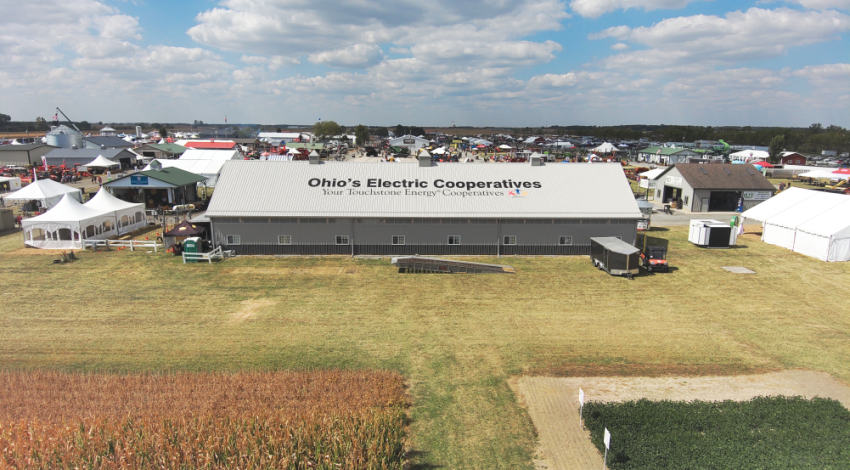
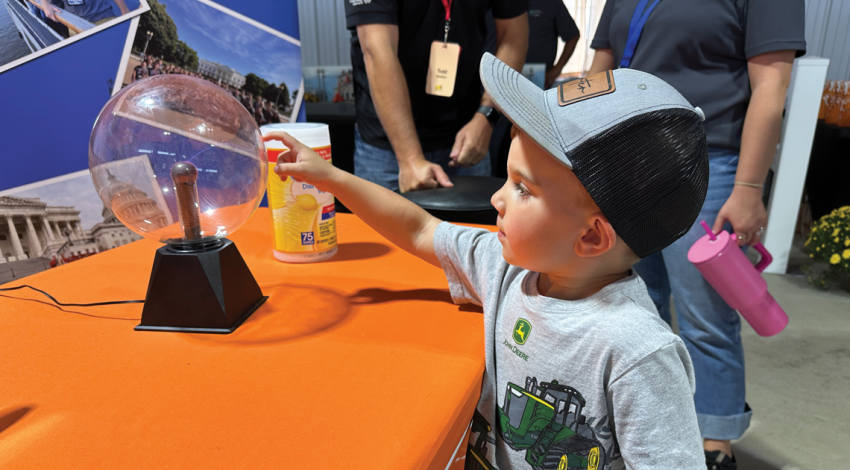
The Ohio’s Electric Cooperatives Education Center at the 2016 Farm Science Review introduced several popular new attractions. So what’s the best way to follow that up?

“It seemed like everything there was such a hit, we’re going to do them again,” says Janet Rehberg, OEC’s director of marketing. “People loved the Kids’ Zone, so we’ll have more of that, and the ‘Be a Lineman’ area was crowded the whole time, so we’ll keep that, too. We also have a few new displays in our area that I think people will really enjoy and get a lot out of.”

An individual holds a smallmouth bass.

Ohio is one of only three states that does not recognize a state fish, but if ever our lawmakers should decide to name one, there’s but a short list of great candidates: the yellow perch, for example, or the Ohio Muskie. A particularly strong case, however, could be made for the smallmouth bass — the gamest fish that swims.

A photo of the Potomac Eagle carrying passengers through the mountains.

If a leisurely, relaxing train ride, combined with watching wildlife — particularly bald eagles — sounds like fun, you might want to head east to Romney, West Virginia, where, in the spring, summer and fall each year, the trains of the Potomac Eagle Scenic Railroad leave Wappocomo Station for a three-hour, 35-mile round-trip deep into the mountains.

The tracks parallel the south fork of the Potomac River, and the highlight of the trip is a wild stretch of stream where eagles soar.