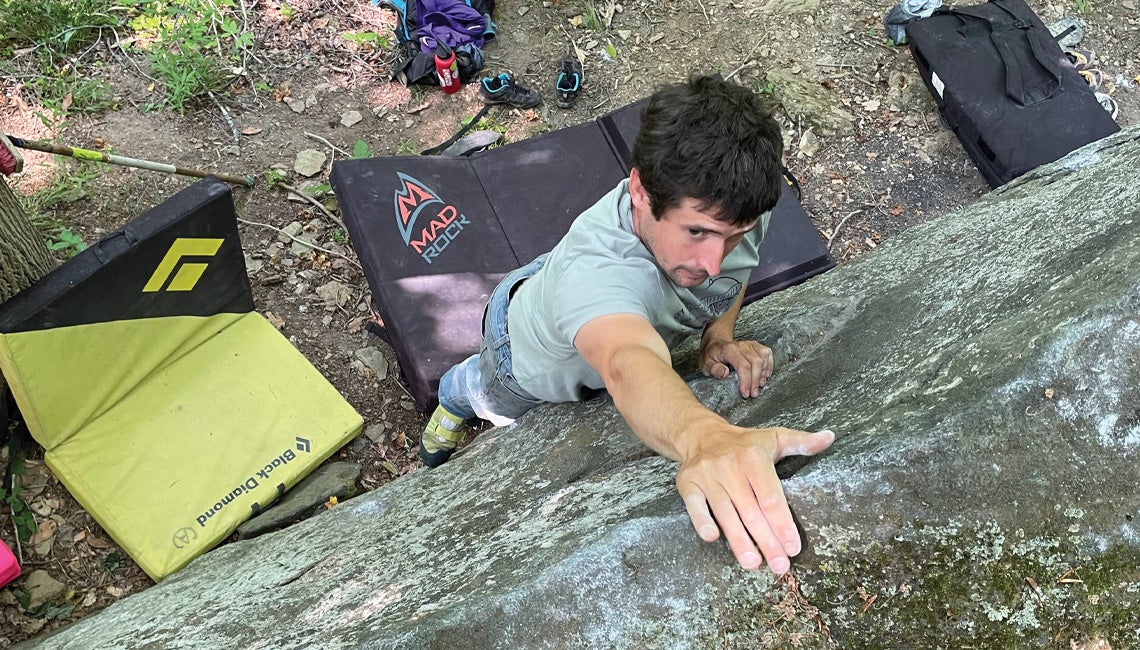
Ted Welser, a professor in the Department of Sociology and Anthropology at Ohio University, focuses his academic research on “the intersection of digital social systems, organizations, and social change.”
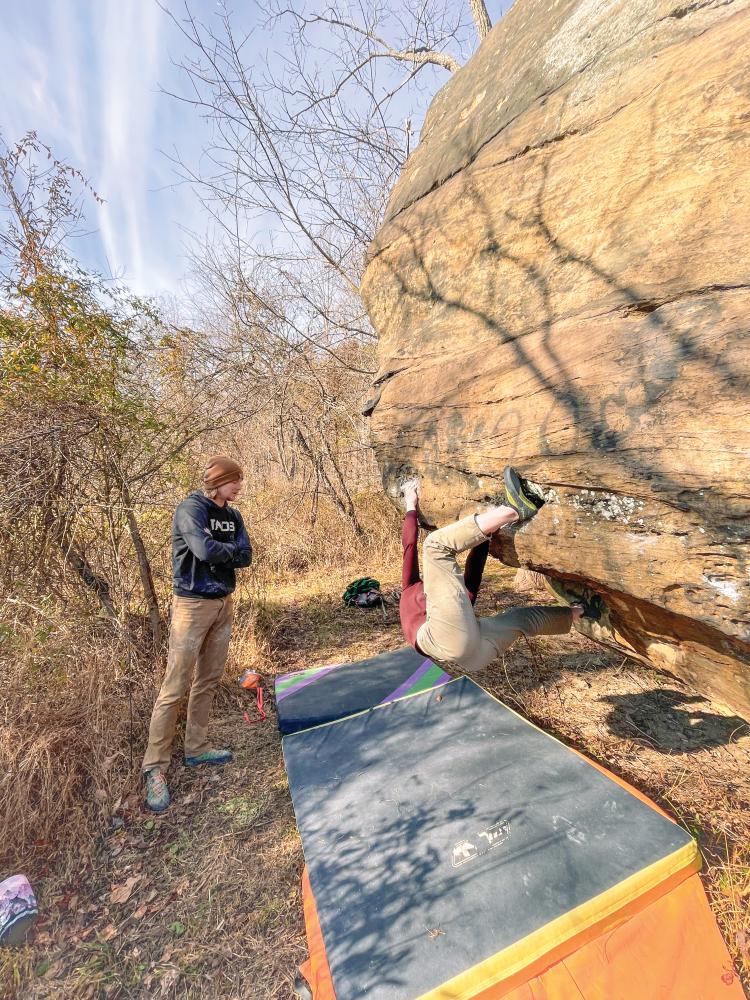
But when he’s not studying the evolving use of social media or digital inequality in Appalachia, he usually can be found on a rock somewhere.
Welser started climbing in 1989, while he was a student at Miami University in Oxford. “Miami had one of the few indoor climbing walls then,” he recalls. Through the years while both his CV and his family grew, so did his love for climbing, and he’s since climbed all over the world.
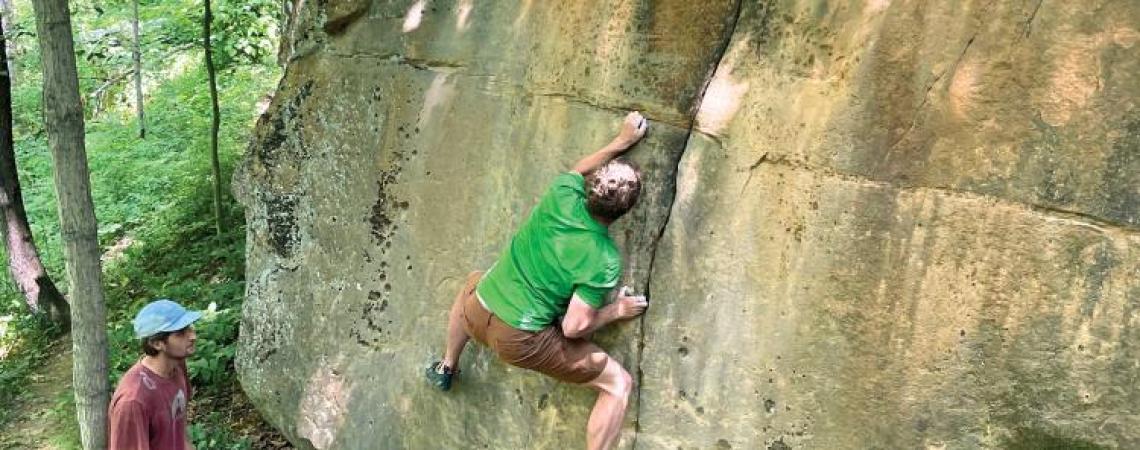
The most dangerous type of climbing is free solo, where the climber has no safety equipment.
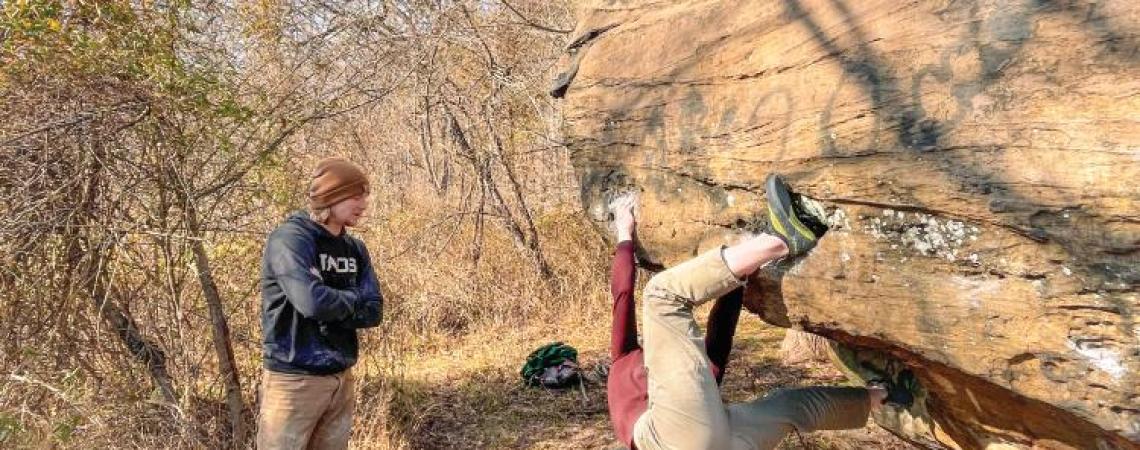
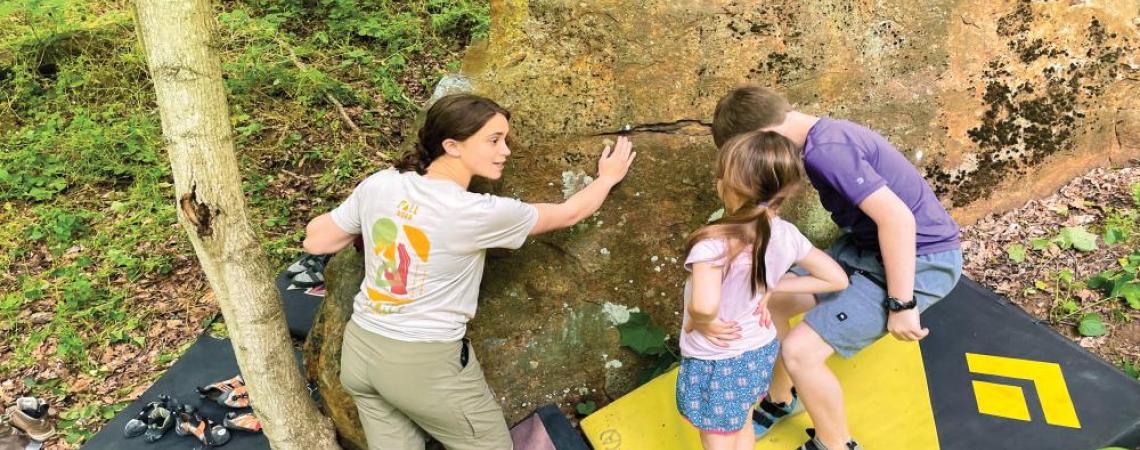
“Climbing combines physical activity — a sportlike activity — with a meaningful cultural experience,” he says. “It’s a reason to travel and experience new places. I’ve spent hundreds of days climbing in Ohio, Kentucky, West Virginia, and Alabama, traveling to places that are remote. I’ve enjoyed meeting people there who are climbers and not climbers.”
Shortly after he earned his PhD in sociology from the University of Washington, he and his wife, Laura Black, moved to Athens with their two kids to be professors at OU.
He built a climbing wall in his garage, founded the Climb Athens nonprofit, and began working with the Ohio Climbers Coalition, for which he serves as Southeast Regional Coordinator. Even his kids have gotten in on the act, having started when each was about 2 years old. His older daughter has climbed internationally and has competed in the National Collegiate Climbing Competition.
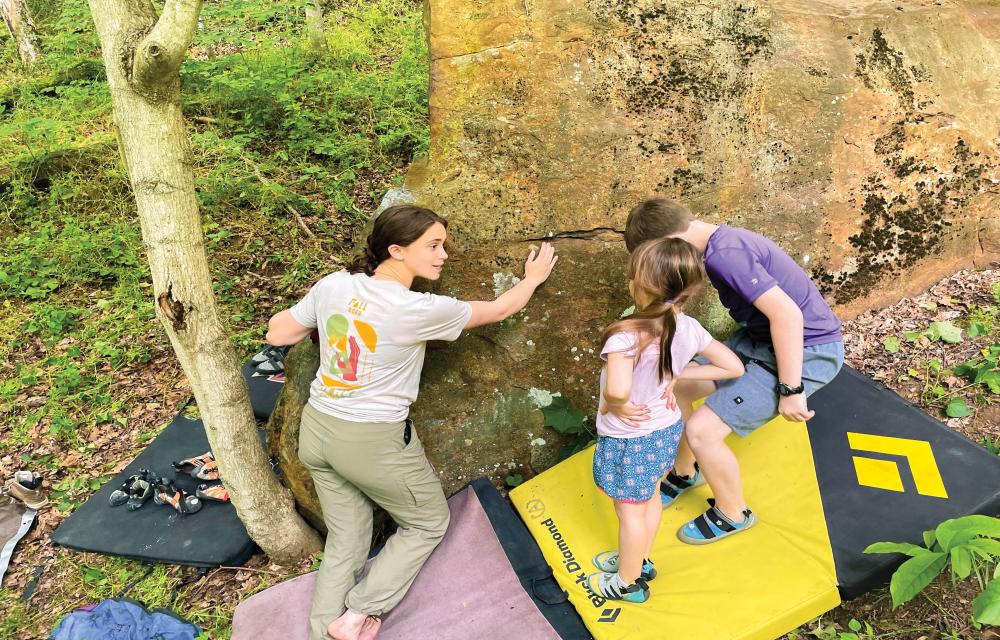
Welser is also an ambassador of the sport, always eager to introduce more people to climbing. “It’s worth it to give it a try, if you haven’t done it,” he says. “It’s an activity that can help you find new horizons and new things you haven’t experienced.”
Of course, just a glance will tell folks that climbing appears to be a dangerous sport. For those worried that it seems like it might be too much, he understands, but has a ready answer.
“You have to understand that there is a risk, but we do what we can to follow safety practices,” Welser says. “In over 30 years of climbing, I’ve practiced to stay very safe. When I’m high off the ground, I always have a rope to catch me if I fall.”
Welser suggests that people who want to try climbing should visit an indoor climbing gym for some instruction. Indoor climbing walls are also common at community recreation centers and universities.
Noting that some indoor climbing gyms offer yoga classes, Welser says climbing requires “a balanced fitness — strength and flexibility.”
To begin climbing outdoors, it’s a good idea to book a professional instructor/guide. Such services are available at major climbing areas, such as Hocking Hills, New River Gorge in West Virginia, and Red River Gorge in Kentucky.
Climbers are always looking for new places to climb. Welser says that many good sites in Ohio are on private land. He and other experienced climbers strive to protect climbing areas and consider access to private land as a privilege. He notes that landowners have several legal protections against any liability claims.
What climbing type is for you?
- The most dangerous type of climbing is free solo, where the climber has no safety equipment or anyone else to rely on. Welser says that despite the YouTube videos, it’s extremely rare because it’s beyond most people’s climbing ability and the risks of falling are so high.
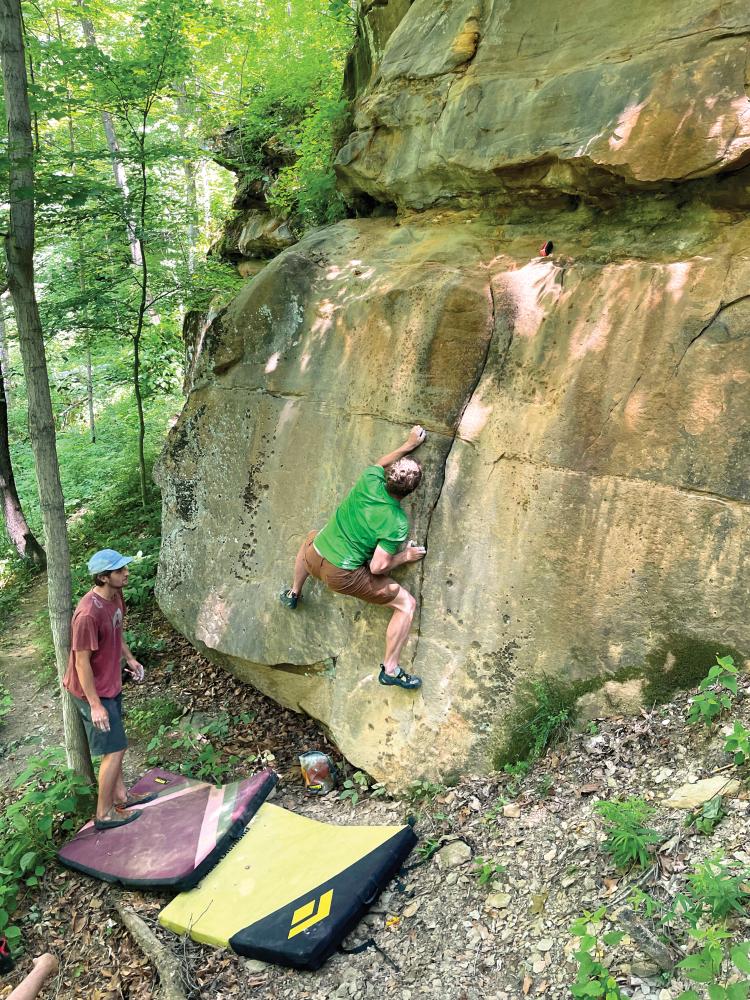
- Bouldering, as its name suggests, is climbing over large rocks within a few feet of the ground. It might sound easy, but often requires climbing sideways. “It can be very intense,” he says. “It’s like a puzzle to solve.”
- Multi-pitch climbing is a way to climb a cliff or rock that is too tall to be climbed on one length of rope. Instead, the first climber climbs part of the way with a rope, then stops and anchors the rope to safety bolts already installed into the rock. The second climber then ascends that distance and they repeat the process until both climbers reach the top.
- Traditional, or “trad” climbing, is riskier than multi-pitch because the climber must place their own removable safety anchor points. The climber wedges cams and bolts into crevices in the rock.
- Ice — people who climb ice, such as frozen waterfalls, wear special boots that dig into the ice as they kick each foot inward. They hold a hatchet-like tool to hit into the ice for each new handhold.
For more information on climbing in Ohio see https://www.ohioclimberscoalition.org/