The name of John Solomon Rarey is known to most folks in the small Franklin County town of Groveport; there’s a statue of him at the community’s recreation center, after all, and his brother William was one of the original founders of the village (which at the time was called Rarey’s Port). The Rarey name graces several roads, buildings, businesses, and even a cemetery in the area.
In his day, though, John S. was world-famous. “If he were alive today, Rarey would be a celebrity and all over the media,” says Rick Palsgrove, director of the Groveport Heritage Museum. “Once he trained that untamable horse, everyone knew who he was.”
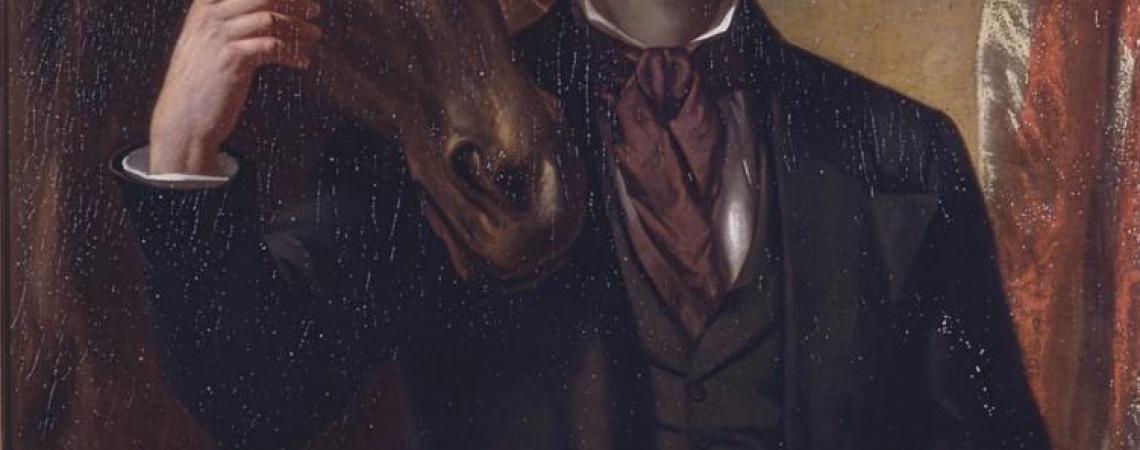
Rarey cemented his reputation as one of the greatest horse trainers the world has ever known when he won a bet with England’s Earl of Dorchester.
Rarey cemented his international reputation as one of the greatest horse trainers the world has ever known when he won a bet with England’s Earl of Dorchester in 1852. The earl, it so happened, owned a horse named Cruiser, reported to be the fastest in England. But Cruiser also was vicious — a living fury who kicked two grooms to death, and who, as if in a rage, snapped an inch-thick iron bar with his teeth as numerous witnesses watched. He was considered too dangerous to race.
John Solomon Rarey was born in 1827 in his father’s tavern near what is now Groveport. His family owned several farms in the area, and from childhood, he displayed a genius for working with horses. After Rarey “broke” his first horse at age 12, locals began soliciting him to handle their horses. By 1855, he was testing his techniques on feral horses in Texas, and just two years later, he was demonstrating them to British officers in Canada.
The “Rarey Method” was revolutionary for its time. Instead of fear or pain, Rarey employed kindness, patience, a firm demeanor, and a soothing touch. “Rarey could train horses without hurting them, and for a professional trainer, that was a valuable skill,” says Palsgrove. “He earned a horse’s trust by calmly talking to it.”
In 1857, Rarey ventured to England, where his abilities quickly attracted the attention of Queen Victoria and Prince Albert, and the royal couple asked him to do a command performance at the January 1858 marriage of their eldest daughter. The Times of London reported the “surprising and successful result” when a cream-colored horse belonging to Her Majesty was “subjected to the manipulation of Mr. Rarey” during the wedding-eve event at Buckingham Palace. “This particular animal has never permitted anybody to ride him,” the newspaper stated, “but he allowed Mr. Rarey to mount him without offering the least resistance.”
That horse, however, had nothing on Cruiser, and the English press soon challenged Rarey to conquer the fearsome dark bay that “could do more fighting in less time than any horse in the world.” Dorchester bet Rarey a hundred pounds that he couldn’t tame Cruiser within three months. Rarey did it in three hours.
When Rarey encountered Cruiser, the horse was virtually imprisoned in a tiny, cramped brick stable to limit his movement. Rarey boldly opened the stable’s oak door and stood before the stallion. Talking in hushed tones and stroking him, Rarey quieted Cruiser enough to gently restrain him. Soon the horse realized he’d met his master and docilely laid down. Both Rarey and Dorchester rode Cruiser that day.
Having convinced England’s aristocracy of his horse-taming prowess, Rarey embarked on a world tour. He gave lectures, did entertaining public demonstrations, rubbed shoulders with royals ranging from the King of Sweden to the Czar of Russia, and collected numerous accolades along the way. Queen Victoria’s courtiers danced to the “Rarey Waltz.” A new word was coined: “Rareyfy” — meaning to tame a horse by kindness. The Royal Society for the Prevention of Cruelty to Animals presented Rarey with a gold medal.
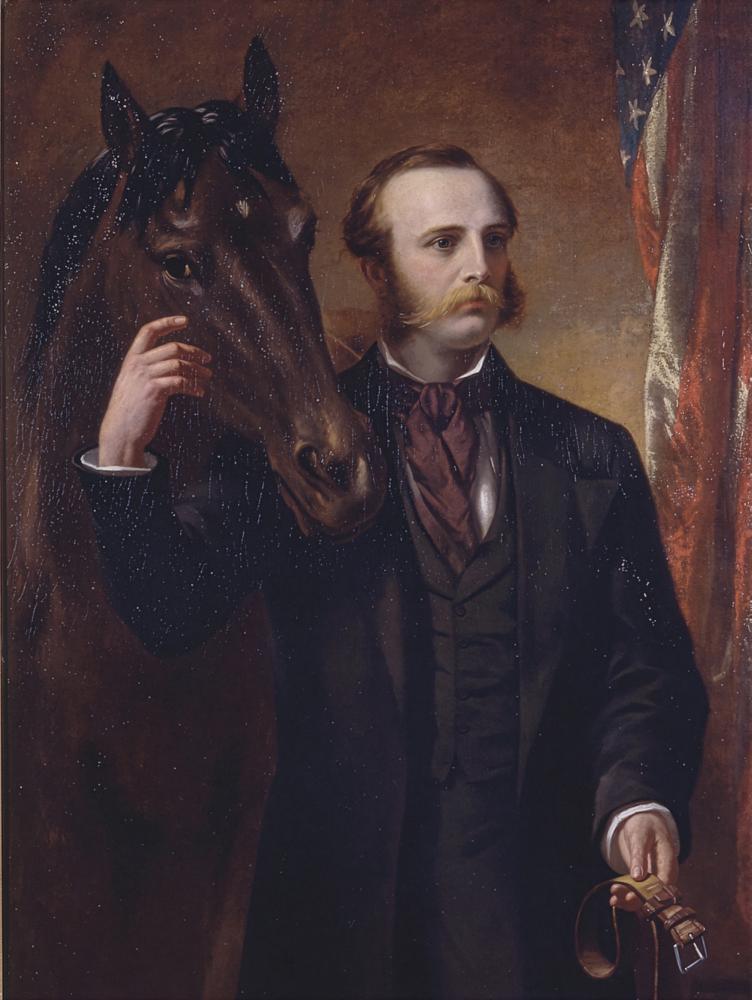
Newly rich, Rarey acquired Cruiser from Dorchester and returned to Groveport in 1861 with the horse in tow. Upon his arrival, Rarey set about building Cedarlawn, a 24-room mansion surrounded by acreage that included a stable and a paddock for Cruiser. Dignitaries from around the world visited the renowned horse trainer, and he always flew the flags of their home countries over Cedarlawn when they did.
With the Civil War raging, Rarey and Cruiser toured northern cities from Boston and New York to Chicago and Cincinnati. Philadelphia’s newspapers described Cruiser as “a splendid specimen of horseflesh” and observed that Rarey performed “equine miracles” by subduing all kinds of ugly and vicious horses. “Rarey tamed whatever animals people brought to a show,” says Palsgrove. “Then at the end, out came Cruiser, and he’d shake hands with the horse.”
Rarey’s practices drew praise from philosopher Ralph Waldo Emerson and abolitionist William Lloyd Garrison, who opined that Rarey provided a lesson in substituting love for brutality. Even the U.S. military took notice, and when General Henry Halleck asked him to visit the Army of the Potomac in December 1862, Rarey instructed Union cavalry officers and witnessed the Battle of Fredericksburg from a reconnaissance balloon.
Three years later, Rarey suffered a debilitating stroke, and succumbed in 1866 at age 38. After Rarey’s demise, Cruiser resumed his unruly ways, but in accordance with his friend and master’s will, he lived out his days at Cedarlawn. Cruiser died in 1875, and says Palsgrove, “The horse was still so well-known that the New York Times printed his obituary.”
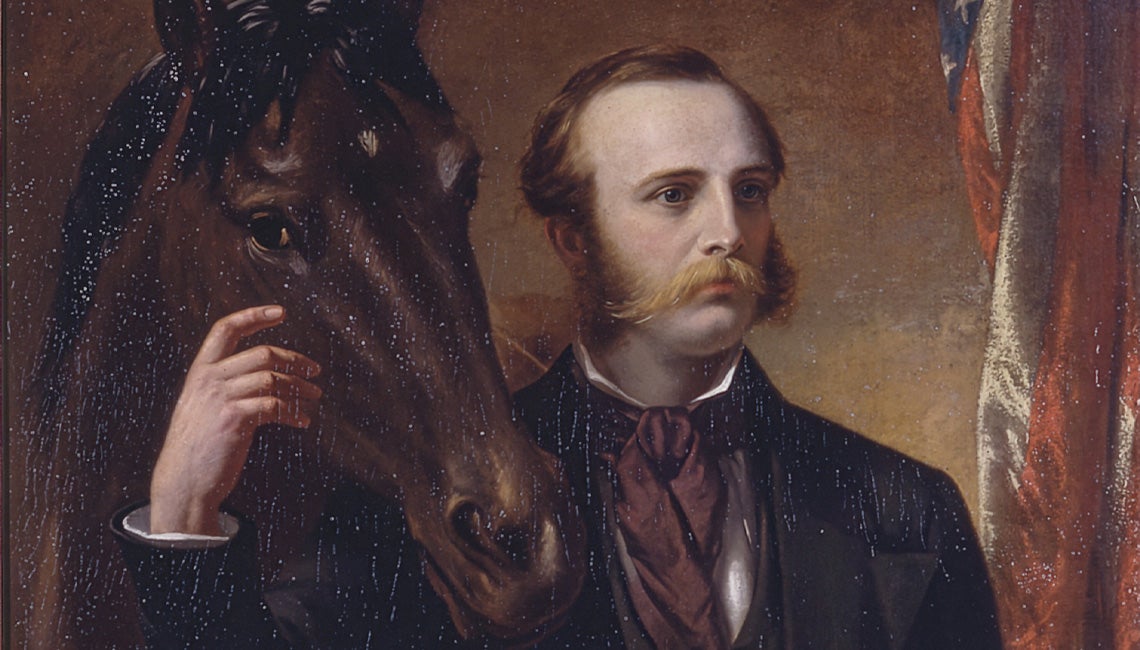
Although today’s world has largely forgotten Rarey and Cruiser, Groveport keeps their remarkable story very much alive. The Groveport Heritage Museum devotes considerable space to exhibits about the pair, and Palsgrove delights in showing visitors the passage in Little Women where Louisa May Alcott referenced his hometown’s horse whisperer. Groveport’s city seal features Cruiser; a mural saluting both Cruiser and Groveport’s canal heyday graces the side of a building on Main Street; and in front of the Groveport Recreation Center, statues by Zanesville sculptor Alan Cottrill portray Rarey’s and Cruiser’s fateful first meeting. Rarey’s statue features his signature top hat and muttonchop whiskers, while Cruiser is depicted in an aggressive stance with teeth bared.
Groveport’s most enduring tribute to Cruiser comes from its school district, which chose him as its mascot in the early 1900s because of his example of strength, spirit, and discipline. The school colors were also inspired by the horse — “black, because Cruiser was a very dark horse, and red, for his fiery temperament,” says Palsgrove.
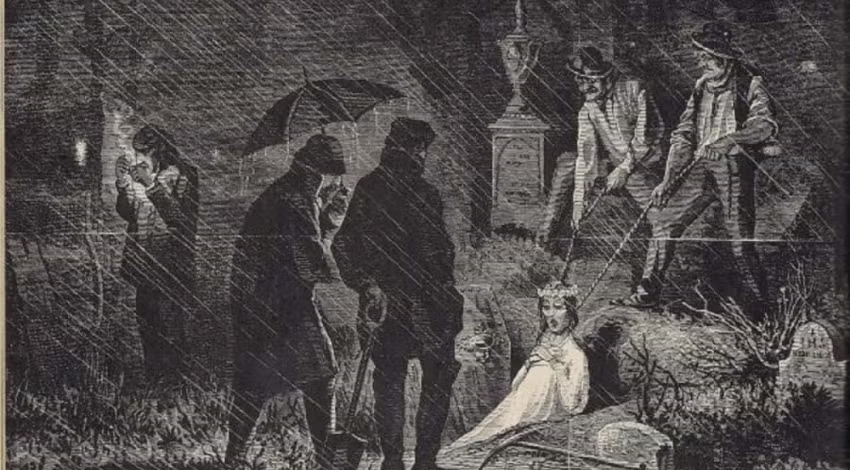
Although Rarey was laid to rest in his family’s plot in Groveport Cemetery, Cruiser’s burial site is a mystery; Palsgrove says the Rarey family kept it a secret because they feared grave robbers would steal the remains and put them on display.
A middle school building now occupies the place where Cedarlawn once stood, and a football field has replaced Cruiser’s barn and paddock. “Cruiser’s grave might be somewhere beneath that field,” says Palsgrove. “But we’re not sure, and I think we’re fine not knowing.