Features

Brett Fletcher has been selling Maine lobsters out of a 96-square-foot shack in Knox County for 14 years.

Along the road connecting Fredericktown and Amity in Knox County is a red wooden sign with a lobster on it, marking a driveway leading to 22 acres of wooded property featuring a creek, walking trails, two cabins and a 1961 Shasta Airflyte camper trailer for rent, a house, a

The road to Amity

After graduating from Ohio State University, Fletcher talked his dad into co-signing a loan for a lobster boat and moved to an off-the-grid family cabin in Georgetown, Maine. He spent the next 20 years as a professional lobsterer, hauling water to his makeshift shower and 200 traps’ worth of lobsters per day from the waters surrounding the island town.

After the rains, a flooded road that led around the lake toward Reily (courtesy Reily Historical Society).

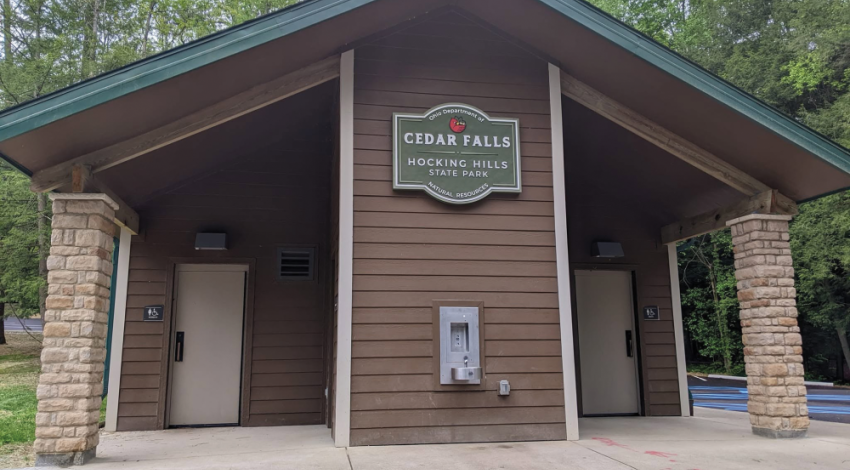
This is the story of a failed state park and its lake. To tell it faithfully, though, I need to tell you how I came across it. To do that, I need to first beg forgiveness, because I fibbed 44 summers ago. 

First, I encountered the ruins of curious concrete edifices in the creek bed that were clearly relics from another time. Old sycamores and silver maples grew thickly through cracked concrete. A tall tower stood there, orphaned, in what seemed the most out-of-the-way place. Not 40 yards away, Indian Creek bent into a deep pool beneath sheltering box elders. That leads to the second reason for the memory: It was there that I hooked a smallmouth bass as long as my forearm and thick as a pillow from the smallest of waters.

Wright Brothers 1909 military flyer

Born and raised in Columbus, Air Force General Curtis LeMay studied engineering at Ohio State University and launched his military career in his hometown by learning to fly at old Norton Field.

One airlift pilot, Lt. Russ Steber, took along his newly adopted boxer rather than leave the pup alone during the lengthy missions. The dog became such a familiar part of the airlift, Steber even had a parachute made for him. Eventually, LeMay learned of the stowaway, and Steber expected to be in big trouble. Instead, the general told Steber his dog was a great morale booster and promptly named him “Vittles.”

There’s a whole network of folks around the state who find and send in photos of Ohio’s largest trees to be posted on Marc DeWerth’s Big Trees Facebook and Instagram feeds — such as the national champion northern catalpa tree in Lawrence County.

Spring comes into full bloom in May.

For DeWerth, it’s a moral imperative. “People need to know about nature,” he says. “We need to look up — there is so much to see and learn in nature. I want youth to understand the significance of Ohio’s trees.”

Wyatt Newman (left) and Sam Bell came up with their idea, for truck-mounted robots that can create custom road markings, while they were biking.

Sam Bell, a retired auto mechanic, and Wyatt Newman, a retired Case Western Reserve University professor of electrical engineering, have been friends and bicycling buddies for years. “We talk about everything on our rides,” Bell says.

The common, labor-intensive practice is that all those turn arrows, handicapped space designations, sharrows (shared lane markings), and other specialty markers are stenciled by hand. It’s not only costly, it puts America’s road workers in danger every time they do their jobs. RoadPrintz changes that by producing a truck-mounted robotic arm that can paint even custom markings that are too complicated for striping trucks.

Upon her arrest, Gillars was held in a prison camp at Frankfurt until turned over to the FBI in January 1949

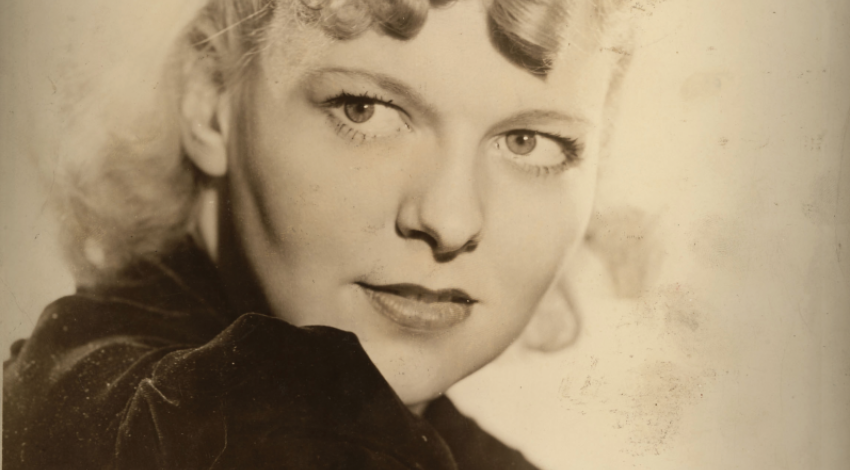
On March 15, 1946, 77 years ago last month, Ohioan Mildred Gillars was arrested by the U.S. Army Counter Intelligence Corps in Berlin, Germany.

Mildred Gillars was born in Maine in 1900 and came of age in Ohio, the stepdaughter of an alcoholic dentist who once practiced in Bellevue. Home life was tumultuous. 

She graduated high school in 1917 at Conneaut, near the extreme northeastern corner of the state, and attended Ohio Wesleyan University, where she majored in dramatic arts. Gillars, who went by the nickname “Milly,” took roles in plays and earned a reputation as an excellent orator, eccentric, and a bit of a coquette. 

Designed to temporarily capture and slow the flow of water off your property, rain gardens are a practical and beautiful landscape feature that is becoming popular, especially for those looking to lighten their footprint on the Earth.

In April of 2020, we were just beginning to wrap our heads around the notion that the coronavirus pandemic would not simply disappear after the weather turned warm.

If that seems like a modest aspiration, understand that I’ve coveted a rain garden for many years. Designed to temporarily capture and slow the flow of water off your property, rain gardens are a practical and beautiful landscape feature that is becoming popular, especially for those looking to lighten their footprint on the Earth. 

One of the most popular events at the Hayes Library's Easter Egg Roll is the arrival of the Easter Bunny.

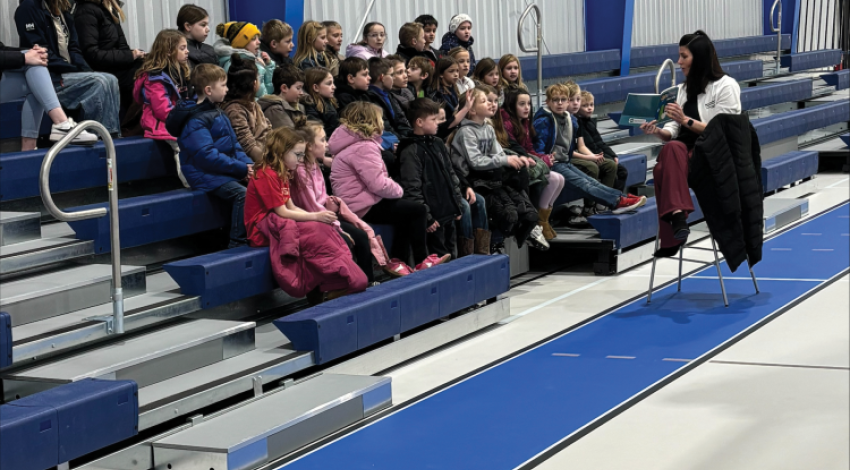
For more than 25 years, children have been bringing colored Easter eggs to the Rutherford B. Hayes Presidential Library and Museums (HPLM) in Fremont. Why?

Egg games were popular during the late 1800s, and in Washington, D.C., residents especially enjoyed spending Easter Monday on the grounds of the U.S. Capitol, where they picnicked and watched children rolling eggs — and often themselves — through the grass. After some rambunctious egg rollers damaged the landscaping in 1876, members of Congress promptly protected their turf by passing a law prohibiting people from using the Capitol grounds for a playground. Because it rained in 1877, the law wasn’t enforced until 1878, when police expelled youths carrying colored eggs from Capitol Hill.

Karl Maslowski served as a combat cameraman for the U.S. Army Air Forces during World War II. He filmed aircraft and camp life at an airbase in Corsica under famed director Capt. William Wyler. Some of Maslowski’s footage was later used in the 1947 film Thunderbolt!

Like most wildlife photographers of the early 20th century — though there were only a handful — Karl Maslowski was a hunter before he became a photographer.

The answer to his problem, he believed, was acquiring one of those newfangled 16mm movie cameras he had been hearing so much about. “But they were just too expensive, and our family was dirt poor,” Maslowski remembered. Fate, however, sometimes has a way of intervening in such situations.  

Experienced Klier crew members place long steel beams beneath a structure, then slowly raise it.

Jim Klier has been a mover for 39 years.

Klier has moved plenty of homes for lots of different reasons — some legal, like for zoning issues; others more sentimental. Klier’s moved a lot of older homes. Much older. Like an 1813 timber frame home on Lake Erie.

“Oh, heavens yes,” he says. “A home that’s been in the family for generations, for example. You really have to love the house to do something like that, to go through that process.”