Ohio history

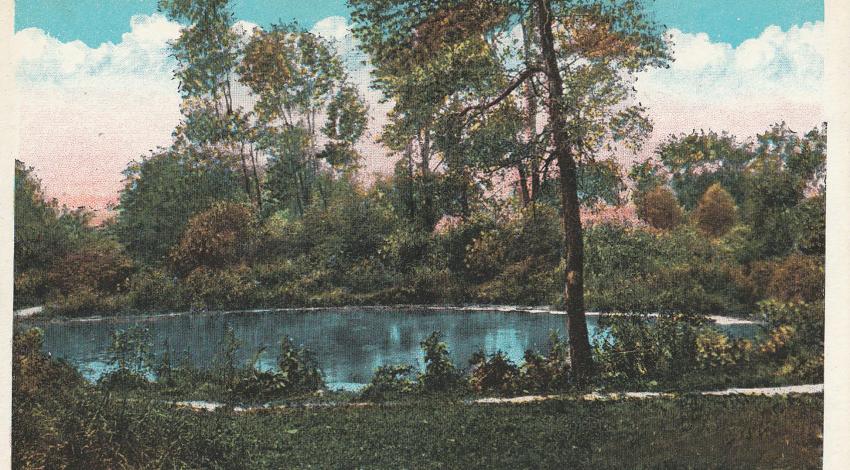
This 1920s postcard showing the Castalia Blue Hole gives a sense of why it drew tourists from all around (photo courtesy of the Rutherford B. Hayes Presidential Library & Museums — Charles E. Frohman Collection).

At  one  time, the “blue hole” in Castalia was a big deal. Really big. From the 1920s until it closed in 1990, the quaint tourist destination drew as many as 165,000 visitors each year who traveled to gaze at the geologic curiosity.

Nancy Gurney remembers going to the Blue Hole on the occasional Sunday day trip to Castalia with her family in the 1950s, when she and her sister were young and her parents were farmers in Seneca County.

“It was so nice, all landscaped and beautiful, and it had flowers,” recalls Gurney, who now lives in Lakeside. “And there was this mystery of a deep hole with no bottom they can detect.”

Gurney, later a scientist, admits that, of course, there is a bottom — though to a child and tourist, the bottomless mystery thing was way neater. 

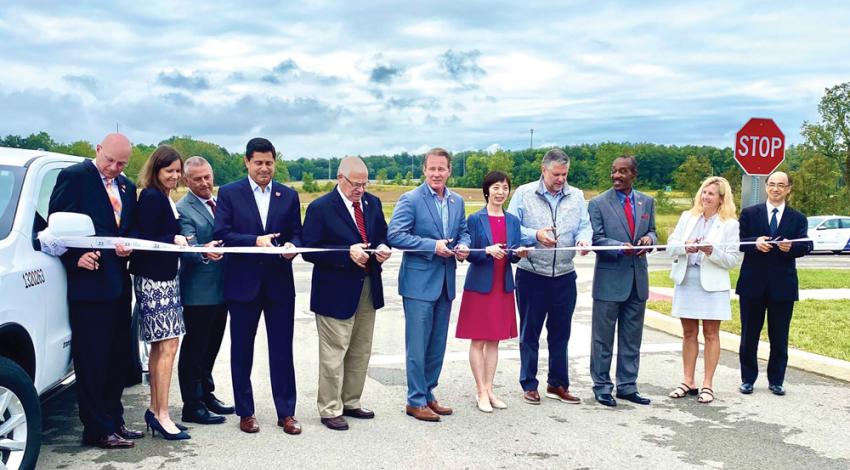
Ribbon cutting of the 33 Smart Mobility Corridor

Ohio, a state long-obsessed with being in motion, has a rich history of being on the leading edge of transportation innovation. 

The 35-mile section of U.S. Route 33 runs from Dublin through Marysville and up to the gates of the TRC in East Liberty. It’s a one-of-a-kind vehicle testing ground that seeks to shape the future of connected and driverless vehicles. 

Ohio Literary Trail logo

Ohio’s writers, poets, authors, and musicians have left lasting impressions on Supreme Court judges, inspired presidents, and moved the entire nation to change its opinion.

The trail showcases more than 70 landmarks, including historical buildings, libraries, and markers, as well as festivals that commemorate Ohio’s literary contributions. The publication took the form of a printed map for the first several decades of its existence. In 2020, the trail went online, where it now features an interactive map that divides the state into five regions. Each section of the site contains links and information about the destinations within the region.

Who better to tell our story?

The story of electric cooperatives is one of the great American success stories: Neighbors across the country banding together to extend electric service to homes and farms too far from population centers to be profitable for traditional electric companies. Today, the nearly 900 electric cooperatives operating across the United States, including the 24 headquartered here in Ohio, continue to be a model of public-private partnership and an essential part of the communities we serve.

Triumph sportscar

The 1950s and ’60s were considered the “Contest Era” in America, and no one in the country was better at creating a prize-winning jingle or short poem than Evelyn Ryan.

Her quips usually included a humorous twist, similar to the writing of Ogden Nash, often poking fun at herself. Measuring just 5 feet, 6 inches tall, Evelyn had gained a few pounds later in life and wrote: 

Fitting Advice
Of all sad words,
Give these the prize:
‘My dear,
You’ll need 
Our larger size'.

The 1996 CompuServe team

Wilhite invented the GIF while he worked at CompuServe, an early tech company that was based in central Ohio. Although the name may not mean much to anyone under 40, CompuServe played a pivotal role in the early days of the Information Age. Digital breakthroughs still in use today originated there, including online shopping, stock research, and self-serve airline tickets.

Langsdon Mineral Collection, Celina

Popcorn and pencil sharpeners, minerals and merry-go-rounds, Great Lakes, and great-big cuckoo clocks: Ohio has a plethora of pretty amazing things to explore. Here’s just a sampling of our state’s perhaps lesser-known museums, collections, and interesting sights. 

1. Langsdon Mineral Collection, Celina 

Back in 2006, local collectors Ron and Ruth Langsdon donated much of their extensive collection of rare minerals to the Mercer County District Library in Celina. The Langsdon Mineral Collection includes more than 900 stunning specimens of minerals from all over the world — from a peacock-colored bornite and raspberry garnet to azurite, amethyst quartz, and an enormous, polished piece of jade.

Warther Cutlery

Ernest “Mooney” Warther began carving with his first pocketknife at age 5. A dozen years later, in 1902, he crafted his mother a kitchen knife as a gift. Her friends and neighbors liked it, so he made more. 

American steel, American hardware, American wood, Ohio labor, and blades with an amazingly attractive (trademarked since 1907) finish pattern create loyal customers who return regularly to add to their collections. If you visit the company’s new 15,000-square-foot showroom, factory, and office, you’ll find plenty of American-made kitchen products, including cookware and a small army of specialty foods, spices, and condiments. But you’ll quickly see that knives made by fourth-generation craftsmen are the star of the show.

Cleveland native and Hollywood actress Patricia Heaton of Everybody Loves Raymond and The Middle once told a joke about pro football coach Paul Brown: “A football player died and went to heaven.

The joke slyly illustrates the enormous impact and legacy Paul Brown had on the game of football. Pre-Brown, it was characterized mostly by brute force, with little intellectual finesse. Brown’s genius for innovation transformed it into the mental and analytical game that it is today. 

Grandma Gatewood Memorial Hiking Trail

Do you like to hike? Emma Rowena Gatewood sure did.

Known for her minimalist, no-nonsense approach to hiking, Gatewood used a homemade sassafras walking stick to help steady her on the trail and carried a cloth sack slung over her shoulder, filled with only 18 pounds of food and equipment. Today’s hikers often carry twice that much weight if not more, and they do it with high-tech backpacks. Instead, she had the following advice for would-be AT hikers: