right-of-way

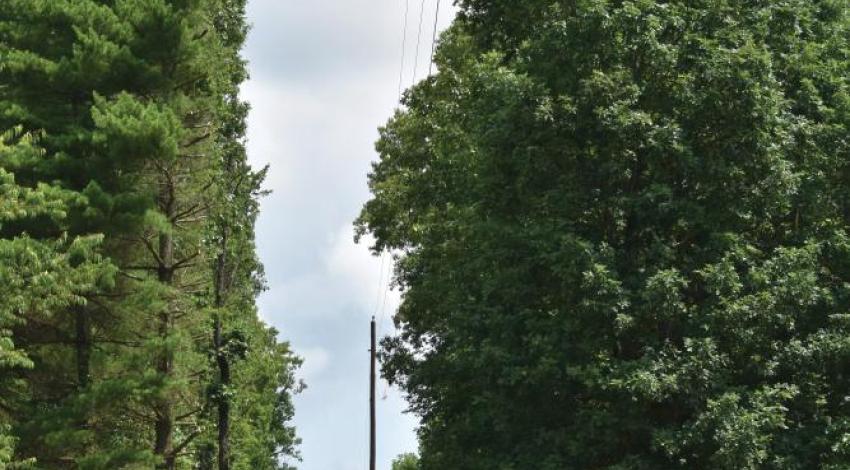
A right-of-way before trimming.

Some people might be alarmed by the sight of a low-flying helicopter dangling what looks like a prop in a horror movie passing over their property.

Nancy Thompson was excited.

“Washington Electric called me last week and told me they would be here, and here they are,” she says. “I think it’s kind of exciting. They came through and cut the trees without cutting the wire. I’ve never seen anything like it.”

About 50% of all power outages are caused by vegetation. That figure varies widely depending on the landscape through which power lines run, and it reaches two-thirds for some Ohio co-ops. Many outages occur during storms when limbs or entire trees fall across electric lines, but others arise less dramatically when branches grow into lines. 
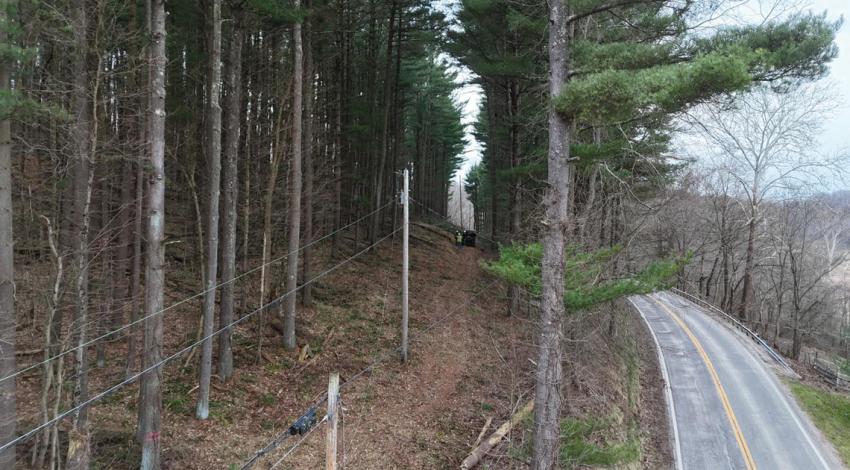
Power lines running through trees

The violent windstorm that swept across Ohio and much of the rest of the Midwest on March 13 was a powerful reminder about how quickly the weather can change — and how much we all depend on electricity in our daily lives. 

Gusts were strong enough to bring down trees, snap utility poles, peel shingles, and unceremoniously toss around just about anything that wasn’t tied down. In other words, it was the kind of weather that makes folks worry about whether or not their lights will stay on.

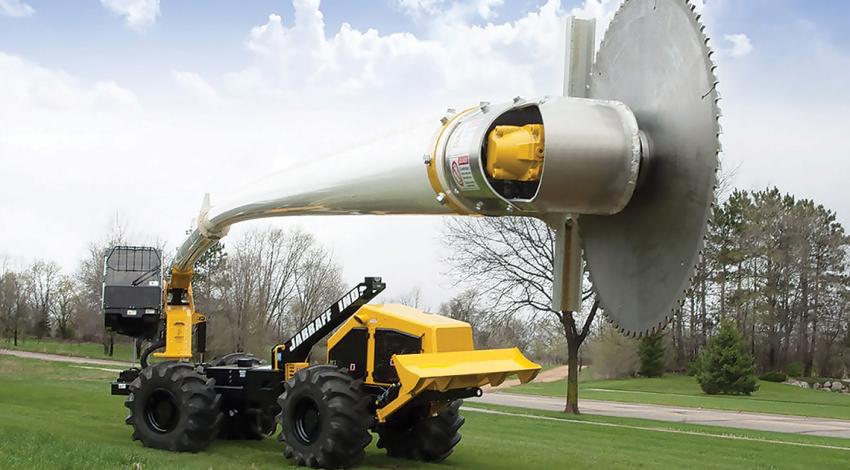
Jarraff Industries’ all-terrain tree trimmer

It’s a common sight, especially during the spring and summer growing season — crews cutting away tree limbs and foliage that have gotten too close to nearby power lines.

Generally, anything within a set distance on either side of the lines, as well as above and below the lines, must come down to prevent contact — especially when storms roll through. Without ROW maintenance, obtrusive branches and limbs often can be blown into the lines, creating dangerous and costly power outages.