birds

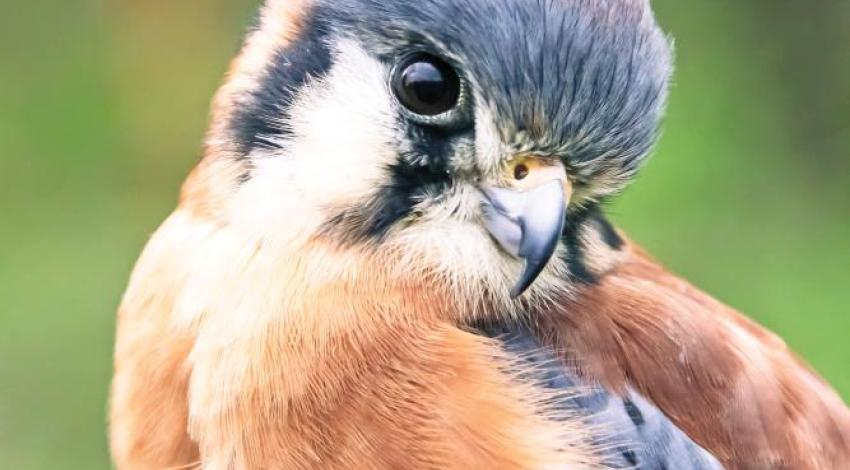
An American kestrel

You might see one while you’re driving down an interstate highway or a country road: a relatively small, robin-sized bird that you might not think much about until you realize that it’s hovering 50 feet or so in the air, intently staring down at the grassy road berm below.<

More commonly known in years past as sparrow hawks, kestrels measure just a foot or less in body length, but have a wingspan of up to 2 feet, which aids them in their unique hovering style of hunting. 

Despite their small size, kestrels possess the same fierce, intense nature of larger falcons, such as the peregrine, which also lives in Ohio. Kestrels, however, are no match for peregrines’ speed. In level flight, peregrines have been clocked at 70 miles per hour, and in a steep dive known as a stoop, they can reach 200 mph — the fastest creature on earth!

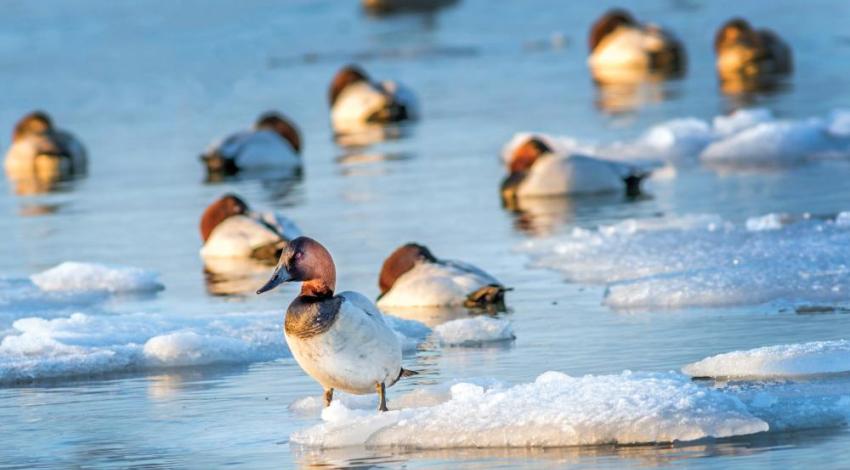
A photo of ducks in icy water

Decades ago, when I was a much younger man, I was a serious waterfowl hunter.

Large, handsome, fast-flying birds, canvasbacks were not exactly numerous during those years, but they were plentiful enough to be considered fair game. No matter how hard we hunted, however, we never bagged a single one. 

I retired from duck hunting and sold the boat decades ago, but in truth, I never totally lost the desire to bag a “bull can,” as hunters call the male (or drake) canvasback. Recently, I realized that I’m not getting any younger, and I decided that if I’m ever going to do it, I should probably do it soon. And I knew exactly where to begin my “hunt.” 

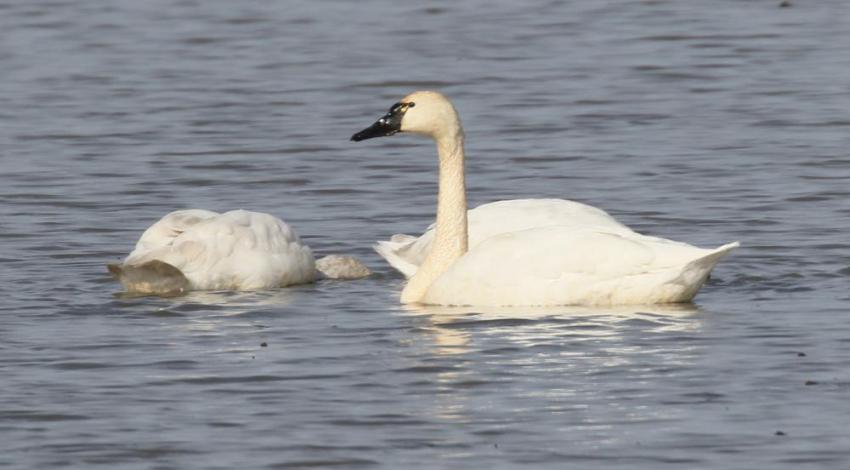
Tundra Swans in water

There are three categories of waterfowl that frequent the Buckeye State: ducks, geese, and swans. Swans are by far the largest of them — weighing 20 pounds or more, with wingspans measuring nearly 8 feet.

Tundra swan (the good)

The tundra swan is Ohio’s only native swan. Large flocks of them migrate through the state late in February and March on their way north to nest in the High Arctic, then come back with their young cygnets the following November and December, especially along the shores of Lake Erie.  If you have an older bird ID book, the tundra swan may be identified as a “whistling swan.” 

Birding telescopes on display

If you know someone who’s really ready to raise their birding game in 2026 (even if that someone is you), a spotting scope might be just the thing.

“We began as a small gift shop and watch-repair business in 1976,” says Hershberger, who owns the shop. “So next year will be our 50th year in business. We always had a few pairs of binoculars for sale, and I began birding when I was a teenager, so the optics side of the business grew out of that hobby. Today, we carry 18 brands of optics, with 200 to 300 pairs of binoculars on display, and 20 to 30 spotting scopes, as well as telescopes for stargazing.”  

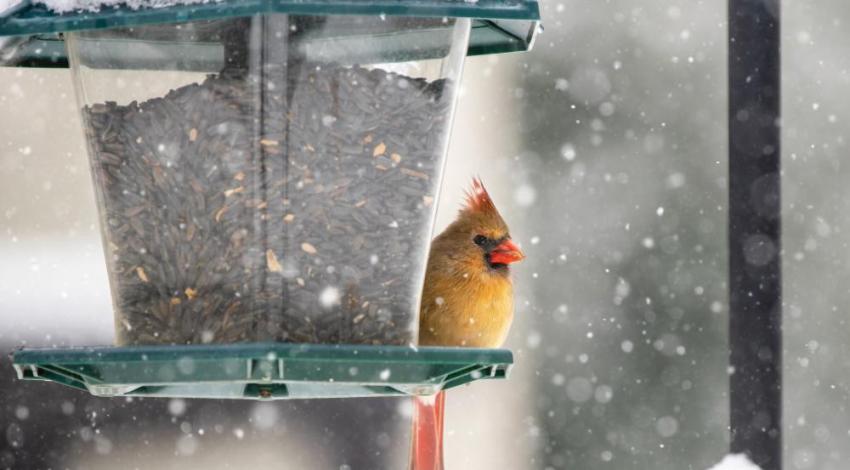
Female cardinal perched on a feeder

With its pointed crest and for its striking cardinal-red color alone, the northern cardinal is not only easy to notice, but also to remember and to appreciate. Lucky for us, it never leaves the home place.

The colorful northern cardinal lives over the entirety of Ohio, and that alone is reason enough for the state legislative assembly to name it the official state bird.  There are other meritorious reasons that call forth warm approval and high regard. 

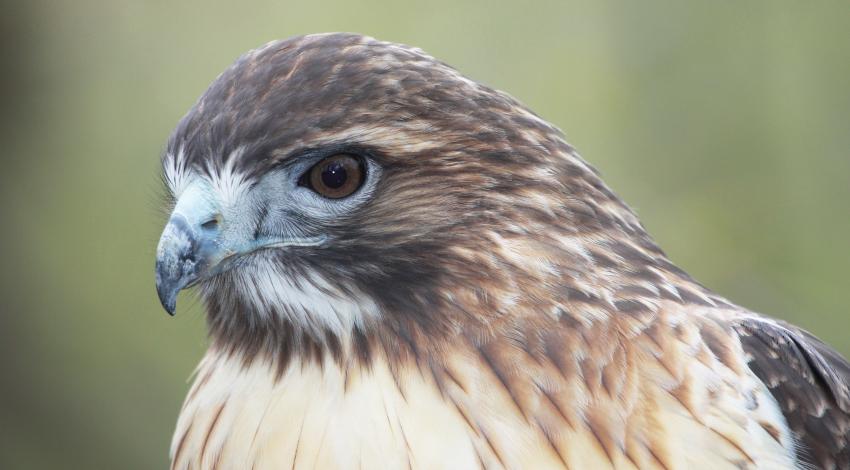
Red-tailed hawk

Late one September many years ago, I was visiting Pointe Mouillee State Game Area at the mouth of the Detroit River along the western shoreline of Lake Erie in late September when I looked skyward and saw the most stunning example of fall bird migration I have ever witnesse

The vivid image of that annual autumnal spectacle of migration remains in my mind’s eye yet today. But it has always made me stop and wonder: Why do some raptors migrate, while others don’t?

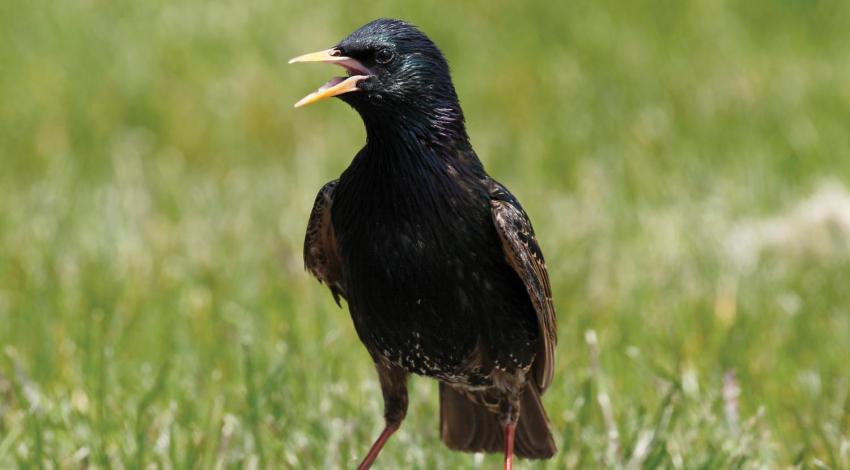
A starling chirping in the grass

Learning any hobby is always easier with a mentor — even a virtual one. Take birding, for example.

“The Merlin Bird ID app contains identification support and photos, sound recordings, maps, and descriptions for more than 10,000 bird species from around the world, with more species being added constantly,” says Kathi Borgmann, communications manager for the Cornell Lab of Ornithology, which developed and owns Merlin. “More than 29 million people worldwide have installed Merlin on their phones, with June 2024 seeing the greatest number of Merlin users, more than 5.4 million during that month alone.”  

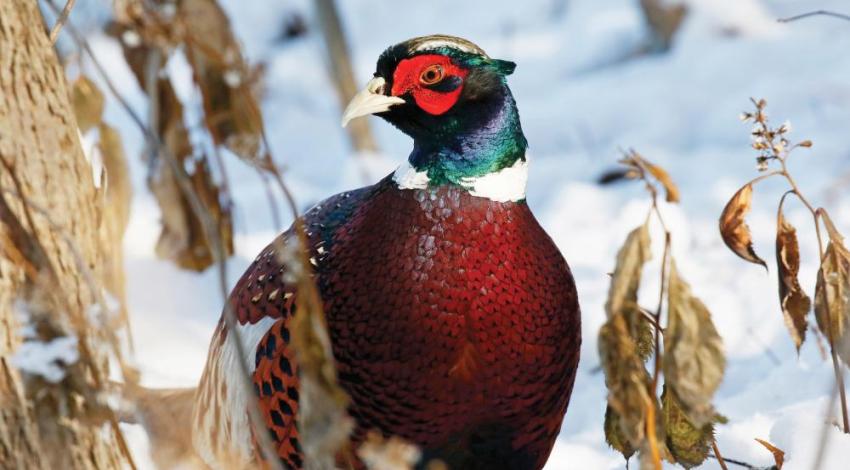
Asian ring-necked pheasants are also known as “ditch parrots” because of their bright plumage as well as their tendency to lounge along roadsides.

I’m old enough to have witnessed the demise of much of the ring-necked pheasant population in Ohio firsthand. In the 1960s, I remember my father taking me on a pheasant hunt to private property in the northwest part of the state.

Ringneck numbers in Ohio peaked during the 1930s and ’40s, and have been on a steady downhill slide ever since. The reason for the decline is simple, as it is throughout the North American pheasant range: the disappearance of quality grassland habitat. 

As goes the habitat, so goes the population of birds.  

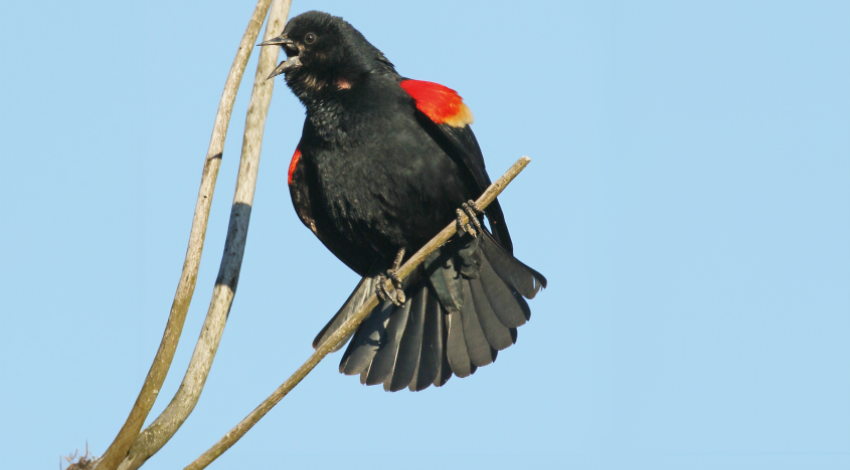
Red-winged blackbirds are considered by ornithologists to be one of the most abundant birds in North America, with their continental numbers estimated at well over 100 million.

This time of year, when most Ohioans can’t stand much more of winter, a certain songbird begins arriving in the Buckeye State with a promise that yet another spring is on its way. 

Ubiquitous, conspicuous, and easy to identify, male red-winged blackbirds are a stunning glossy black, their wing epaulets — lesser wing coverts — flashing a vibrant red, highlighted by a yellow bottom-edge stripe. The sight of males bobbing on cattail stalks and sound of their familiar, gurgling “kon-ka-reee” song are sure signs that spring weather is not far off.

Did you know robins were once hunted and eaten by humans?

Hunting earthworms on our lawns or building nests in our shrubbery, robins are so ubiquitous today that we barely give those attractive, red-breasted songbirds a second thought. 

The slaughter began with large mammals — elk and deer in the East, bison in the West. Once those populations were decimated, the professional hunters moved on to waterfowl: ducks, geese, and swans. After those species were depleted, shorebirds were next in line. Smaller than most waterfowl, shorebirds made up for their small size by numbering in the millions. They also decoyed readily and tasted good on the dinner table. 

Last on the list was songbirds.