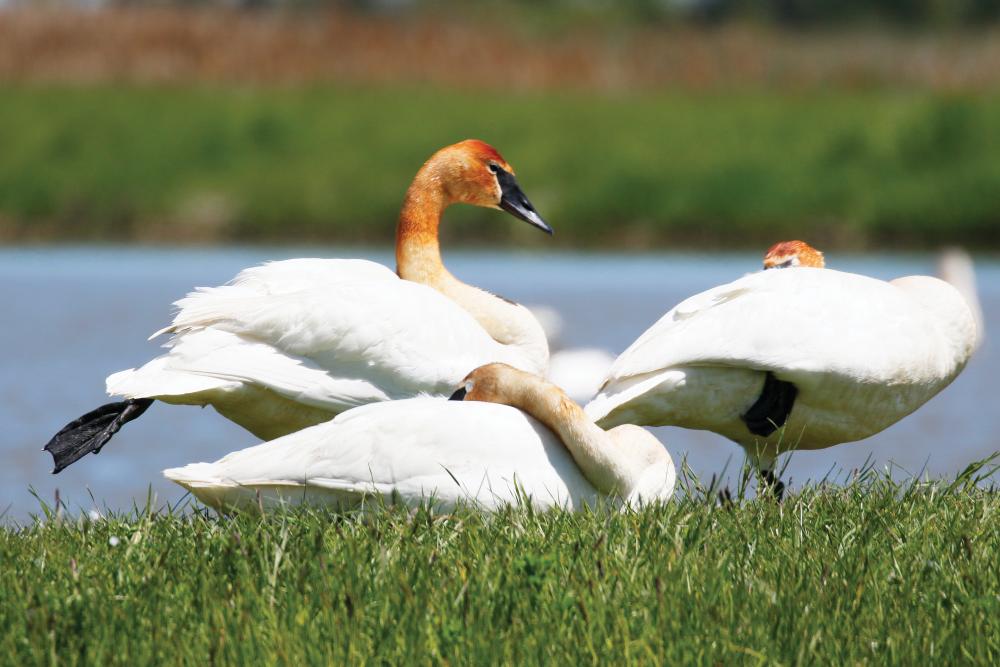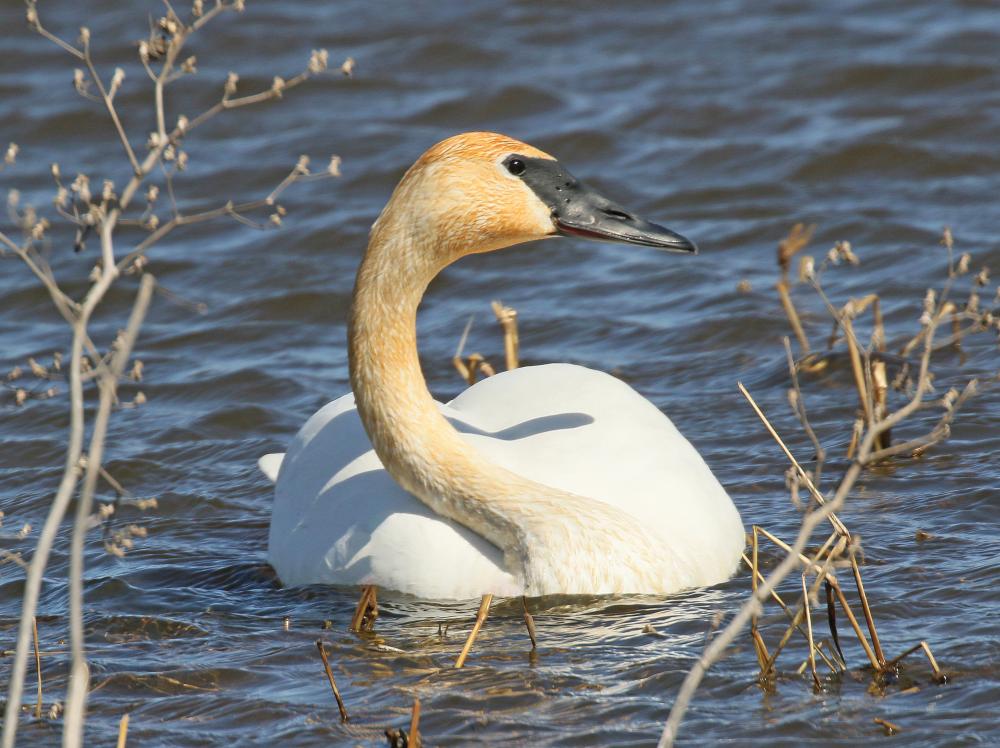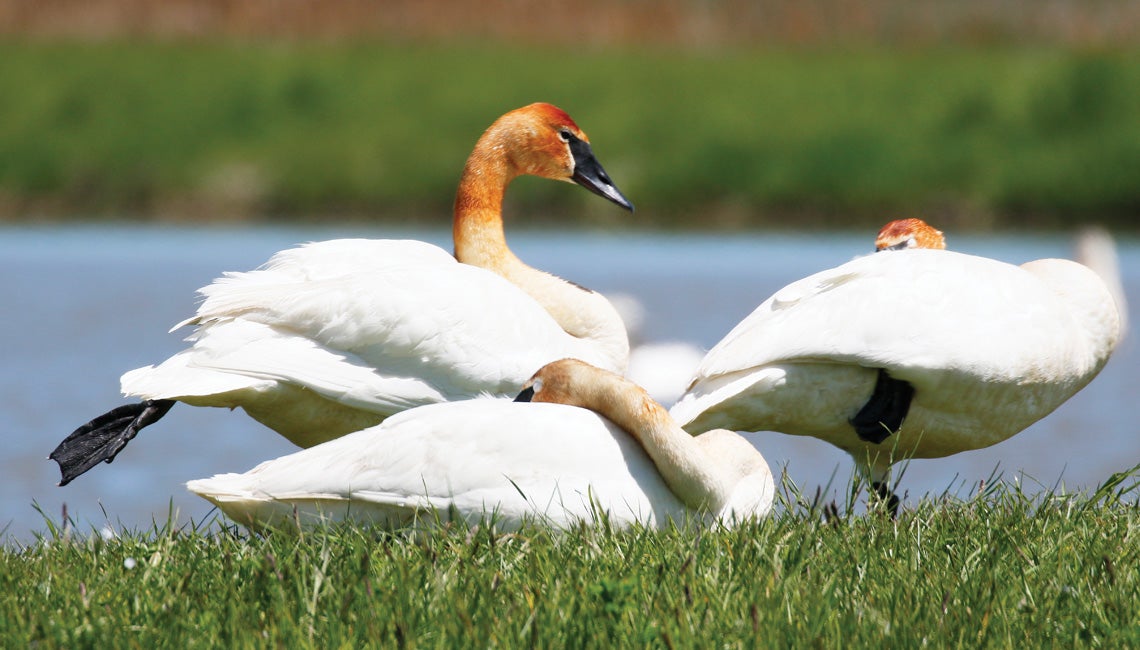
There are three categories of waterfowl that frequent the Buckeye State: ducks, geese, and swans. Swans are by far the largest of them — weighing 20 pounds or more, with wingspans measuring nearly 8 feet. There are just three swan species in Ohio (tundra swan, mute swan, and trumpeter swan), but it can be a challenge to make a positive identification at a distance, as they are all snow-white and relatively the same size.
As you get closer, though, the differences become more apparent, so grab your binoculars and let’s head outdoors.
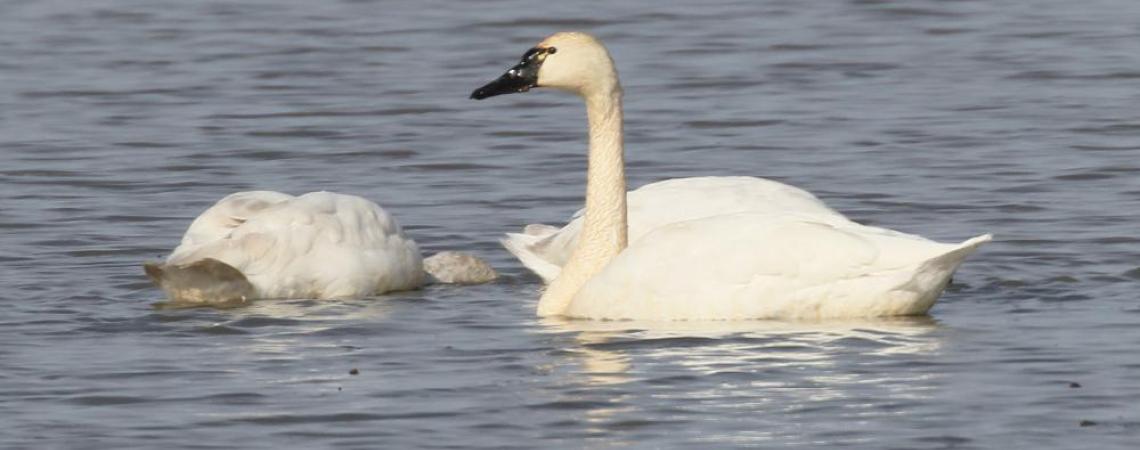
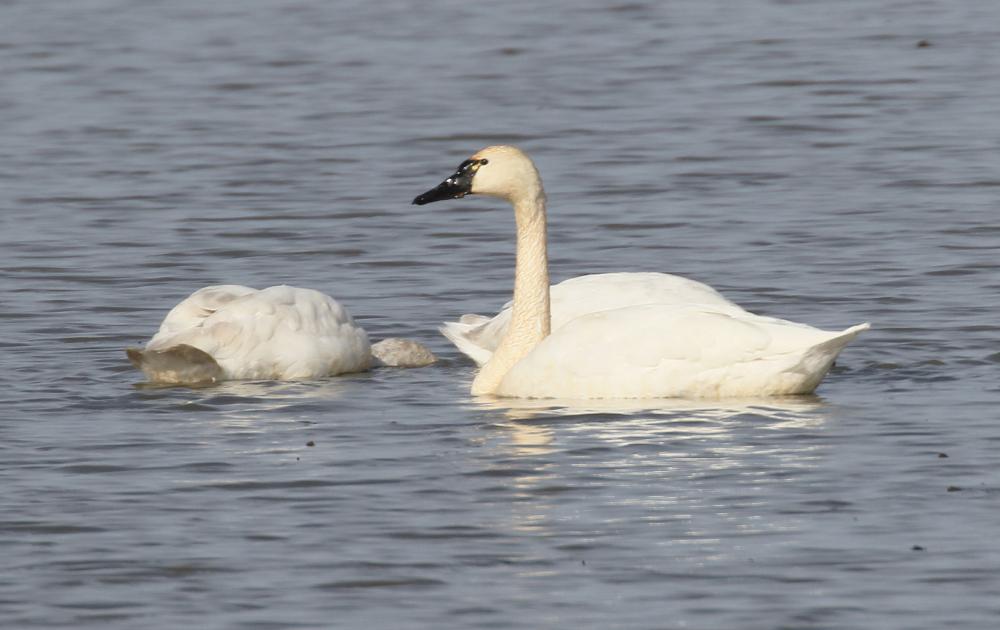
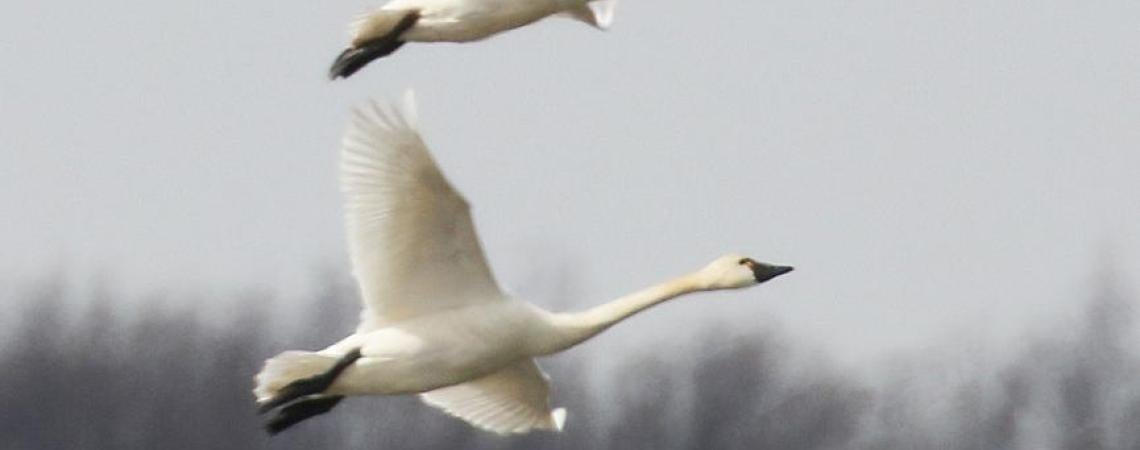
Tundra Swans, also known as Whistling Swans, have a yellow lore in front of the eye, at the base of their bills.
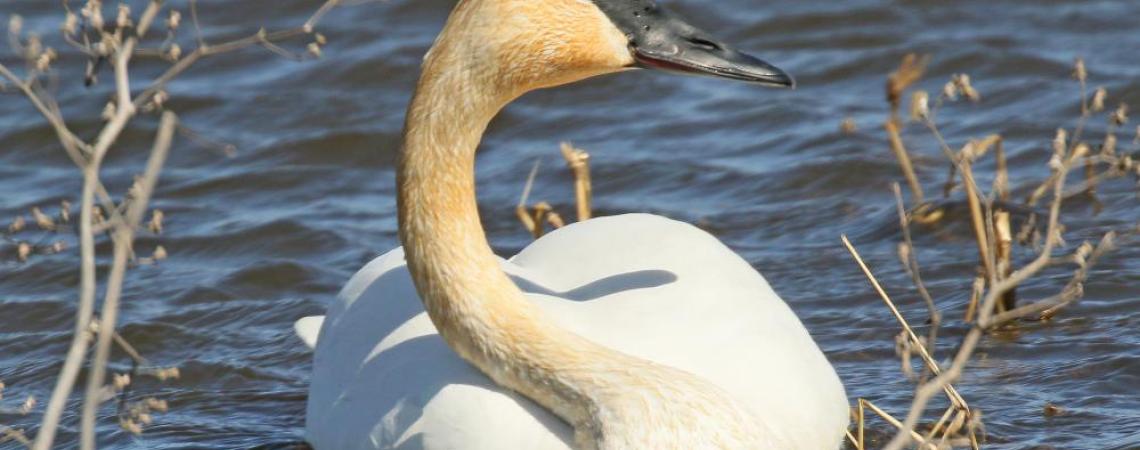
Tundra swan (the good)
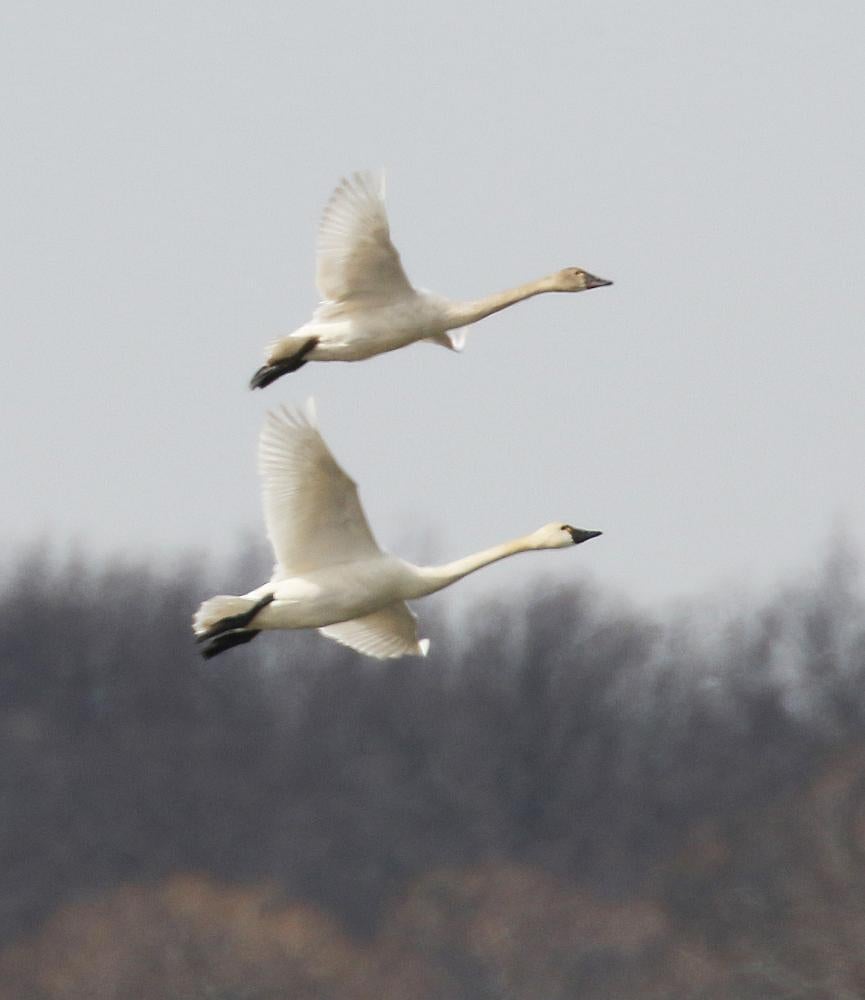
The tundra swan is Ohio’s only native swan. Large flocks of them migrate through the state late in February and March on their way north to nest in the High Arctic, then come back with their young cygnets the following November and December, especially along the shores of Lake Erie. If you have an older bird ID book, the tundra swan may be identified as a “whistling swan.”
According to Kevin McGowan, an avian educator with the Cornell Lab of Ornithology in Ithaca, New York, “The name whistling swan was changed to tundra swan in 1983 because it was lumped with the Bewick’s swan of Eurasia and considered the same species.” So, how best to identify the tundra swan/whistling swan from the two other Ohio swan species? Look for the yellow lore, a small, bright-yellow mark immediately in front of each eye at the rear of the bird’s black bill.
Mute swan (the ‘bad’)
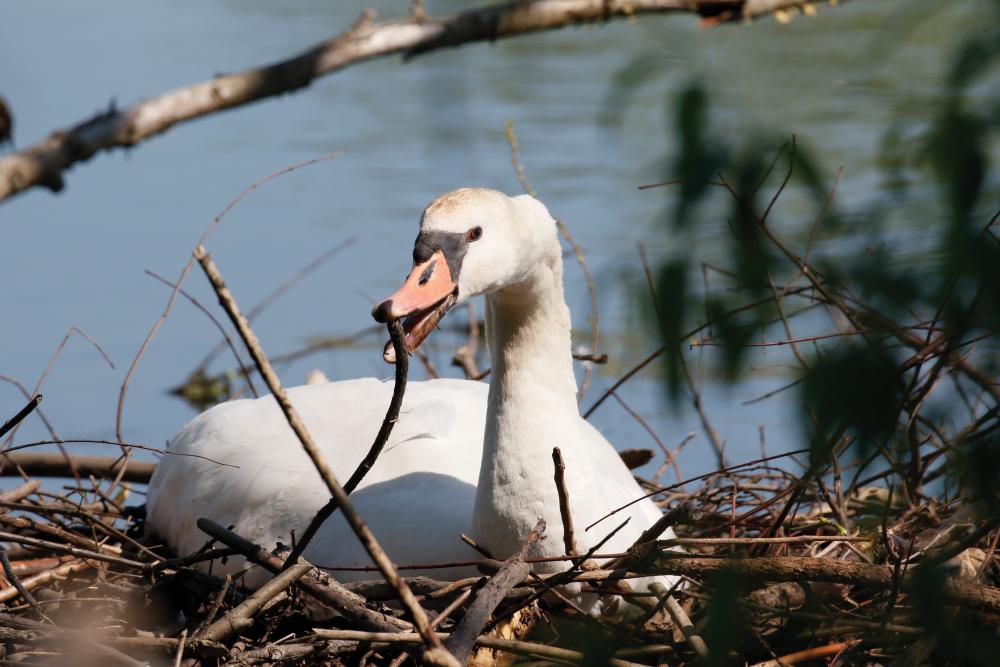
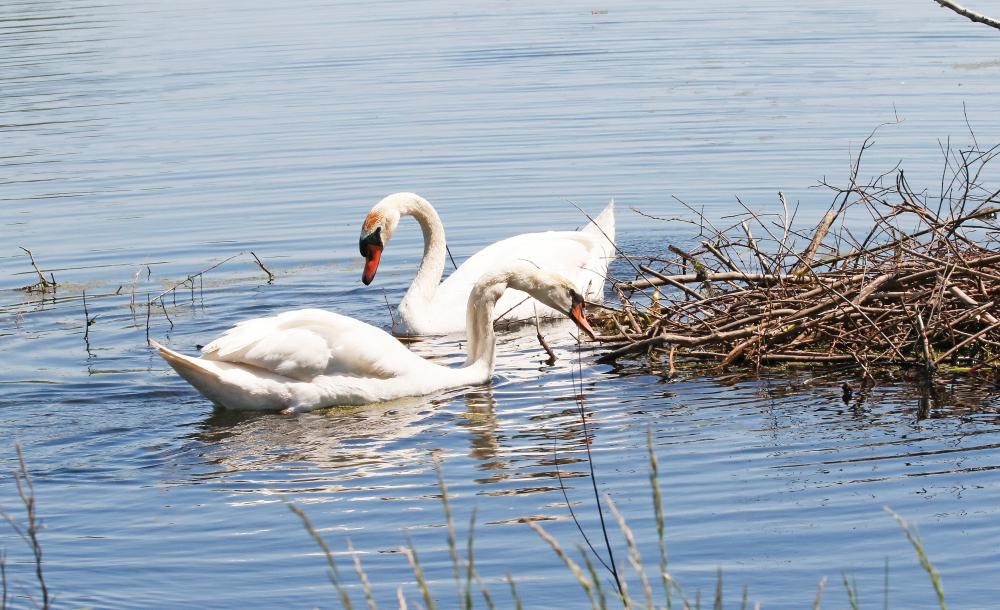
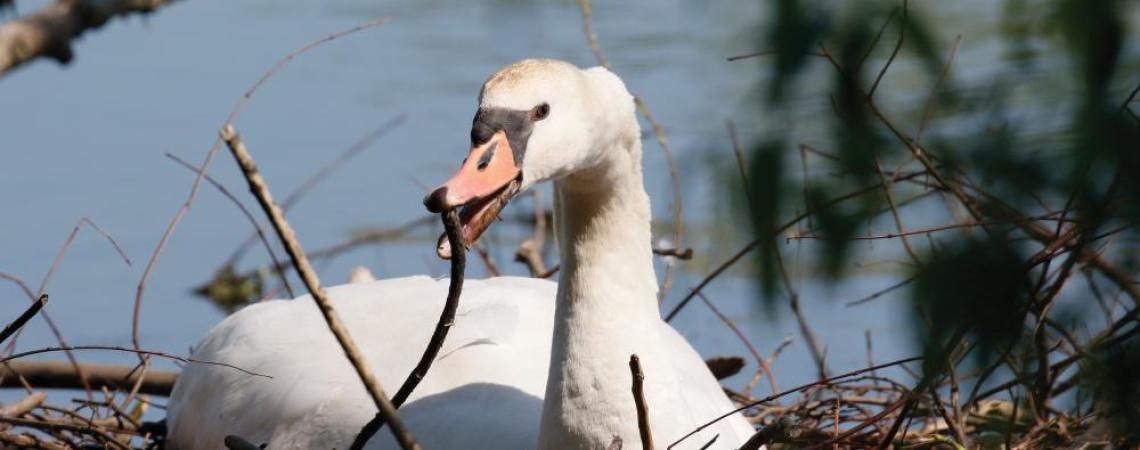
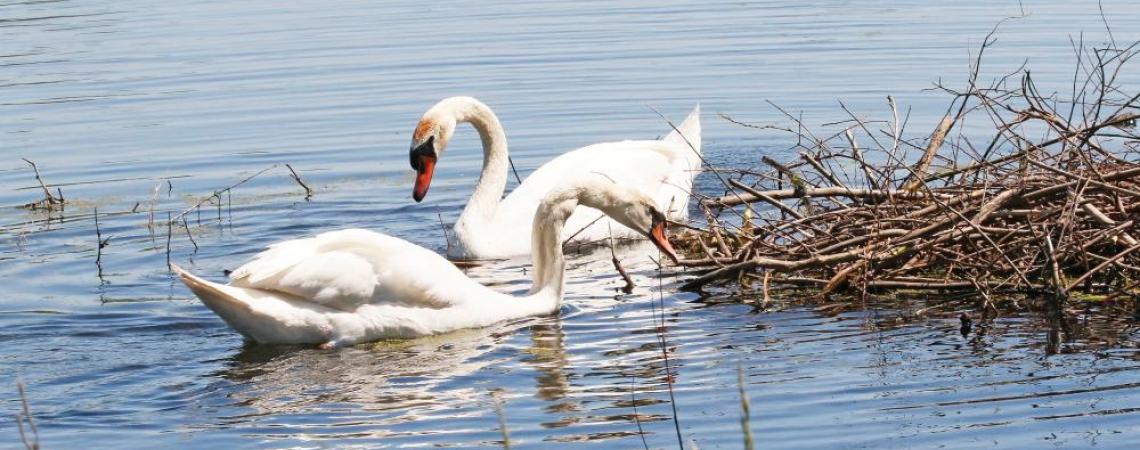
Mute swans are identified by their orange bill with a black knob at the base; while swimming, they also tend to hold their head and neck in a downward “S” curve. Many ornithologists consider the mute swan less than desirable because it’s a nonnative species that was introduced to North America in the mid-1800s. The first Ohio nesting in the wild was documented in 1987. The problem with mute swans is their natural aggression. As their numbers have increased, they’ve outcompeted native waterfowl for food and nesting sites.
I witnessed this behavior firsthand during the spring of 2024 while visiting East Point Nature Preserve on Lake Erie’s Middle Bass Island. A pair of mute swans had established a nest site, and I watched the female repeatedly reach down to the bottom of the shallow marsh with her long neck, pulling up long, thin sticks with her bill to add to the nest. In the meantime, her mate was constantly patrolling the entire wetland, chasing off any other waterfowl that attempted to land.
Trumpeter swan (the Ugly Duckling)
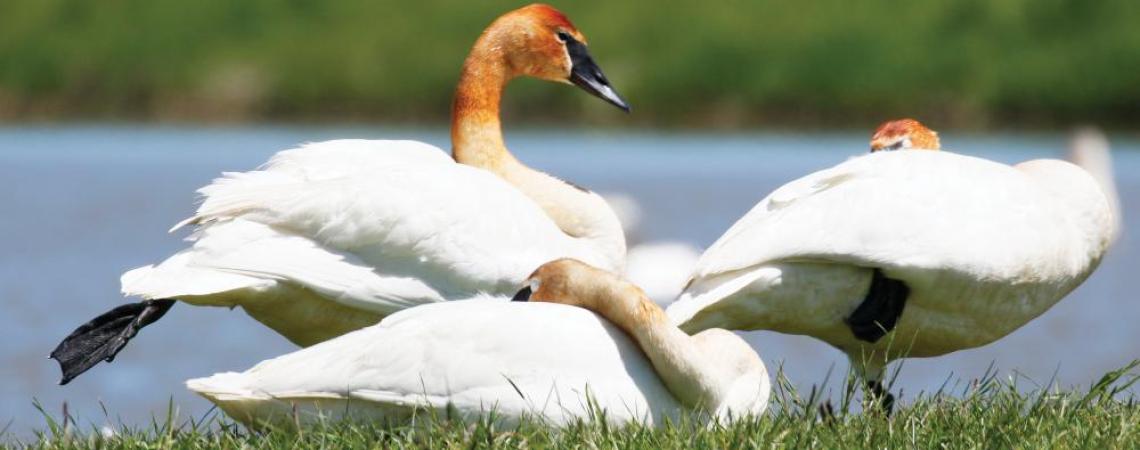
Here’s where swan ID gets a bit trickier. Trumpeter swans look similar to tundra swans, but lack the yellow lore at the base of the bill. Trumpeters are also larger in body size than tundras, but that’s often difficult to determine if the species are not close enough together for comparison. The best characteristic to look for when identifying a trumpeter swan is its combination wedge-shaped head and black bill.
Trumpeter swans were nearly hunted to extinction more than a century ago in North America. Thankfully, the unregulated slaughter was stopped just in time, when less than 100 known trumpeter swans remained. During the ensuing years, a national conservation plan to recover the birds was developed, and Ohio became part of that effort.
In the Hans Christian Andersen fairytale titled “The Ugly Duckling,” a young duck is so large and awkward that it is expected to grow into a particularly ugly adult duck. Instead, it turns out that the bird wasn’t a duck after all, and grows up to become a beautiful, graceful swan. It’s a story with a happy ending, just as the real story of the trumpeter swan is.
Trumpeters were removed from the state’s threatened species list in 2024, culminating a 28-year effort by the ODNR, Division of Wildlife, to restore a population of trumpeter swans within the state. Today, Ohio’s trumpeter swan population stands at nearly 1,000 birds, with pairs nesting in 26 counties, their unique, trumpeting calls once again heard emanating across Buckeye wetlands.