American history

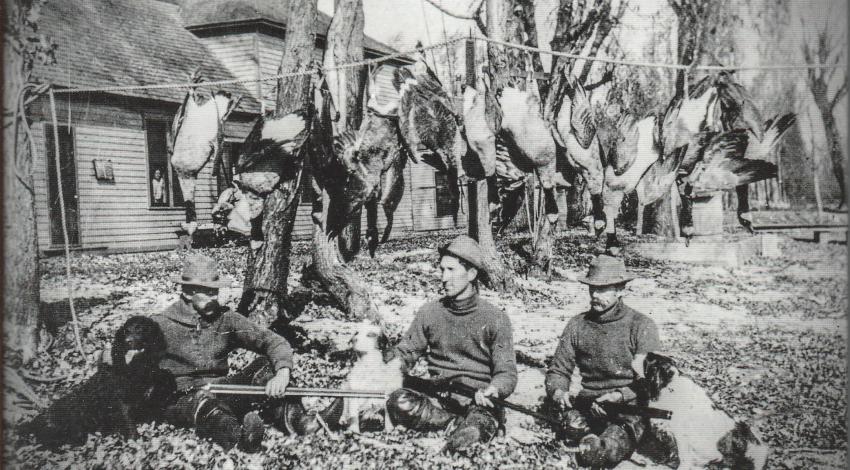
A black and white image of men sitting on the ground with guns after a duck hunt

Sudden, severe storms can rake the Great Lakes at any time of year.

The Great Lakes Shipwreck Museum estimates that from 1875 to 1975, somewhere around 6,000 commercial ships sank on the Great Lakes — and those are only the ones that were documented. Some experts say the actual number could be more than four times that. Between one-fourth and one-third of them happened in November. 

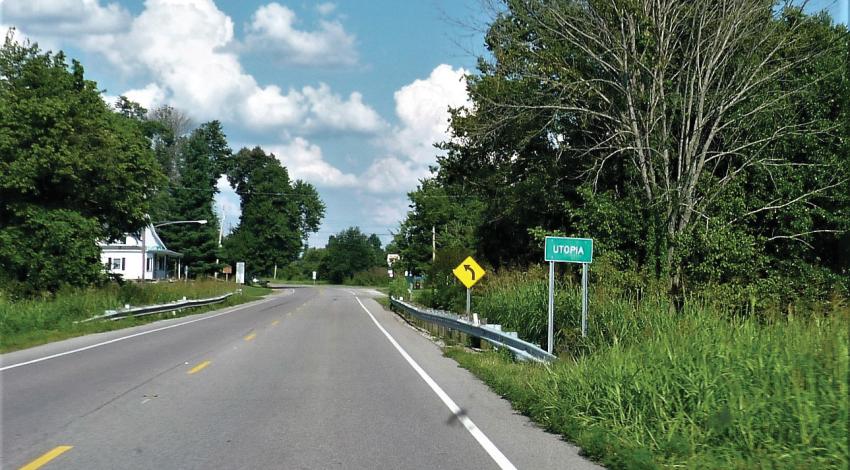
The road leading into Utopia, Ohio

Communes, seeing how they are often made up of individuals who possess a similar innate trait (generously called “self-interest”), always fail.

The first Utopia

In the 1830s, our still-new republic was a land of religious chaos. New denominations arose and populist movements formed as some folks grew disillusioned with the status quo or frustrated by economic woes. 

It was with that as the setting that French philosopher Charles Fourier’s views on communal living began to gain popularity: that everyone should share equally in both the work and the wealth of a community. Fourier-inspired communes called phalanxes began to spring up from New York to Texas.

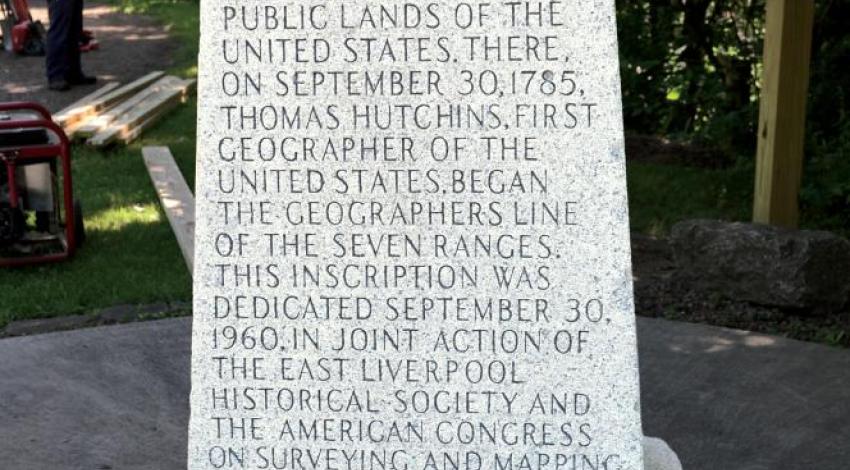
A monument in Ohio that commemorates three Jeffersonian ideals that were pivotal to the Land Ordinance

If you’ve ever flown over Ohio and points west, you cannot help but notice the checkerboard of farm fields and woodlots — the corn-and-soybean plaid that’s repeated westward until it finally exhausts itself at the edge of the Pacific Ocean.

In 1774, the Ohio Country was a vast land populated by a host of Native American tribes, and the British Crown wanted to use it as feudal property — owned by the king — where occupants would pay a tribute to live there. A young Thomas Jefferson was having none of it. He penned a pamphlet denouncing the plan — he hated the thought that only aristocrats and kings and churches could own land in America. More on that in a bit.

A group of students doing a Revolutionary War reenactment

As the United States celebrates its 250th anniversary this year, Americans are paying particular attention to the history of the nation: the “shot heard ’round the world,” the Declaration of Independence, the Revolutionary War, and all of the history from just before and af

“Reading about history in a book is good, but it doesn't give you the same feel as attending a living history event,” says Cindy Jackson, a reenactor who is coordinator of the Fair at New Boston, an annual Labor Day event in Springfield that includes several reenactments during its run. “It helps us get in touch with history instead of it being a dry subject in a textbook — and when you see it happening right in front you, it isn't as pretty as in the movies.”


Historians note the April 1775 “shot heard ’round the world” — the opening round of gunfire when colonial Patriots engaged the British army for the first time during a skirmish in Massachusetts. 

It read, in part, “As the Love of Liberty, and Attachment to the real Interests and just Rights of America outweigh every other Consideration, we resolve that we will exert every Power within us for the Defence of American Liberty, and for the Support of her just Rights and Privileges; not in any precipitate, riotous, or tumultous Manner, but when regularly called forth by the unanimous Voice of our Countrymen.”

In today’s parlance, it might be described as a challenge to “fool around and find out.”

Silhouette of people holding the American flag at sunset

America’s story did not begin in 1776. Long before the founding fathers gathered in Philadelphia, the seeds of liberty, self-government, and limits on power were sprouting in western Europe and beyond — it was a good bit of the reason people left there to settle in the colonies in the first place.

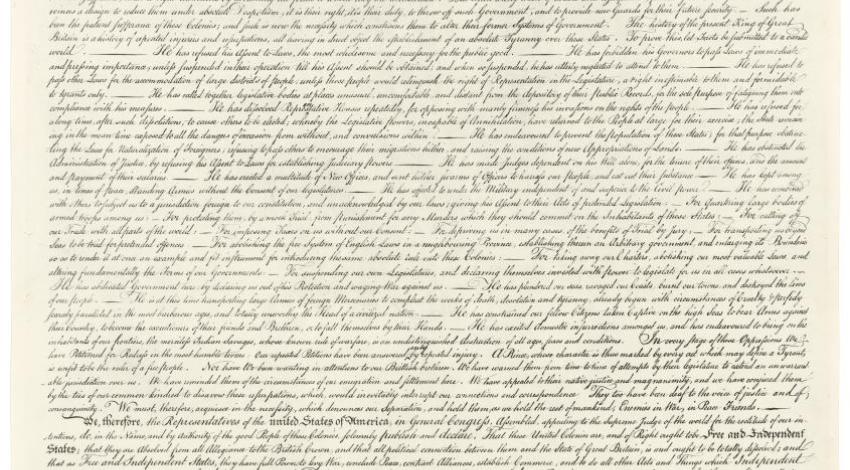
Declaration of Independence

Americans obviously celebrate July 4, Independence Day, honoring the date on which the Continental Congress officially adopted Thomas Jefferson’s statement declaring the American colonies’ independence from Britain. This year, as part of the official U.S.

“They transformed a resolution into a binding act of commitment,” says David Zavagno, executive director of Lake Erie Heritage Foundation. “That moment — where individuals stepped forward and put everything on the line — is at the heart of our event.”

Zavagno says that the July 4 action was important, but it was the delegates’ actual signing of the declaration that was an act of mutiny against Britain and its king. “Signers picked up a pen and risked their life, knowing they would be forced to pick up a sword to defend it,” he says.
Maria Stein Shrine of the Holy Relics

When Francis de Sales Brunner, a Catholic missionary priest from Switzerland, first came to what is now Mercer County in the mid-1840s, one of the substantial number of religious artifacts he brought with him was a depiction of a miracle in which the Virgin Mary is said to

His original collection, expanded through acquisitions and donations over the years, has grown into one of the largest collections of holy relics in the country, and today, the Maria Stein Shrine of the Holy Relics draws visitors from around the world to pray and reflect among more than 1,200 documented pieces displayed in a series of three hand-carved wooden altars and assorted glass cases. 

A group of people sitting in grass listening to a book reading

In 1957, humorist James Thurber wrote to Columbus Dispatch writer and artist Bill Arter to discuss the future of the house where Thurber had been born.

Not a bad local legacy for a humor writer and cartoonist who frequently made his hometown and its inhabitants the butt of his jokes. In stories like “The Day the Dam Broke” and “University Days,” the good citizens of Columbus and its land grant college, Ohio State University, were often portrayed as naïve or foolish at best, bumpkins at worst. But overall, his portrayal was fond, says Leah Wharton, operations director at Thurber House. 

Great Council State Park welcome center

Of Ohio’s 88 counties, eight are named for Indian tribes: Delaware, Erie, Huron, Miami, Ottawa, Seneca, Tuscarawas, and Wyandot.

In development since 2019, Ohio’s newest state park is located along U.S. Route 68 just north of Xenia, where “Old Chillicothe” — a historic Shawnee village — once stood. As Gov. Mike DeWine said at its June 2024 grand opening, “The land had a story that needed to be told.”