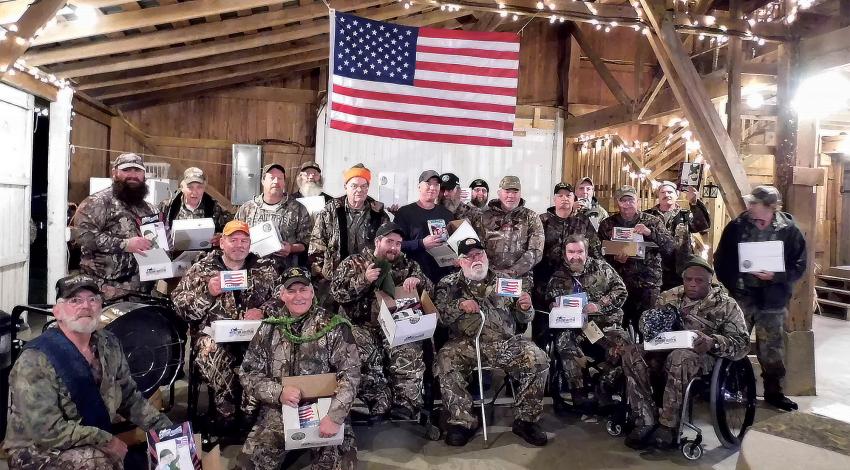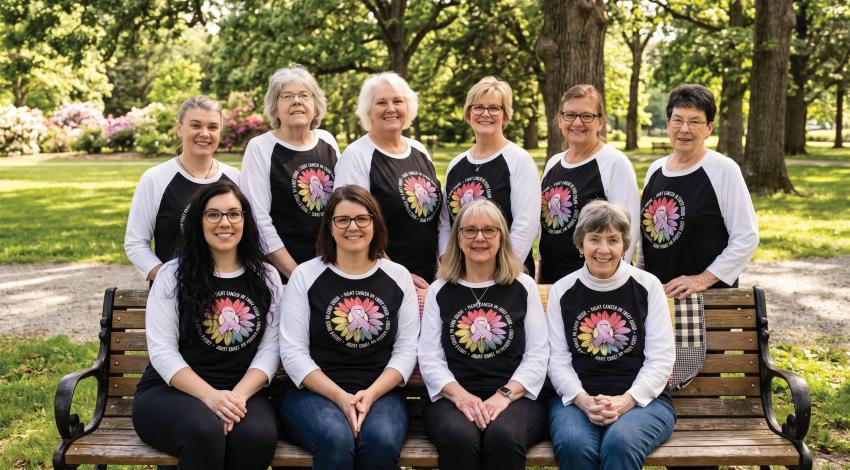
Pat Mangen Cochran still remembers the time a former classmate recounted undergoing chemotherapy for recurrent bladder cancer.
She had no idea her good deed for a childhood friend would spark an ambitious project that now continues to benefit cancer patients of all ages throughout the state and beyond.
“Red wore the modified shirts to The James Cancer Center in Columbus and the nurses went crazy,” she says. “I made more in different sizes for Red to take in — not just once, but quite a few times. They wanted more that they might distribute at all seven treatment centers in their system.”
Historians note the April 1775 “shot heard ’round the world” — the opening round of gunfire when colonial Patriots engaged the British army for the first time during a skirmish in Massachusetts.
It read, in part, “As the Love of Liberty, and Attachment to the real Interests and just Rights of America outweigh every other Consideration, we resolve that we will exert every Power within us for the Defence of American Liberty, and for the Support of her just Rights and Privileges; not in any precipitate, riotous, or tumultous Manner, but when regularly called forth by the unanimous Voice of our Countrymen.”
In today’s parlance, it might be described as a challenge to “fool around and find out.”

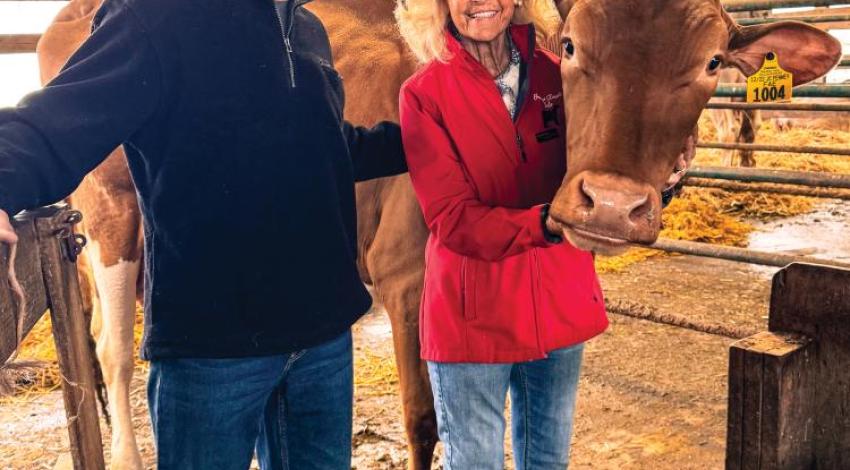
Though they also raise corn, soybeans, and hay at Ayars Family Farm in Mechanicsburg, John and Bonnie Ayars are, at their core, dairy farmers.
But it’s not just milk or even the marketing of genetics from their purebred cattle that’s at the heart of the business. From the start, it’s the educational aspect of the farm that appealed to Bonnie and John, who are members of Piqua-based Pioneer Electric Cooperative. Each summer, the Ayarses welcome hundreds of local elementary school students to the education center they built on the farm. Visitors get to meet and touch famous cows like Buckeye Bessie, Honeybun, and Bravo. They feed calves, try to milk a cow, and sample ice cream made on the farm.

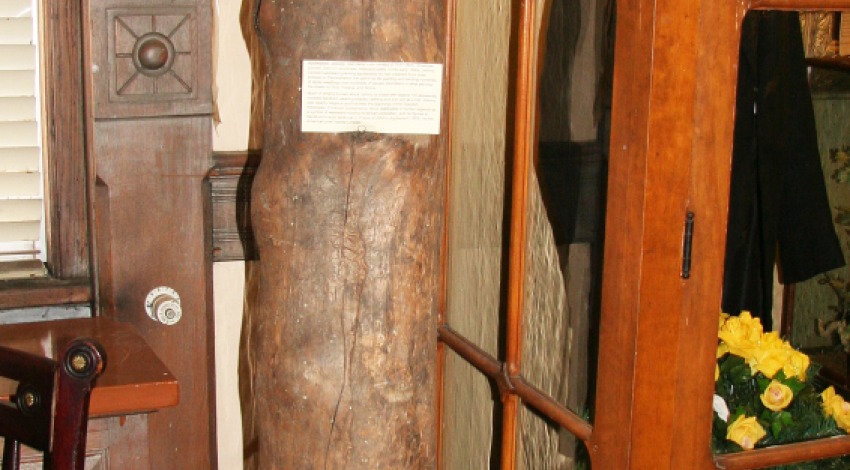
A deeply worn long wooden table, believed to date back more than 400 years, is the centerpiece of the Contraxx Furniture offices in McConnelsville.
Early in his career, Workman learned how the national furniture world works — through trade shows, corporate showrooms, and long days selling into a system built for scale. During his years at Taylor Woodcraft, a McConnelsville-based school furniture manufacturer, he built relationships with major retailers, including Williams-Sonoma. He began supplying consumer pieces — starting with stools — and saw how demand could push standardized production toward customization.

If the internet had a physical body, data centers would be its brain. If you’ve ever streamed a show, backed up your photos, or asked a smart speaker for the weather, all of that information came through a data center.
When big changes come very quickly, often with little or no information that’s easily accessible, neighbors tend to react with suspicion and sometimes even anger. Residents of towns like Trenton, in Butler County, and South Bloomfield, in Pickaway County, have crowded local zoning boards, signed petitions, and generally begun pushing back against data centers planned in those communities. In fact, at least 30 Ohio municipalities have enacted or are considering enacting moratoriums on new data centers.
And that raises a question: What’s the big deal?

More than three thousand years ago, nomads in Central Asia moved from place to place with their homes on their backs. The structures — wood frames covered with felted wool or animal fur — were light, yet they could withstand the winds of the barren steppe.
Add some other modern conveniences, and it makes for glamping at its finest. Turn the page to check out a few options for yurt stays right here in Ohio.

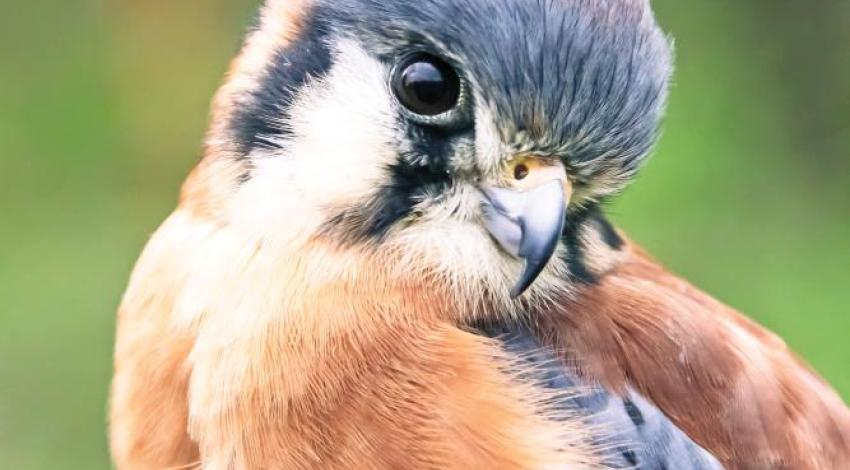
You might see one while you’re driving down an interstate highway or a country road: a relatively small, robin-sized bird that you might not think much about until you realize that it’s hovering 50 feet or so in the air, intently staring down at the grassy road berm below.<
More commonly known in years past as sparrow hawks, kestrels measure just a foot or less in body length, but have a wingspan of up to 2 feet, which aids them in their unique hovering style of hunting.
Despite their small size, kestrels possess the same fierce, intense nature of larger falcons, such as the peregrine, which also lives in Ohio. Kestrels, however, are no match for peregrines’ speed. In level flight, peregrines have been clocked at 70 miles per hour, and in a steep dive known as a stoop, they can reach 200 mph — the fastest creature on earth!

Remember your first roller-coaster ride?
Kilner, a chemistry teacher at Eastlake North High School, is president of the Great Ohio Coaster Club, where he says he’s formed lasting friendships with fellow coaster enthusiasts — whom he describes as “friendly people who want everyone to have fun.” But the relationships, he says, go deeper than a common admiration for corkscrews and loop-de-loops. “I lost my dad last year,” he says. “I didn’t publicize it, so I was amazed at how many people from the club reached out to me.”