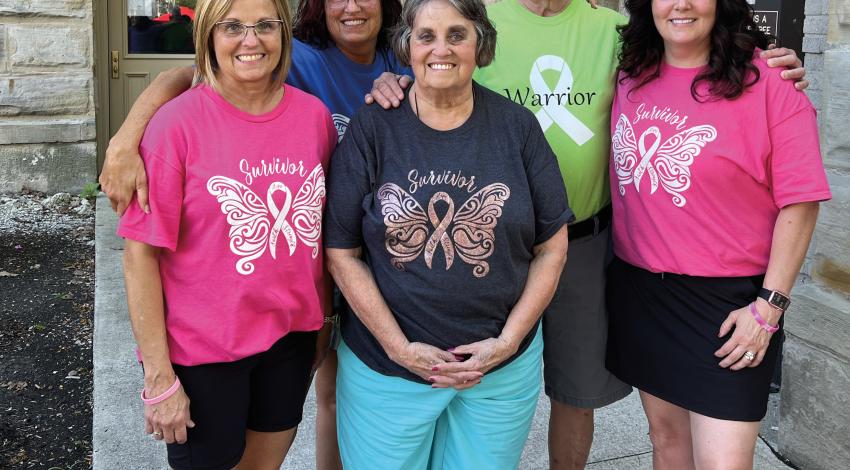
One in eight women will be diagnosed with breast cancer during their lifetime.
Pink Ribbon Girls serves five regions: Dayton, Cincinnati, and Columbus in Ohio; St. Louis, Missouri; and the Bay Area in California. The organization’s sights are set on expanding their reach to other regions throughout the country, to ensure that no one has to battle breast or gynecological cancers alone.
As Hohenstein can attest, breast cancer affects more than the individual — it affects the entire family.

Mosey down a dirt street, browse through old-time shops, watch a Wild West shootout, or belly up to the saloon bar for a cold sarsaparilla. You can do it all at Dogwood Pass near Beaver in rural Pike County.
The saloon came first in 2010, and today more than 30 buildings occupy a 2-acre tract at the Montgomery farm. There’s a general store, a jail, a bank, a photography studio complete with vintage costumes, an undertaker, a shooting gallery, a blacksmith shop, a combination church/school, Boot Hill cemetery, and the Montgomery Mining Company, where young and old alike can mine for gems on certain days.
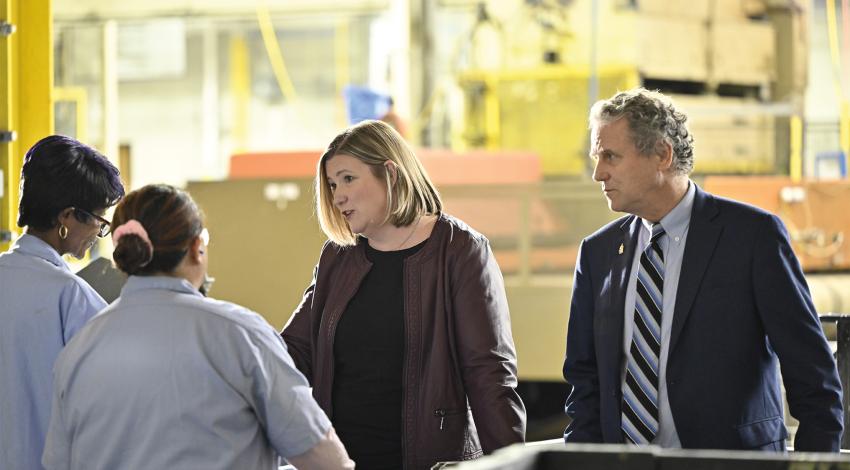
Ohioans head to the voting booth Nov. 8 for one of the most consequential midterm elections in recent memory. Among the many significant decisions voters must make is who will lead the state’s executive branch as governor for the next four years.
If elected in November, what will be the issues of highest priority for your administration?
Mike DeWine: We must bring economic prosperity and hope to every part of Ohio. We must improve our economic development efforts in Ohio and focus on every part of the state. To succeed in a tech-focused economy, we are investing substantially in career education, job training, and workforce development. We are closing the digital divide so that all Ohioans have access to high-speed internet services, which will create opportunity for generations.
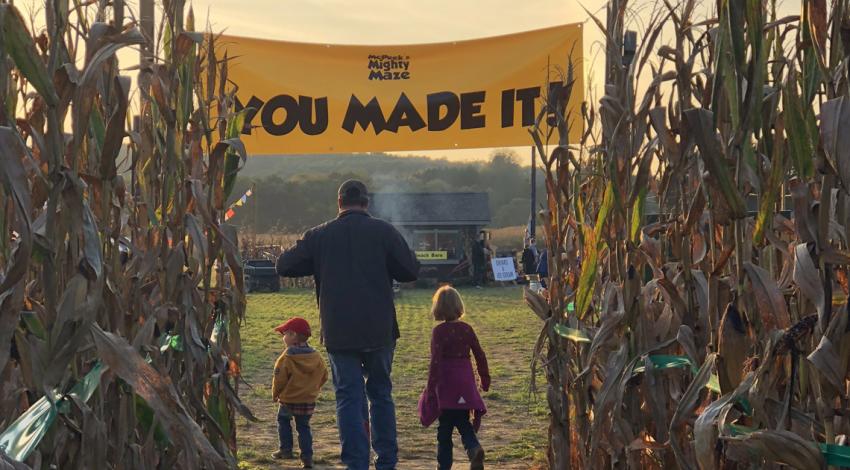
As viewed from above, some corn mazes are complicated labyrinths of intricate, themed designs. Whether they’re looking for a challenge or just an autumn atmosphere, enthusiasts of all ages are attracted to corn mazes.
McPeek’s Mighty Maze and Fall Festival
Located at the Coshocton KOA Holiday in Coshocton, the Mighty Maze is a part of the fall festival held by Ryan and Camille McPeek. Employee Amy Hamilton says they plant the corn like normal, and the maze is cut with a tractor and a GPS device.
Do mazers ever get lost?
“Some do need help,” she says, noting that guides are always available. Before closing each evening, employees sweep through the maze, looking for stragglers.
“We leave no man behind,” Hamilton jokes.

Buckeye Power has been the generation and transmission supplier to Ohio’s electric cooperatives since 1968, producing electricity from power plants and delivering it across the high-voltage transmission network (or “grid”) to each of those 24 electric cooperatives. Throughout this long history, American Electric Power (AEP) has been a partner to Buckeye Power in the generation of electricity — first only at Cardinal Power Plant, but adding more facilities as time went on.
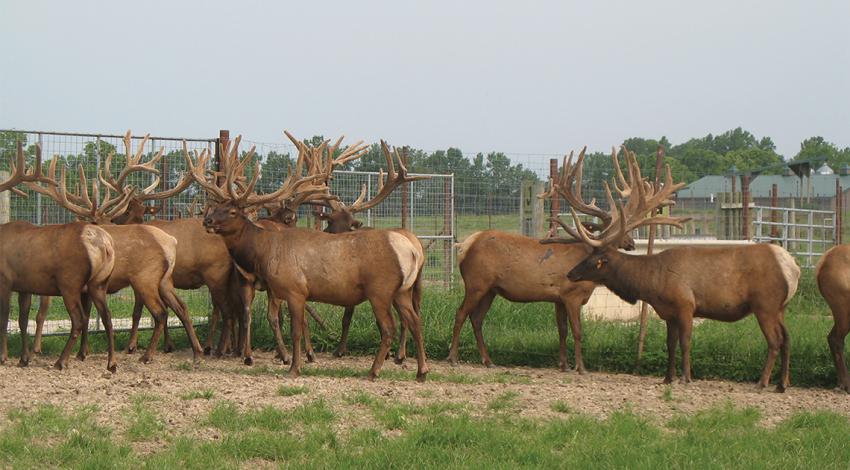
Around 200 elk are home on the range at Dave Flory’s Quiet Harmony Ranch in the rolling Preble County hills.
After viewing an informational movie, visitors can drive through the elk park to view the statuesque animals lounging in pastures and paddocks or opt for the 50-minute Outback Encounter, which affords a closer look and commentary. The inquisitive elk often approach fences for a peek at visitors or simply watch from their open shelters.
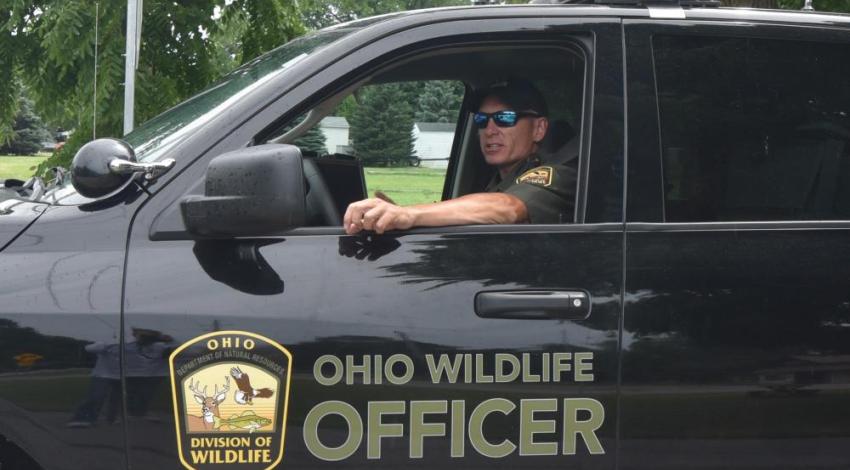
Mostly in life, possums, skunks, groundhogs, and racoons don’t get much respect. That’s especially so for the ones who spend their last earthly moments on Ohio roadways, just before they get hit.
Katie Dennison is a research biologist for the Ohio Department of Natural Resources’ Division of Wildlife. At the Olentangy Research Station in Columbus, she oversees the annual Furbearer Roadkill Survey. And yes, that’s the official name.
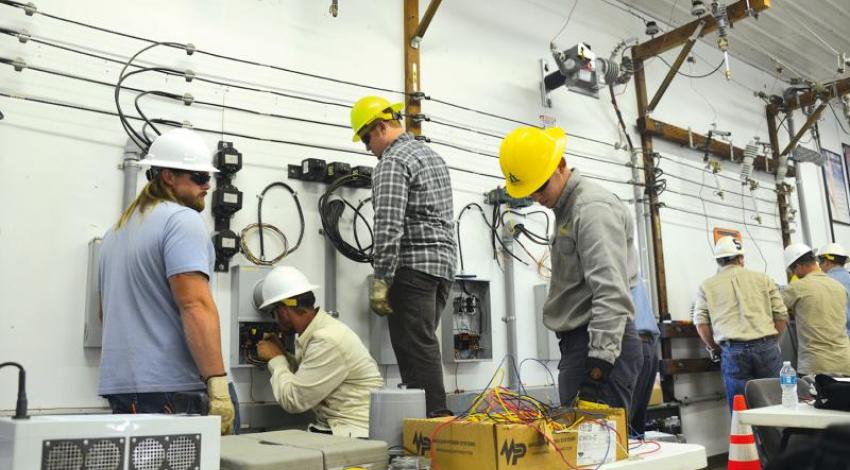
Mike Taylor was a few days away from a scheduled pre-hire lineworker assessment at Paulding Putnam Electric Cooperative when his little brother, Tim, attended an Ohio Farm Bureau ExploreAg one-day program at the
ExploreAg is Ohio Farm Bureau’s signature agricultural literacy and workforce development program. The majority of its offerings, which are free, are week- and weekend-long immersion camps for high school students. Teens get a broad-spectrum look at agriculture and related STEM fields, develop their leadership and collaboration skills, and prepare for college and/or a career.