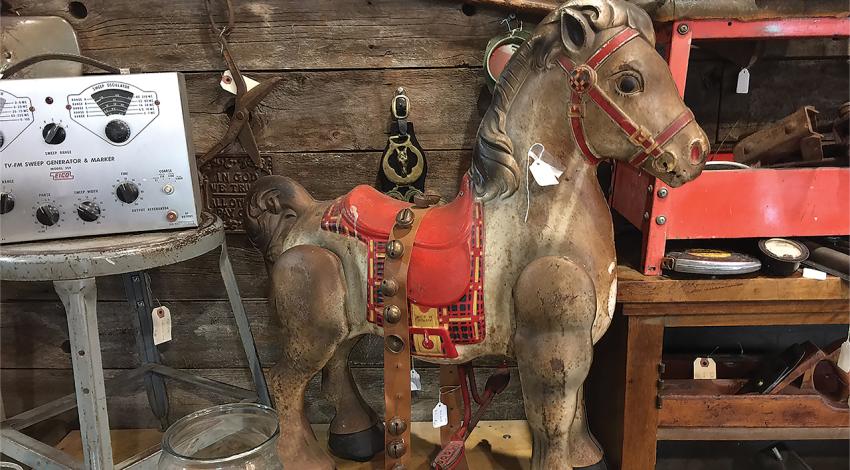
No one ever went into the vintage toy business out of dreary obligation.
In fact, many of the people we met during our look at vintage toy stores around Ohio started as hobbyists collecting the memories of their own childhoods.
“A hobby turned into a business,” says Mike Patterson, owner of Mike’s Vintage Toys in Springboro, describing his career path.

Harrisville, West Virginia, boasts the oldest operating dime store in the United States. Berdine’s Five & Dime began as a general store in 1908 and has been operating at its current location on Court Street since 1915. It looks to be ready for an even longer stay.
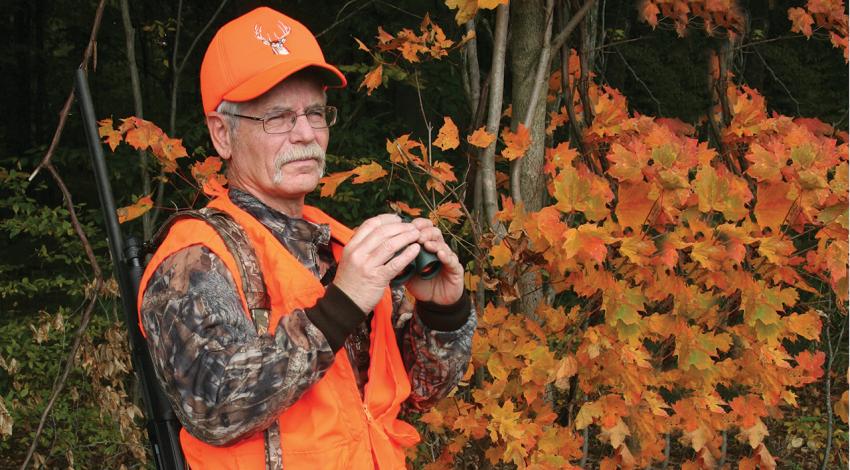
Twenty years ago this fall, Rick Wilson was driving along a Virginia highway when he spotted a woman standing beside a car with the trunk open. “From the way she was dressed and by the appearance of the car, it looked like she was not doing too well financially,” Wilson says. “When I stopped and asked if her car was broken down, she said, ‘No, but could you please help me load a deer into the trunk?’”
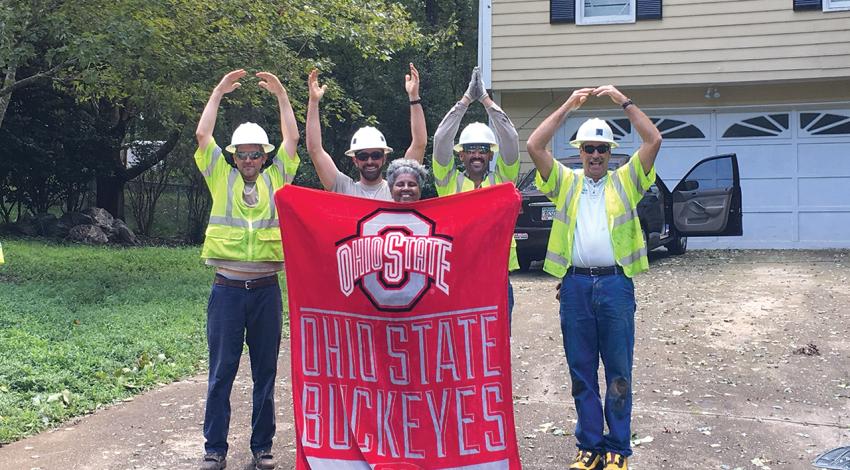
Chuck Chafin has worked on electric lines with the South Central Power Company for 18 years, during which time he’s seen his share of power outages and general destruction both in Ohio, and beyond, caused by extremes in weather.
So while he wasn’t particularly surprised at the damage that he and 72 other lineworkers and supervisors from Ohio’s electric cooperative network found in Georgia in the wake of Hurricane Irma in early September, it still presented a big job.

For some 25 years, I raised beagles for hunting cottontail rabbits. Reluctantly, I gave it up about a decade ago when my oldest dog died. What I miss most about the sport is the sound of the chase.
Hunters call it hound music.
My longtime friend and fellow outdoors writer Mike Tontimonia is another who knows the sound well. A member of Carroll Electric Cooperative in eastern Ohio, Tontimonia estimates he’s owned 150 beagles during his lifetime — both hunters and field-trialers — with as many as 20 dogs in his kennel at any one time.
The electric power “grid” that serves our country is a complex and highly technical system that depends on hundreds of organizations working together, each responsible for specific roles, to make it work. Its reliability and stability also depend on common-sense rules from federal regulators and power system operators that direct the actions of electricity providers, both large and small. I have voiced my concerns, on occasion, about ill-conceived or over-reaching regulations that add costs or undermine reliability with little or no benefit to consumers.

The headlines in late 1950 looked grim for our boys on the front lines in the Korean War — and for the Ohio-based Lustron Corporation.
Literally, side by side, you could read newspaper columns across the country about Marines and soldiers facing the coldest winter imaginable as they sought to liberate South Korea from the Communist aggressors, and about the Lustron Corporation facing ruin as it was pushed out of the burgeoning post-World War II housing market. Both made national news.