Of the more than 10,000 B-17 Flying Fortresses built during the World War II era, probably fewer than 10 of the iconic bombers are currently air-worthy.
It wasn’t long after the Liberty Belle left Grimes Field that Tom Reilly, who had led restoration efforts on the plane and brought it to Grimes Field, contacted the airport looking for someone to lead another B-17 restoration project. The Shiffer family jumped at the chance.

When I was younger, I was the girl who hated physical education, didn’t play sports, and ate a steady diet of junk food. Because I was young, I had no health concerns or weight issues.
My husband, Mike, a physical education teacher and a basketball coach at the time, was in a similar boat. When Mike and I met, he was active, playing softball, and later, he played men’s recreational basketball until his legs and ankles got the better of him. His weight had increased, and that led to surgeries on his knee and ankles. He was benched for a while and when he returned to the basketball court, he was overweight and run-down, often with barely enough energy to get through the day.
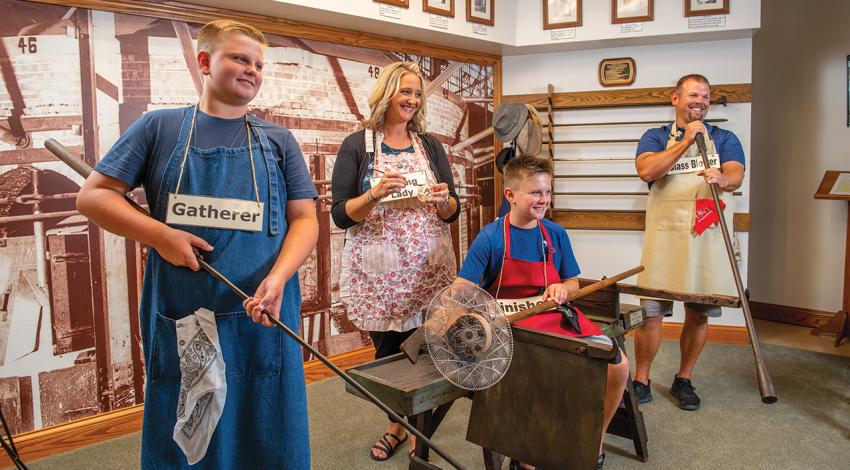
Cindy Arent adjusts her white gloves and smooths the front of her apron over her 19th-century dress.
National Museum of Cambridge Glass
The coal seams and sandstone deposits layered within the hills of eastern Ohio provided the perfect environment for the glassmaking industry to take root and flourish. The Cambridge Glass Company began operations in 1902, producing glassware until the plant closed in 1958. In 1982, the first museum of Cambridge Glass opened, brought to life by the sustained effort of an Ohio nonprofit group called the National Cambridge Collectors.

Just about every winter, I receive a frantic email from an Ohio Cooperative Living reader that goes something like this:
“Help! A hawk is attacking the songbirds at my birdfeeder! What should I do?”
It’s not the answer most want to hear, but the only alternative is to not feed birds. By choosing to feed, you congregate songbirds in numbers not normally found in the wild — and that, in turn, makes easy pickings for predators.
The most common hawk seen in the Buckeye State at winter feeders is the Cooper’s hawk. Sleek, fast, and deadly, this member of the accipiter grouping of hawks is one of the stealth fighter jets of Ohio’s bird world.

Largely serving Adams County, but spilling over the borders to four surrounding counties, Adams Rural Electric Cooperative serves over 7,500 members in southern Ohio. The majority of Adams REC’s consumer-members are residential, but they also serve commercial businesses like Hanson Aggregates Eagle Quarry, one of the largest producers of sand, rock, and gravel; and Murphin Ridge Inn, a popular bed-and-breakfast in Amish country. With 1,300 miles of distribution lines, Adams REC’s territory stretches across an area that is rich in history and nature.

More than we like, the will and whims of government affect your electric cooperative’s costs and operational decisions. Federal and state elected officials and their appointed regulators set laws and rules that govern a range of issues, including regional electric markets, grid access, environmental impacts, employment laws, and taxes and fees, all of which affect the cost and reliability of your electric service. Government relations and advocacy are an essential part of the job of managing an electric cooperative.
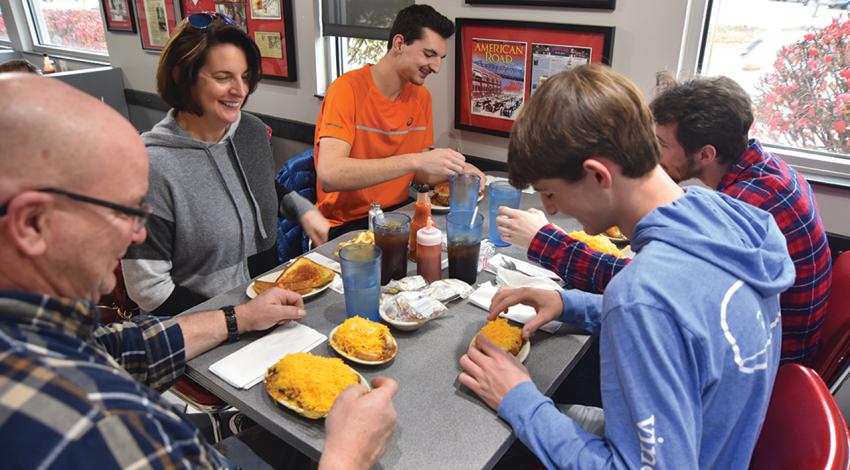
Fact is, no one remembers the day those foreigners invaded Cincinnati — they don’t teach it in the history books — but that influx of folks from Greece and the Macedonian region early in the 20th century has left its tasty marks on the region.
There are more than 200 such shops in the region, and the star of the show at each is the soupy, spicy concoction that, despite the name, bears little resemblance to what most Americans consider chili. Further, it’s tough to guess what’s in the chilis because no one wants to talk recipes.
The original
Steve Martin has operated Empress Chili in Alexandria, Kentucky, for 35 years.
“Empress is the original,” he says. “It all started in 1922 with brothers Tom and Jeff Kiradjieff; they were Macedonians. Empress is the best.”