Most folks familiar with Ohio’s geography know that glaciers covered two-thirds of the state, sparing only the southeastern portion from the cold crush of a Pleistocene winter.
The glaciers also left a little prize that they picked up on the slow slog south: gold.
Yes, there is gold in Ohio. You can find it in perhaps most any stream that flows over glaciated Ohio, but the vast majority of the fine flecks of the yellow metal occur where the glaciers advanced their farthest and fell apart — melted — dropping what they had carried along.
At the corner of Vine and West 8th in downtown Cincinnati, a giant mural covers the entire side of a six-story building. It depicts a colorful, swirling flock of birds: passenger pigeons, now extinct. The last passenger pigeon, Martha, died at the Cincinnati Zoo on Sept.
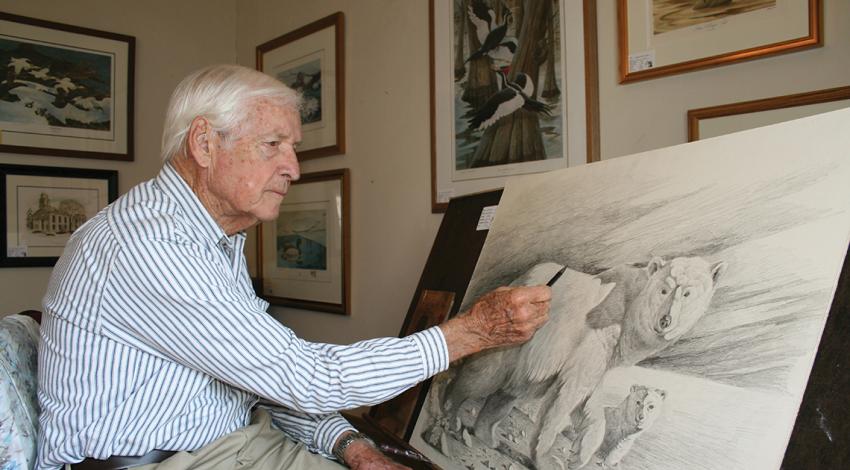
If it has to do with birds in or around Cincinnati, Ruthven probably was part of it.
Born in 1924, Ruthven knew he wanted to be a professional artist from an early age, preferably a wildlife artist. Like so many young men of that era, however, his dream was deferred by World War II; John enlisted in the U.S. Navy after he graduated from high school in 1943.
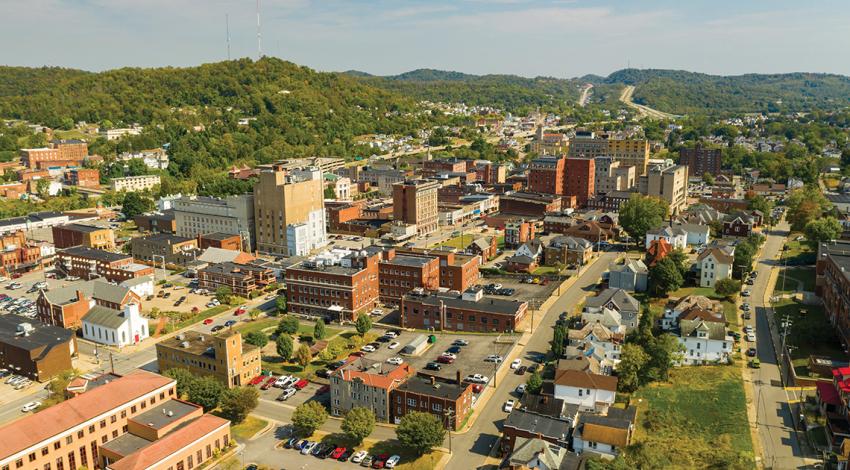
Harrison Rural Electrification Association (HREA) is unique because it is the only electric cooperative in West Virginia. Serving 7,742 consumer-members, HREA spans seven counties on 828 miles of electrical line.
So much to do
The area covered by HREA is a vibrant community. Visitors can explore multiple festivals throughout the year, including the West Virginia Italian Heritage Festival, the West Virginia Black Heritage Festival, the Greek Food Festival, and events such as the Cecil Jarvis Greater Clarksburg 10K. In Clarksburg, there’s a rich public arts and entertainment industry. Clarksburg Amphitheater hosts live music, movies, and other events. There’s also the Robinson Grand Performing Arts Center for productions and programs appealing to all ages.
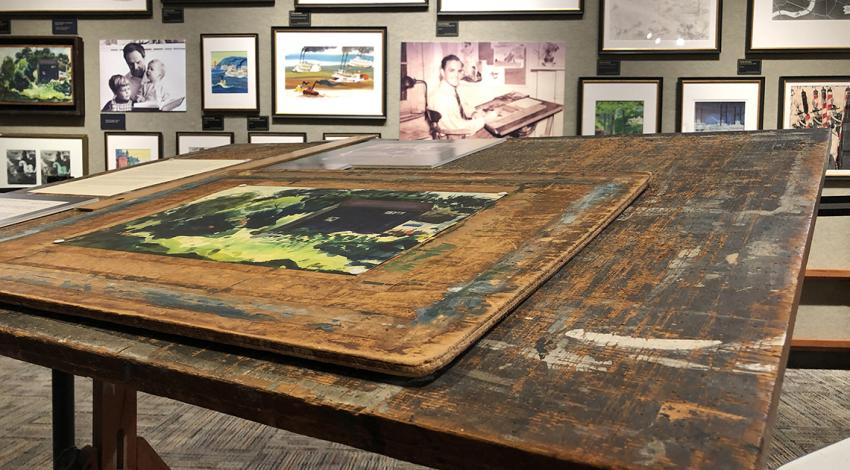
What are some lovable wild things, a colorful and very hungry caterpillar, and a big red dog — along with 16,000 of their friends — all doing in Findlay, Ohio?
There, Dan Chudzinski meticulously cares for thousands of works of original art from much-loved books like Where the Wild Things Are; The Very Hungry Caterpillar; Clifford the Big Red Dog series; The Cat in the Hat; Arthur the Aardvark; and many, many more.
“By day, I’m the curator here,” says Chudzinski, who also works as a professional artist. “I look after this amazing collection of children’s-book art and give people a reason to care about the art and experience it firsthand.”

Looking back, I doubt that too many of us will think of 2020 as a great year. It was strange, sad in many ways, and long — 366 days, to be exact. That’s right: 2020 not only seemed long — it was long.
Many of us are happy to turn the calendar to 2021, but the last 12 months weren’t all bad. There were some bright lights in the electric cooperative world.
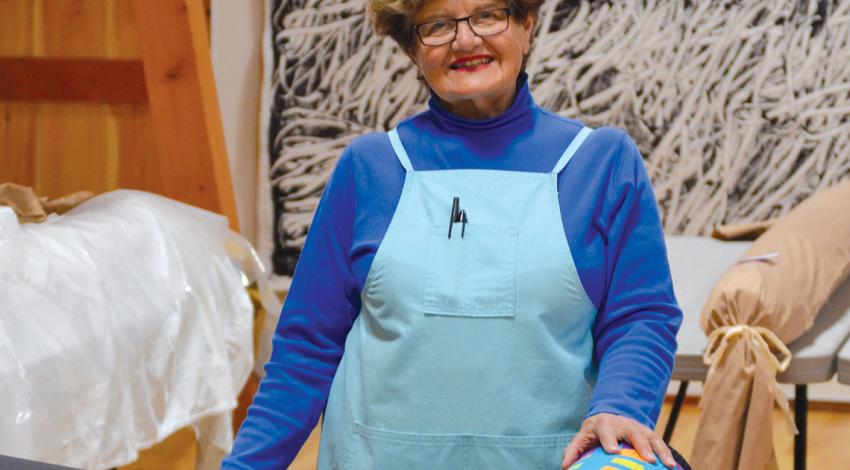
Nancy Crow’s quilts hang in the Smithsonian and the Museum of Folk Art. They’ve been on exhibit in China, England, France, and other countries. Some of her quilts even appear on the covers of two of Maya Angelou’s books.
Surprisingly, for a fabric artist as accomplished as Crow is, she did not learn to sew when she was young. She became an avid knitter in high school, but didn’t create any fabric art until she took a course in tapestry weaving at Ohio State University. Her BFA and MFA degrees from the university were focused on ceramics art.
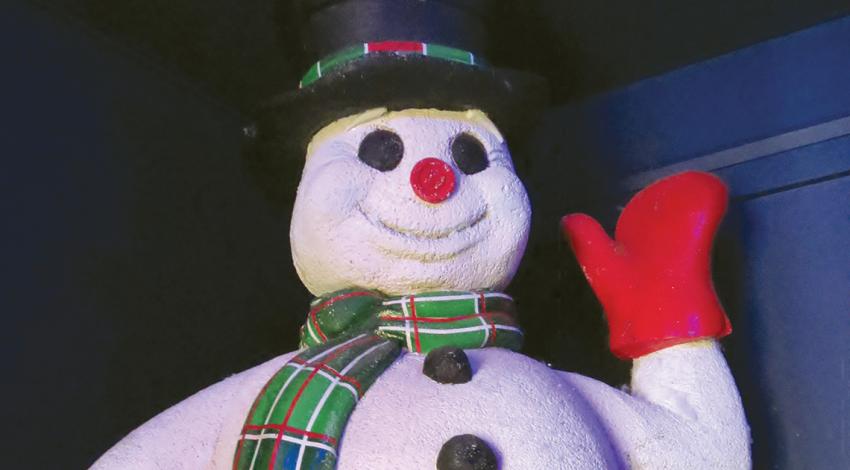
Given the COVID-19 pandemic, it seems as if everyone could use some holiday cheer, and Castle Noel in Medina is just the place for a healthy dose of everything merry and bright.
Yes, Klaus is his actual last name, and with his white beard and lifelong love of Christmas, he not only looks like Kris Kringle but also possesses a kind of Clark Griswold-like zeal that one would expect of someone who has amassed the world’s largest collection of holiday movie costumes, props, and memorabilia.
Every now and then, Anthony Smith, president and CEO of Union Rural Electric Cooperative in Marysville, finds he’s dashed out of the house in the morning without eating breakfast, so he ends up in the drive-thru lane at the fast-food place next to his office to grab a bite
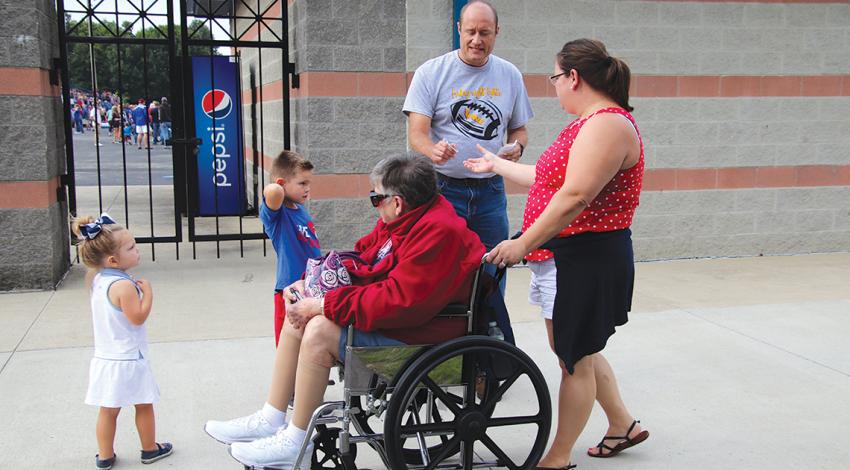
Every now and then, Anthony Smith, president and CEO of Union Rural Electric Cooperative in Marysville, finds he’s dashed out of the house in the morning without eating breakfast, so he ends up in the drive-thru lane at the fast-food place next to his office to grab a bite on his way to work.
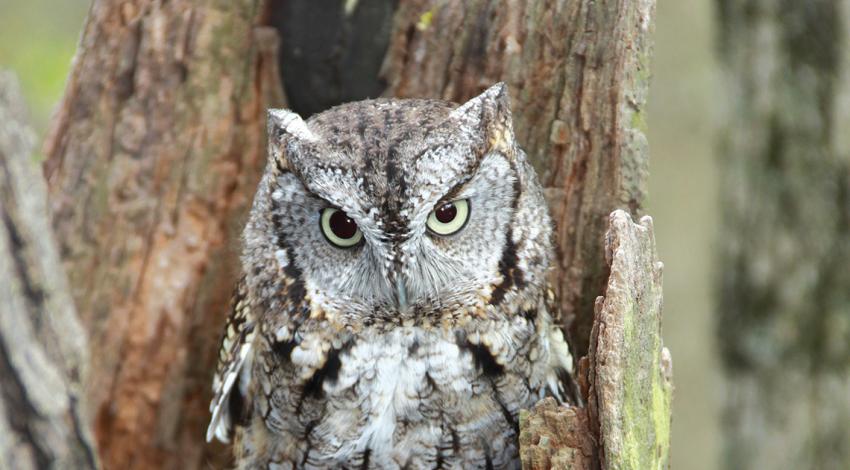
A professor of biology and ecology at Ashland University, Merrill Tawse has been running the same wild-bird survey route annually for more than 40 years. It’s not for his work, though; it’s purely for pleasure.
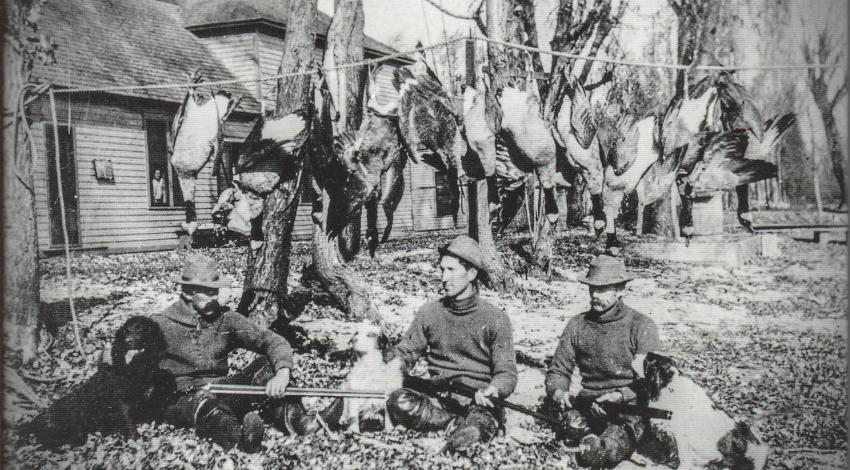
Before 1900, rural people engaged in a holiday tradition known as the Christmas “side hunt.” Sides (teams) were chosen, and team members fanned out through the countryside with their rifles and shotguns. Whichever team amassed the most feathered or furred quarry by the end of the day won the contest.